












// Comparisons
Atlas vs Recruit CRM (2026): One Price With AI vs a Metered Stack
Atlas vs Recruit CRM: which platform fits your agency in 2026
Atlas and Recruit CRM both combine ATS and CRM in one system for recruitment agencies, and both publish their prices. The difference is what the price contains. Recruit CRM’s seat licence covers the core and meters most of what agencies compare on in 2026 — outreach, analytics, LinkedIn messaging, job posting — as separate lines. Atlas includes its AI in the seat price, because there is no version of Atlas without it.
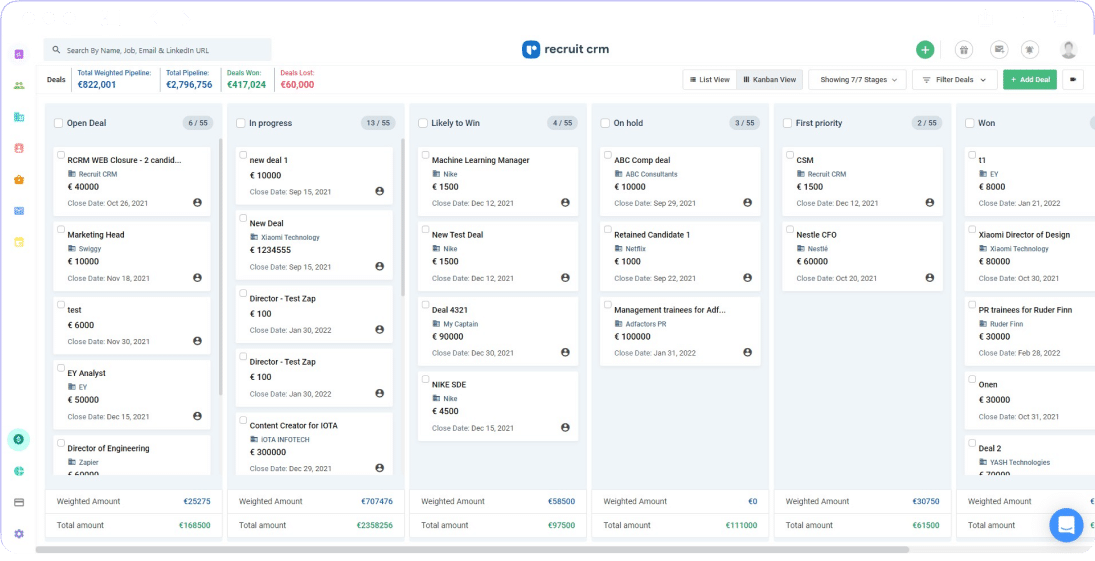
What Recruit CRM actually is
Recruit CRM is an ATS and CRM for recruitment and executive search firms, founded in 2017 by Sean Mallapurkar and his father Ajay Mallapurkar, a former CEO of ADP India and General Manager at Randstad India. The company is fully bootstrapped — no outside funding or debt — and states 200 teammates across seven countries serving 1,500+ agencies in 100+ countries.
The platform covers candidate sourcing with a Chrome extension, AI resume parsing, candidate matching, GPT-assisted content, Kanban pipelines, email sequencing, two-way email and calendar sync, reporting, deal pipelines, invoicing, custom fields, workflow automation and an open API. It is well regarded on review sites: 4.9 out of 5 on Capterra from 464 reviews, 4.8 on G2, with roughly 90% of G2 reviewers in the small-business segment.
Pricing has three published tiers — Pro, Business and Enterprise — running from $95 to $215 per user per month on annual billing, higher on monthly. The licence does not cover the metered lines. Six add-ons carry their own prices: job multiposting credits, workflow automation, analytics, LinkedIn messaging and paid data. Two of them — analytics and LinkedIn messaging — are billed per user across the whole account rather than per user who needs them. Multiposting is tiered by volume, from seven postings a month at the entry price to 125 postings at roughly fifteen times that. Enterprise includes 500 job-posting credits per user per month by default.
What Atlas actually is
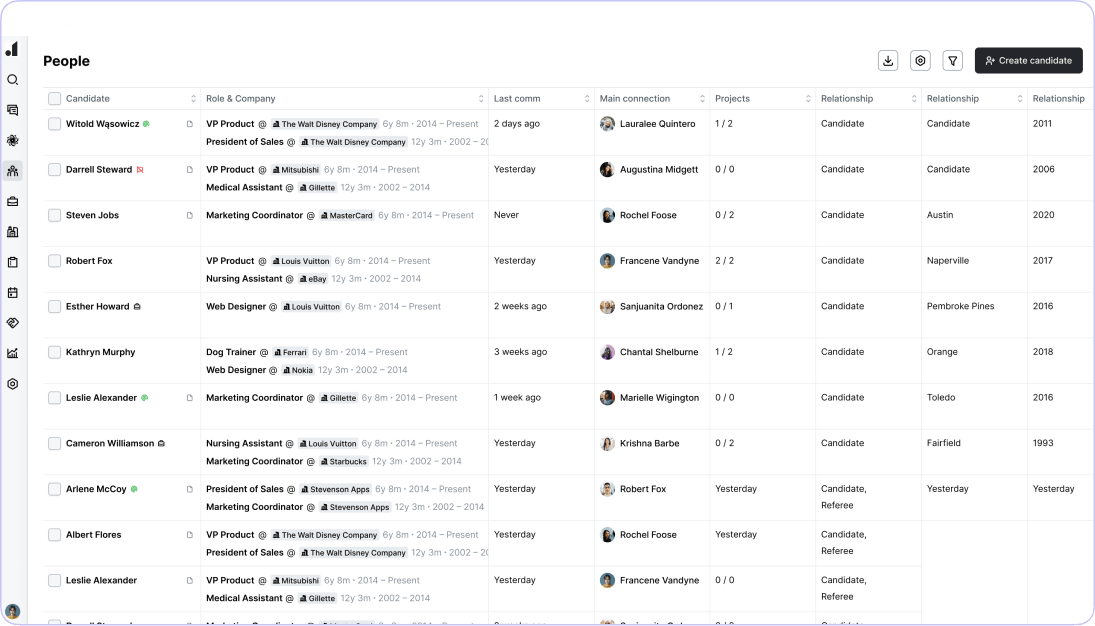
Atlas is an AI-native CRMx — one system combining CRM and ATS — built for agency recruiters and launched in 2023. Its core is Total Memory: a persistent intelligence layer capturing everything a firm’s team says, hears, reads and writes across calls, emails, meetings and notes, made searchable and available to AI agents at every stage of the pipeline. On top sit generative agents that remove recruitment admin, Opportunities for business development, Magic Search for criteria-based candidate assessment, a native AI note-taker, multi-touch outreach campaigns, custom dashboards, an MCP server, a Chrome extension and a mobile app. Atlas serves 500+ agencies, is backed by Smedvig Ventures, and puts around 40% of its team into engineering and product. Pricing starts at $120 per user per month on an annual commitment paid up front.
Side by side
| // Features | Atlas | Recruit CRM |
|---|---|---|
|
AI-native architecture — Built around AI from the first commit, or added to an existing core. |
Yes — Total Memory is the substrate | Established core since 2017; GPT tools, parsing and matching added on |
|
Agentic execution — Does the AI do the work, or recommend it? |
Agents execute: records, follow-ups, status updates | Workflow automation, metered as an add-on; GPT assists with content |
|
Search across your own data — Plain-language criteria, or keywords and fields. |
Magic Search v2 — criteria-based fit scoring | Keyword and field search; candidate matching capped by plan |
|
Conversation capture — Do calls and meetings become searchable intelligence? |
Native AI note-taker, feeding Total Memory | Call recording available; no native meeting transcription into a memory layer |
|
Business development — A pipeline, or a scored workspace with a next action. |
Opportunities — leads, target clients and marketable candidates, scored on momentum | Deal pipelines and invoicing |
|
Outreach campaigns — Multi-step, multi-channel, in the platform. |
Native, context-drawn from notes and job detail | Email sequencing from Business; LinkedIn messaging a separate per-user add-on |
| Analytics | Custom native dashboards, included | Advanced Analytics a separate per-user add-on |
| Job posting | Core boards | Multiposting metered by credits, tiered by volume |
|
Pricing transparency — Can you cost the 2026 feature set from the website? |
From $120 per user/month, annual | $95–$215 per user/month annual, plus six separately-priced add-ons |
| Company | 500+ agencies; VC-backed; ~40% of team in product | 1,500+ agencies; bootstrapped; ~$11M ARR per founder |
| Review standing | G2 4.9 from a small base | Capterra 4.9 (464), G2 4.8 |
Recruit CRM pricing and product facts read from recruitcrm.io in August–September 2026. Last verified: 10 October 2026.
Where Atlas and Recruit CRM overlap — and where the overlap stops
At feature-name level, the two platforms look similar. Atlas and Recruit CRM both combine ATS and CRM in one system, both source from LinkedIn through a Chrome extension, both parse resumes, both run email sequences, both offer Kanban pipelines, reporting, an API and GPT-assisted writing. Both publish prices. Both are popular with small and mid-size agencies that want one system instead of five (although Atlas is also rapidly expanding into Enterprise). Anyone comparing spec sheets will find a lot of matching rows.
The spec sheet is the wrong instrument. Two platforms can list “candidate matching” and mean different things, because the question is not whether a capability exists but what it is connected to — and, with Recruit CRM, whether it is inside the seat price or on a separate line.
This is where the overlap stops. Atlas built its data model around AI first and the recruitment workflow second: Total Memory exists so that every downstream agent has the full context of what the firm knows, and everything else was added to that layer. Recruit CRM built a clean, affordable ATS and CRM in 2017 and has been adding capabilities since — GPT integration, matching, automation, analytics — each one arriving as a feature with its own plan gate or price. That is the natural shape of a bootstrapped, profitable company: every capability has to pay for itself, so every capability gets a meter.
One fact you will not find on other comparison pages
Recruit CRM’s founder published the company’s own numbers in June 2026. Writing on Indie Hackers, Sean Mallapurkar stated that Recruit CRM is fully bootstrapped, hit its first $1M in early 2021, is generating nearly $11M in annual recurring revenue, growing roughly 40% year on year with roughly 40% free cash flow margins, and serves about 2,000 firms across 100+ countries. He also stated that the company grew on content and SEO for years before adding paid marketing and a sales team, and that his regret was not going upmarket and pricing with more confidence sooner.
That is a genuinely impressive business. It also explains the pricing page: a company optimising for 40% cash margins meters what it can. There is no criticism in that — it is the business model, stated by its founder.
The architectural question, stated plainly
Every recruitment platform now claims to be AI-powered. The claim only means something if you ask what it would cost the vendor to be wrong.
A platform built on AI foundations compounds from external progress: when frontier reasoning improves, the whole product improves, because the intelligence sits in the data layer rather than in individually-integrated features. A platform that added AI to an existing core integrates each advance separately, against a schema designed before anyone knew what would be needed.
There is a commercial signature to each. When AI is the foundation, it cannot be sold separately, because no version of the product exists without it. When AI and automation are features, they can be — and Recruit CRM’s pricing page lists workflow automation, analytics and LinkedIn messaging as add-ons on top of a seat licence that works without them. That is not an accusation. It is how the page is laid out.
Deep dive 1: what the seat price actually buys
How Recruit CRM works. Recruit CRM publishes three tiers, from $95 to $215 per user per month on annual billing, and it is worth reading the footnotes. Pro and Business each carry a line that enterprise features are billed separately; only the top tier includes everything in one price. Below the tier cards sit six add-ons with their own pricing: job multiposting credits, workflow automation, analytics, LinkedIn messaging and paid data. Analytics and LinkedIn messaging are billed per user across the whole account, not per user who uses them. Multiposting is tiered — seven postings a month at the entry price, 125 postings at many multiples of it — so a temp desk running volume lands several tiers above the number on the card. It is transparent, and Recruit CRM deserves credit for publishing all of it. It is also six variables.
Where Atlas is stronger. Atlas has one number: from $120 per user per month on an annual commitment paid up front, with the AI, outreach, analytics and search included — not bundled, but built in, because Total Memory is what the ATS and CRM run on. A buyer can cost Atlas from the page in one line.
The structural point matters more than the arithmetic. A vendor that can meter its automation and analytics separately has told you they are separable — features added to a core that works without them. Atlas cannot do that. And Atlas is closing the one thing metered pricing does offer, which is knowing what you use: Magic Credits will unify AI consumption across the platform in a single view.
Deep dive 2: GPT inside a CRM vs a CRM built on memory
How Recruit CRM works. Recruit CRM’s AI is practical and well-scoped: AI resume parsing, candidate matching against a role (with matching counts capped by plan), GPT-assisted content for emails and job descriptions, and a workflow automation engine on the add-on. It is the pattern most established platforms have followed — take a solid record-keeping system and add generative tools to the surfaces where recruiters write. Customers who have used it for years describe the support as excellent and the core as dependable.
Where Atlas is stronger. Generative tools help a recruiter write. They do not change what the system knows. The candidate who said on a call that they would move for the right package, the client who mentioned a hiring plan in passing, the note a departed consultant wrote — none of that reaches a GPT prompt unless someone typed it into a field first.
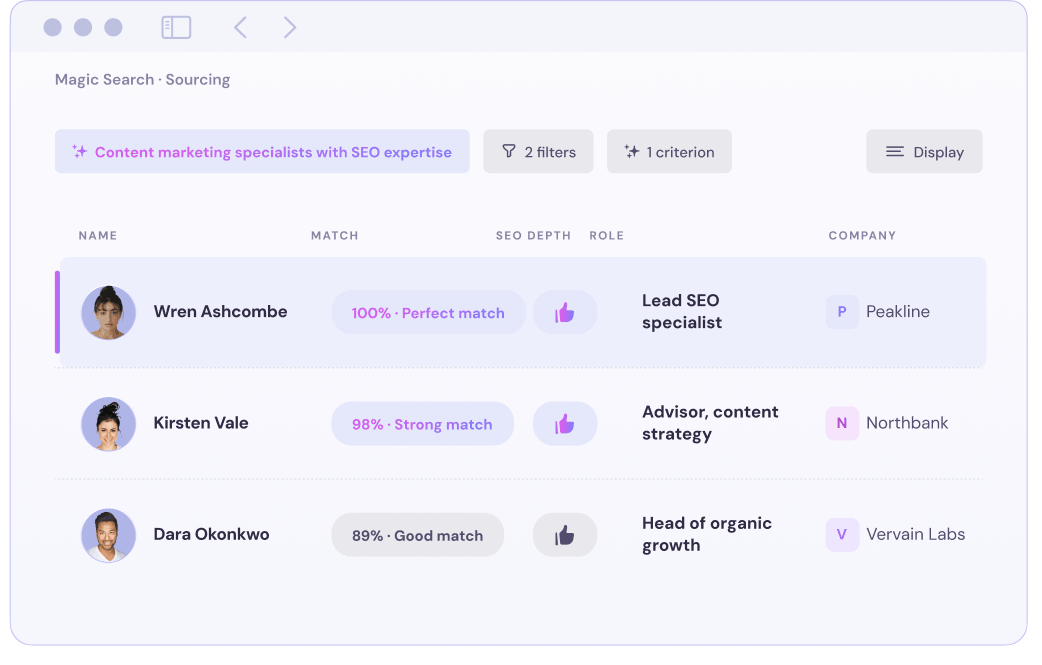
Atlas captures all of it into Total Memory automatically: calls, meetings, emails and notes become searchable intelligence that every agent reads. Magic Search lets a recruiter describe what “great” looks like in plain language and scores every profile against it with a visible fit rating — on the CV, the notes and the conversations at once. Recruit CRM’s matching evaluates the profile you have. Atlas evaluates the person you actually spoke to.
The fair concession: Recruit CRM’s GPT tools are included on every plan and are simple to use, and for an agency whose bottleneck is writing rather than remembering, that is real value at a low price.
Deep dive 3: where the roadmap is going
How Recruit CRM works. Recruit CRM is a bootstrapped, profitable, founder-owned company with no intention of selling, by its founder’s own account. It grew on content and SEO, prices confidently and has been going upmarket. Its customers consistently praise support and value, and its review scores are among the best in the category. That is durability, and it is worth something to a buyer.
Where Atlas is stronger. Durability and velocity are different things. Around 40% of Atlas’s team works in engineering and product, and the observable output is release cadence — the thing Atlas customers volunteer without being asked. Prospects arriving from Recruit CRM describe a platform that was excellent a few years ago and dependable now, and a market that has moved: the phrase that recurs on calls is that it stopped feeling state of the art once AI arrived.
For a buyer signing a multi-year contract, that is the question underneath the feature comparison: whose roadmap are you buying? Recruit CRM’s is careful and margin-disciplined by design. Atlas’s is fast by design. Neither is wrong. Only one of them is built around the assumption that the product must be materially different in a year.
Where Recruit CRM has genuine advantages
Price at the entry point, and published in full. Recruit CRM’s Pro tier is one of the lowest published entry prices in the category, and every add-on is priced on the page. For a small agency that wants a dependable ATS and CRM and can live without automation, analytics and LinkedIn messaging, the total cost is low and predictable. When it decides the choice: if you want the cheapest credible ATS and CRM with published pricing and do not need the metered layers, Recruit CRM wins on cost.
Support and review standing. A 4.9 on Capterra from 464 reviews and a 4.8 on G2 are earned over years, and support is the theme Recruit CRM’s customers lead with — including prospects who are leaving. Atlas has a smaller review base and a younger support organisation.
Stability of ownership. Founder-owned, profitable and explicitly not for sale, by the founder’s own statement. Buyers burned by acquisitions elsewhere in this market will value that, and Atlas — venture-backed and scaling — cannot offer the same guarantee. When it decides the choice: if you want a vendor that will look the same in five years, Recruit CRM’s ownership is the safer bet.
What the market is telling us
Atlas talks to agencies evaluating the whole ATS and CRM market every week, including firms that have run Recruit CRM. What those buyers say is more useful than either vendor’s marketing, so we publish it as we hear it.
Recruit CRM, they were great a few years ago and have really great customer support. But from what I see, they stopped developing — with so much AI invention in the last months, I think it’s not state of the art anymore. That’s why we’re looking for another product.
Recruit CRM just seemed pretty basic to me and the price was fine, so I went with that. Now I’ve had it for a couple of years and I think there’s better tools on the market. It has that feature — it’s just a bit clunky, not as intuitive. I’m looking for something that has it all in one.
It doesn’t really integrate with LinkedIn messaging. They have a service where you can write messages in Recruit CRM that appear in LinkedIn, but it doesn’t really work.
Based on Atlas evaluation conversations, 2026. Updated as new comparisons come in.
Choose Recruit CRM if
- You want the lowest published entry price and do not need automation, analytics or LinkedIn messaging.
- Independent review depth and a long support track record are procurement requirements.
- You want a bootstrapped, founder-owned vendor.
- Your team’s bottleneck is writing, not remembering, and GPT-assisted content is the AI you actually need.
Choose Atlas if
- You want the 2026 feature set — AI, outreach, analytics, search — in one price rather than six.
- Your firm’s knowledge is your product, and you want conversations captured and searchable rather than typed into fields.
- You want admin to disappear rather than be automated on a metered add-on.
- You are buying the roadmap as much as the product, and want the vendor built to change materially every year.
-
// Magic Search
Find the right people in plain English
Search your entire database using natural language and see exactly why every recommended candidate matches your criteria.
-
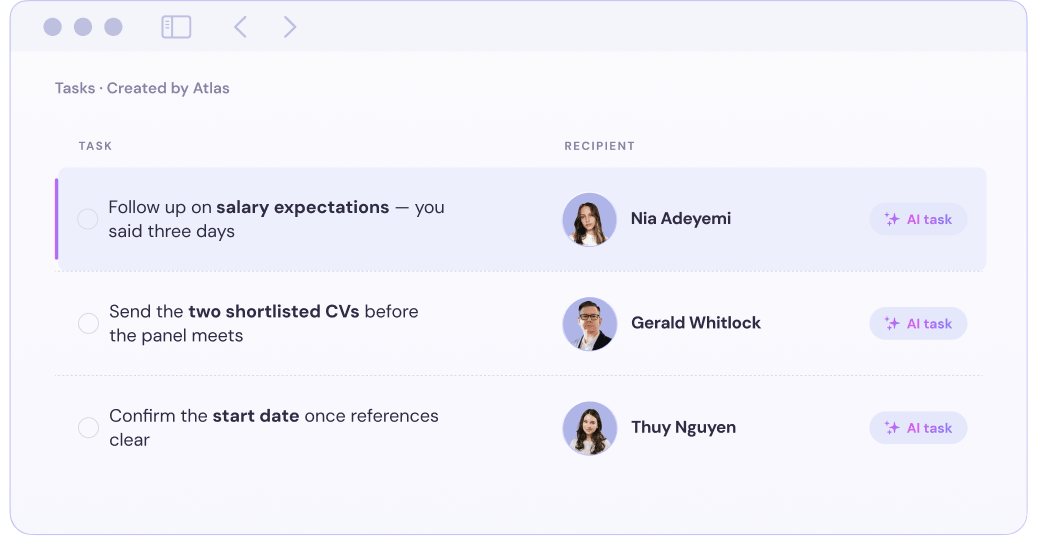
// AI Notetaker + Tasks
Turn conversations into next actions
Capture calls automatically and turn every commitment into a clear, timely follow-up task for your team.
-
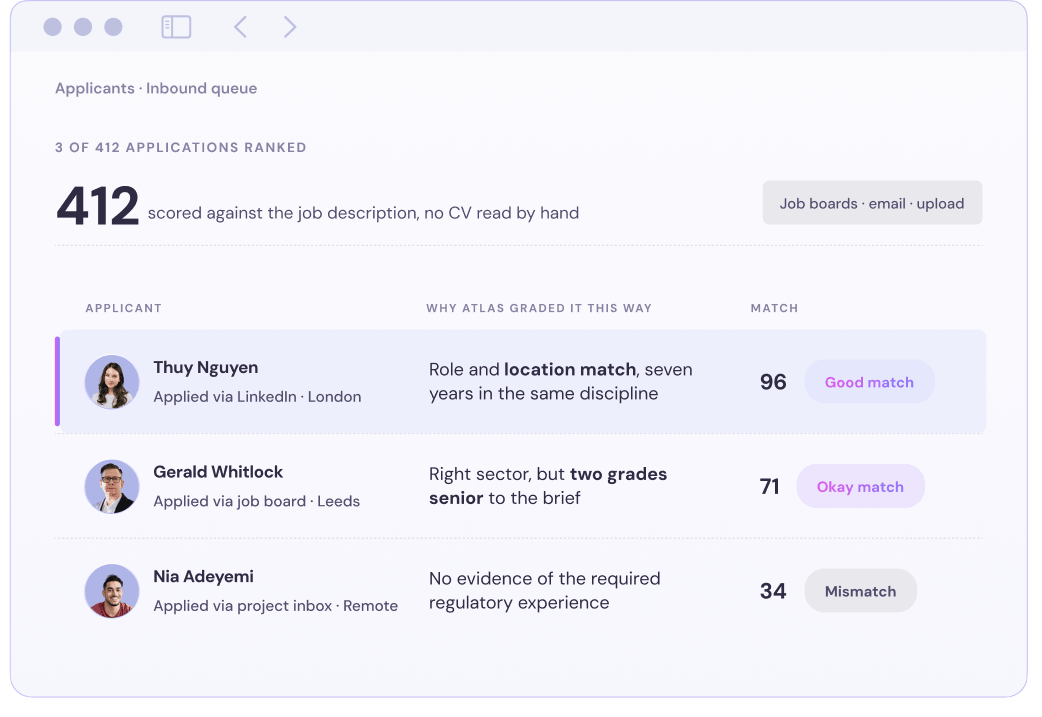
// Applicants
Triage applicants without database clutter
Automatically grade incoming applicants with clear reasoning while keeping unapproved profiles outside your main database.
-
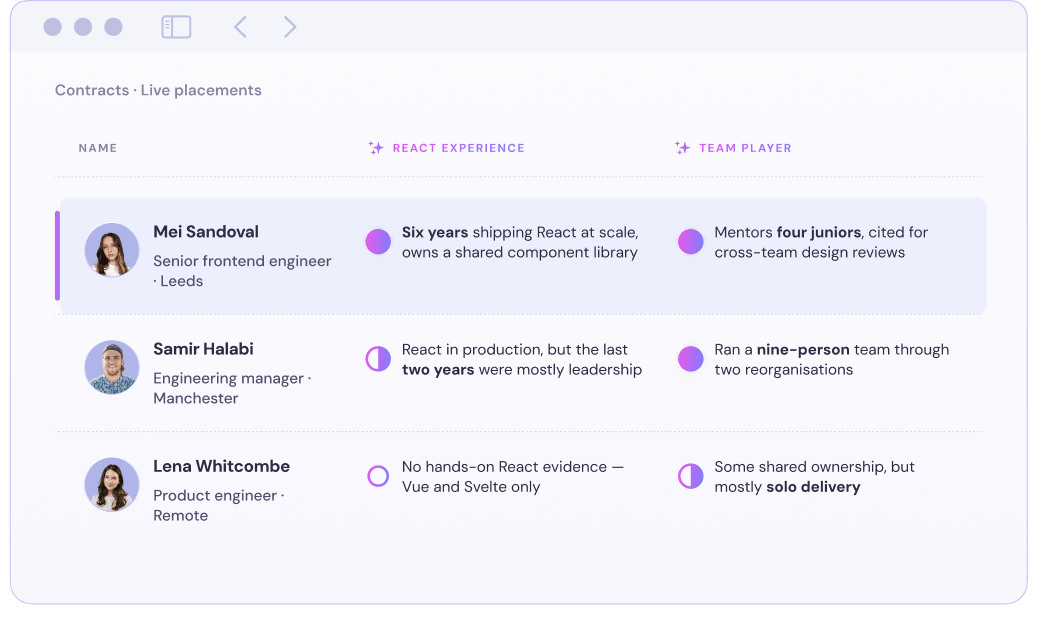
// Magic Columns
Score candidates against your criteria
Evaluate every candidate against your own competencies, instructions and scoring system using flexible AI-powered columns.
-
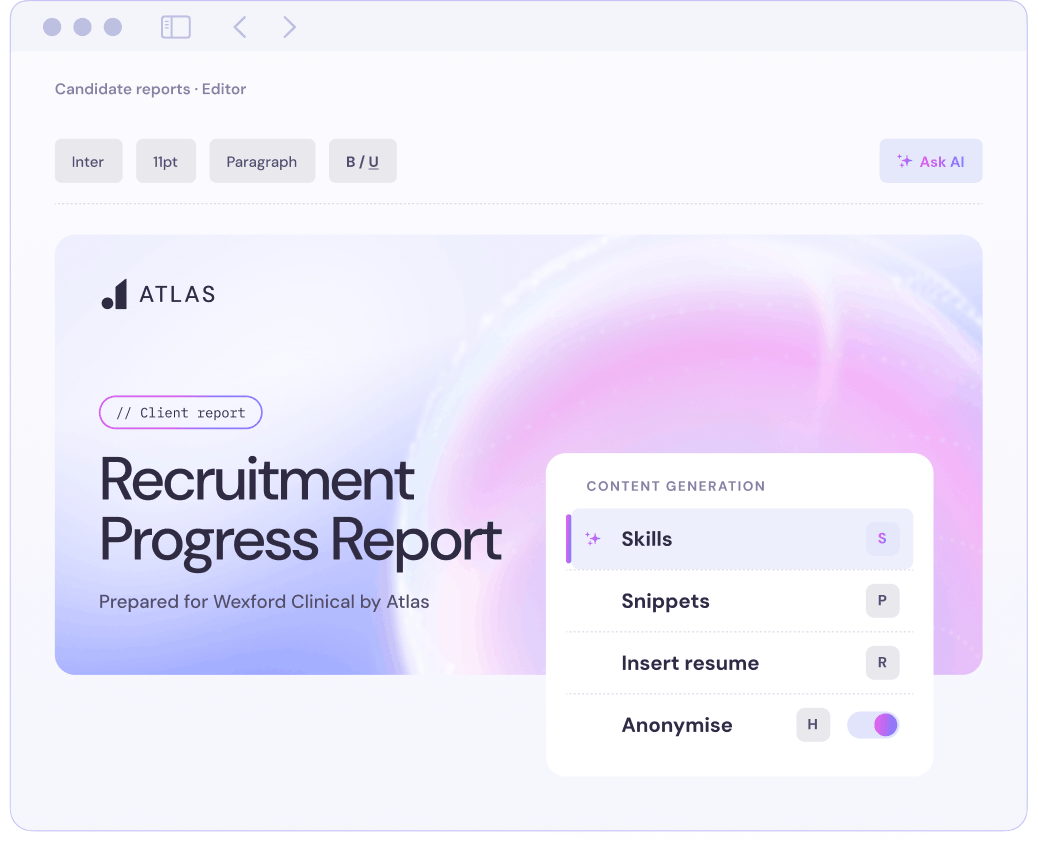
// Candidate Reports
Create polished candidate reports
Turn complete profiles, meeting notes and conversations into polished, client-ready documents.
-
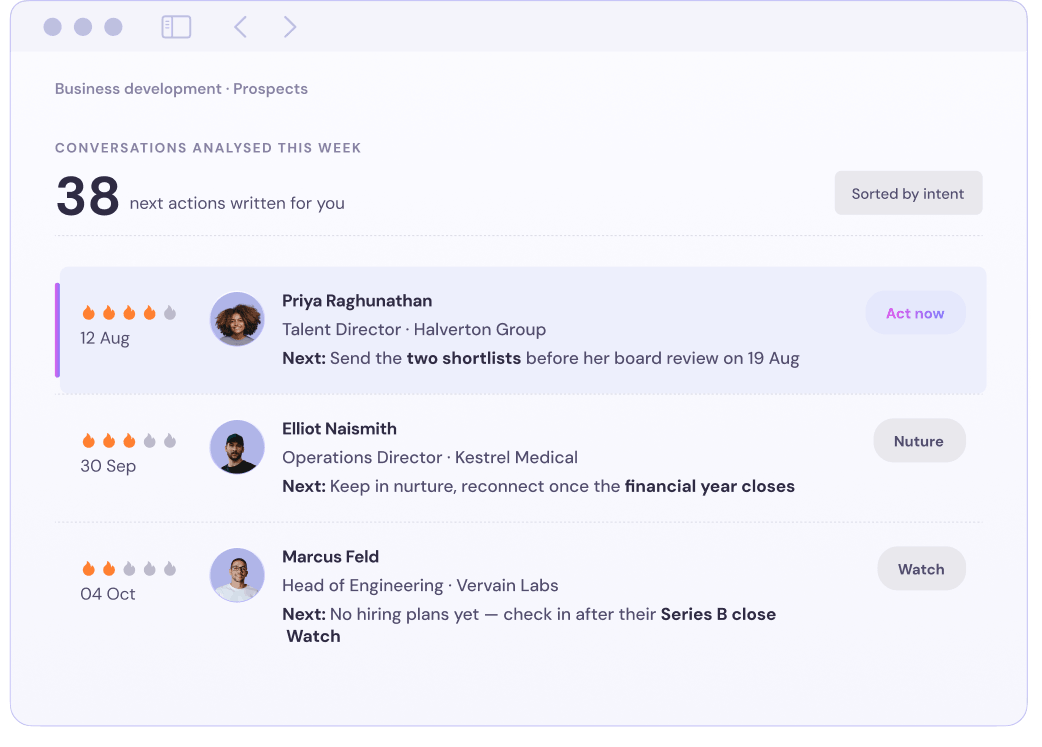
// Opportunities
Focus on opportunities most likely to convert
Track every interaction, assess urgency and prioritise opportunities using an automatically updated likelihood of winning.
-
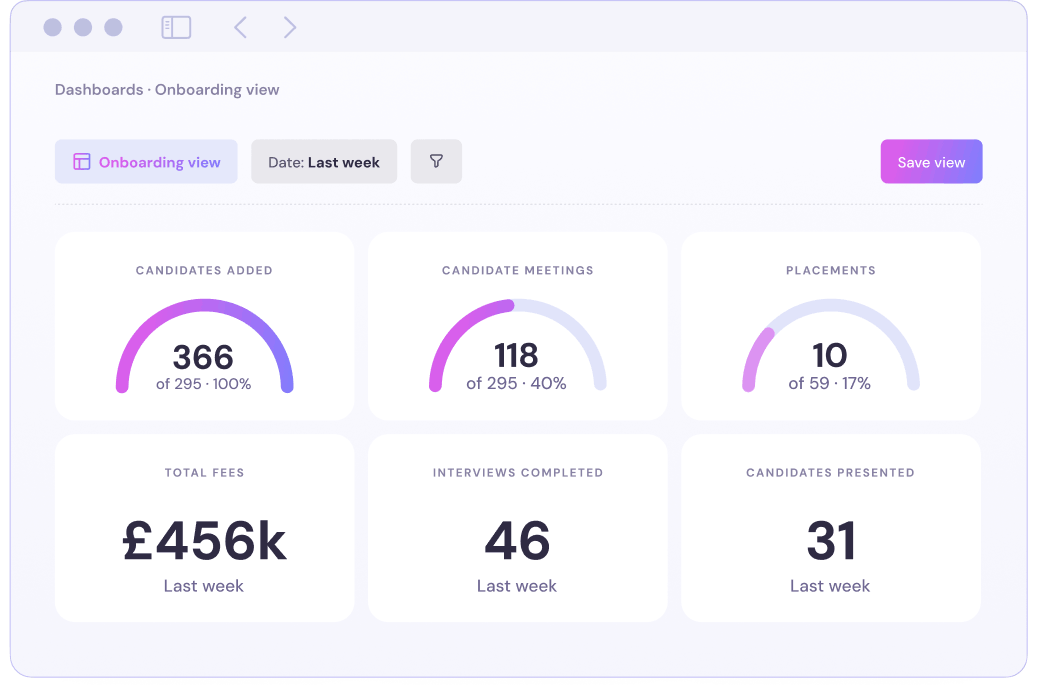
// Dashboards
See performance and pipeline in real time
Track performance, fees, placements and conversion ratios through live dashboards with custom views and filters.
-
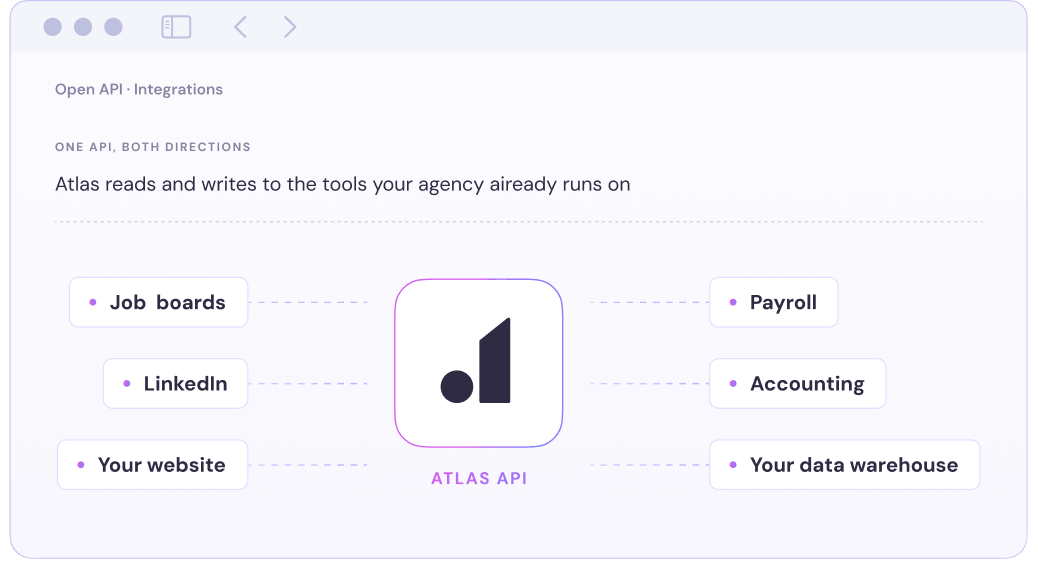
// Open API + Integrations
Connect Atlas to the tools you use
Connect external tools and custom workflows through Atlas’s public API and growing library of native integrations.
-
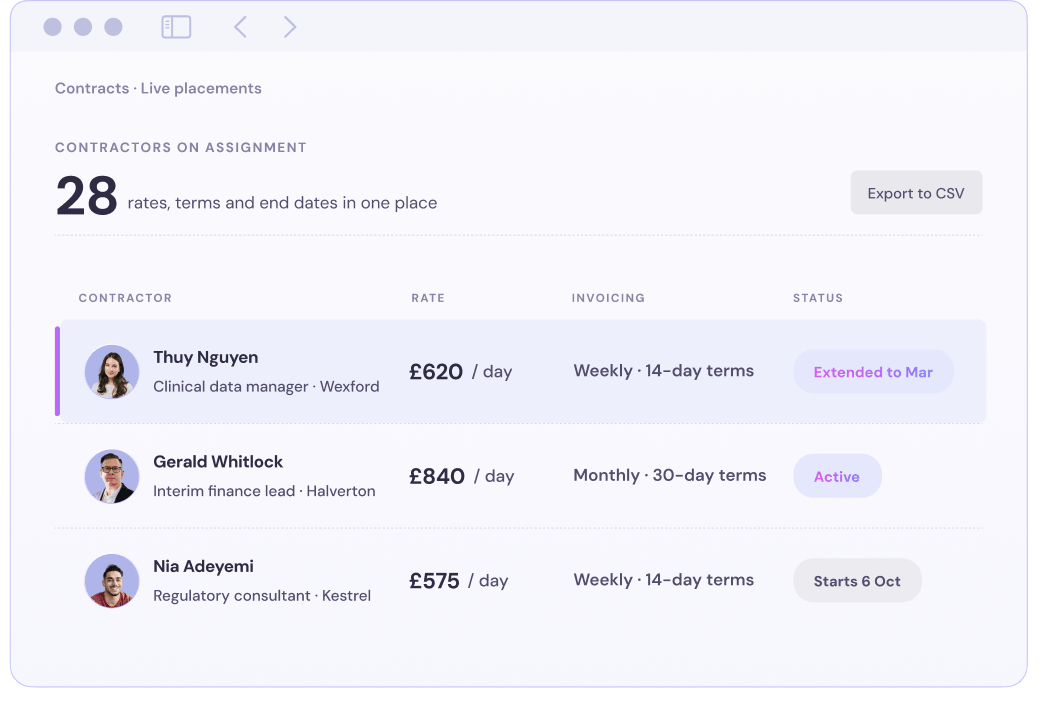
// Contract Management
Manage every placement in one platform
Handle permanent and contract placements with flexible rates, approvals, expenses and automatic status updates.
-
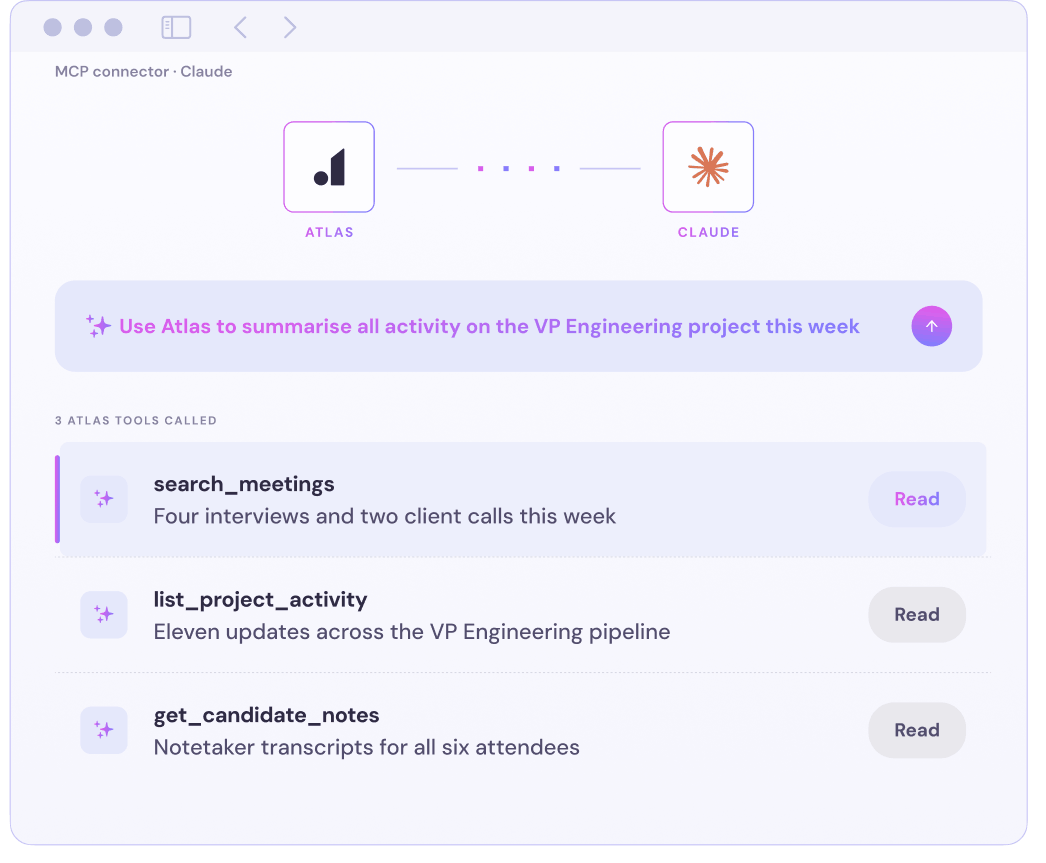
// Claude Connector
Ask Claude anything about your Atlas data
Get answers across candidates, projects, companies, meetings and transcripts without manually searching through records.
Pricing, side by side
Atlas starts at $120 per user per month on an annual commitment paid up front, with AI usage included. Magic Credits will unify visibility of AI consumption across the platform at no additional cost over that price.
Recruit CRM publishes Pro, Business and Enterprise at $95 to $215 per user per month on annual billing, higher on monthly. Six add-ons are priced separately: job multiposting credits, workflow automation, analytics, LinkedIn messaging and paid data, with analytics and LinkedIn messaging billed per user across the whole account.
So the honest comparison is not $120 against $95. It is $120 with everything included against a seat licence plus whichever of six lines your desks actually use. For most agencies evaluating on AI and outreach, that means Business or Enterprise plus automation, analytics and LinkedIn messaging — and at that point the seat price is the smaller number. Price both at your real headcount and usage before deciding.
Migrating from Recruit CRM to Atlas
Migration begins with a full export from Recruit CRM — candidates, companies, jobs, activities and notes. Atlas handles field mapping, cleansing and validation, then configuration, testing and training before go-live. Several Recruit CRM customers are on monthly rolling terms, which removes the usual contract-timing problem.
Preserving unstructured history matters more here than in a conventional migration, because that history is exactly what Total Memory operates on afterwards. Ask any vendor, including Atlas, for a migration scope that names notes, call logs and email history explicitly.
The numbers behind the switch
-
// Garfield Stephers
80%less time spent on CV formatting
-
// Pace Global
30% +more candidates and roles handled
-
// Aym Recruitment
150%revenue growth after adopting Atlas
-
// Ethiq
200%of annual billing target achieved
-
// Tech Valley Recruitment
30 minsaved per candidate report
-
// Globus Search
4×faster candidate sourcing and updates
The verdict
Recruit CRM is a well-run company and a well-liked product. Bootstrapped to $11M ARR at 40% margins, rated 4.9 on Capterra, supported by people its customers praise, and priced from the bottom of the market up — for a small agency that wants a dependable ATS and CRM at the lowest credible price, it is a good choice.
But its pricing page tells you what it is. A seat licence for the core, and six meters for everything an agency compares on in 2026. That is what a company optimising for cash margin builds, and there is nothing wrong with it. It is just not what Atlas is.
Atlas was built the other way. One product, one memory, one price with the AI in it — because Total Memory is not a feature on the platform, it is what the platform is built on. Recruit CRM added AI to a CRM and metered it. Atlas built a CRM on AI and included it.
// See Atlas in action
Bring a live role. Book a 30-minute demo and we will run it in Atlas against your own data — not a sandbox, not a slide.


