













// Comparisons
Atlas vs Loxo (2026): AI-Native Architecture vs AI Added Later
Atlas vs Loxo: which platform fits your agency in 2026
Atlas and Loxo both combine ATS, CRM, sourcing and outreach into a single AI-driven system for recruitment agencies. The difference is when the AI arrived. Atlas was designed around it from the first line of code in 2023. Loxo built a recruiting platform between 2012 and 2022 and has been adding AI to it since. That sequence shapes almost everything else.
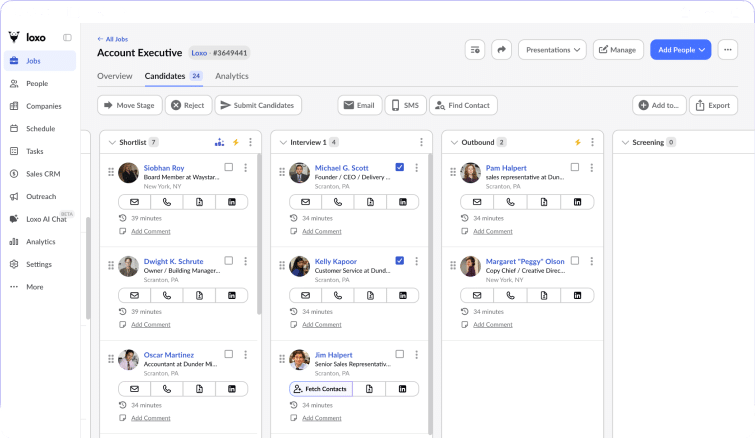
What Loxo actually is
Loxo is a Talent Intelligence Platform, founded in 2012 and headquartered in Austin, Texas, led by founder and CEO Matt Chambers. In February 2025 it closed a $115M growth investment led by the private equity firm Tritium Partners.
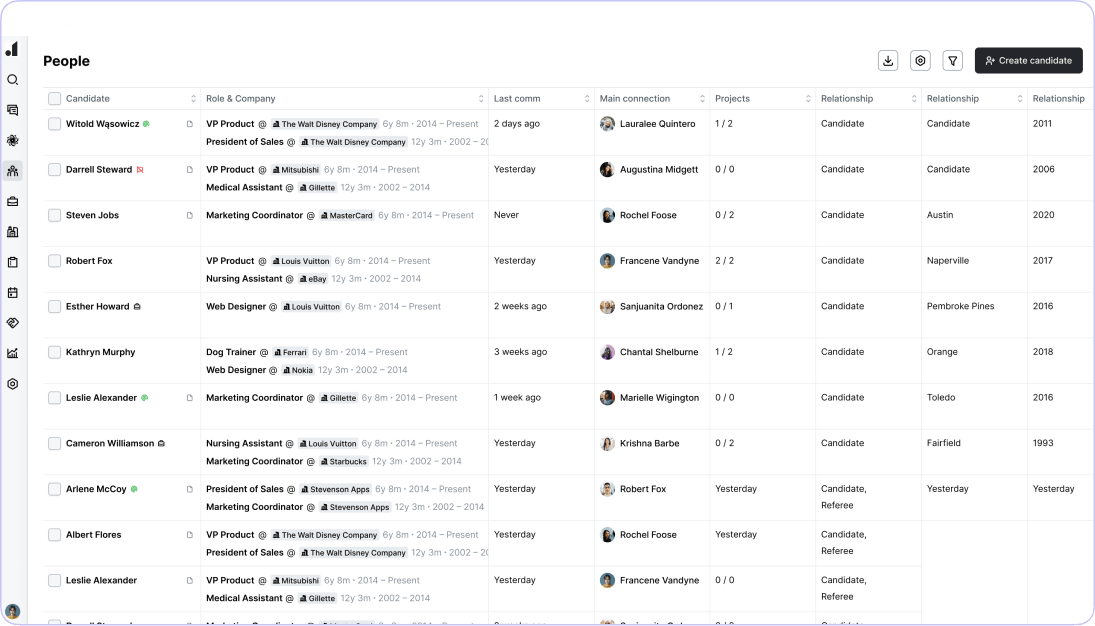
The platform unifies an applicant tracking system, a recruiting CRM, a sales CRM with account-based prospecting, multi-channel outreach, reporting and a proprietary sourcing database. Its centrepiece is Loxo Source, a talent graph of 850M+ professionals that Loxo built, owns and enriches itself, searched alongside a customer’s private database and returning contact information with shortlists where it is available.
In 2026 Loxo released what it calls Next Generation Loxo, adding an agentic workforce on top of that platform. The agents cover job intake, JD and Skill DNA generation, Longlist screening of up to 10,000 candidates per search, Shortlist ranking across seven dimensions, outreach and pursuit, candidate submittals, note-taking and contact-info finding, plus three Data Agents for record refresh, hygiene and deduplication. Full Agentic Mode runs a search end to end and stops at the shortlist.
Loxo’s public position is that intelligence should be owned rather than rented: it builds its own recruitment-specific models rather than layering on a public LLM, and markets that explicitly against what it calls GPT wrappers.
Pricing is Core at $149 per user per month and Professional at $199 per user per month, both billed annually and paid up front, with Enterprise on custom terms. Natural-language AI search is included on every tier. Professional adds Loxo Source, the full agent workforce and 2,500 credits per seat per month, pooled across the team, with Boost multipliers to 5,000 or 12,500 credits priced separately. A 7-day trial gives full Professional access.
What Atlas actually is
Atlas is an AI-native CRMx — one system combining CRM and ATS — built for agency recruiters and launched in 2023. Its core is Total Memory: a persistent intelligence layer capturing everything a firm’s team says, hears, reads and writes across calls, emails, meetings and notes, made searchable and available to AI agents at every stage of the pipeline. On top sit generative agents that remove recruitment admin, Opportunities for business development, Magic Search for criteria-based candidate assessment, a native AI note-taker, multi-touch outreach campaigns, custom dashboards, an MCP server, a Chrome extension and a mobile app. Atlas serves 500+ agencies, is backed by Smedvig Ventures, and puts around 40% of its team into engineering and product. Pricing starts at $120 per user per month on an annual commitment paid up front.
At a glance
| // Features | Atlas | Loxo |
|---|---|---|
| Category | AI-native CRMx (CRM + ATS) | Talent Intelligence Platform (ATS + CRM + sourcing + agents) |
| Founded | 2023 — AI-native from first commit | 2012 — AI added to an existing platform |
| Core intelligence | Total Memory over your firm’s own calls, emails, meetings and notes | Proprietary 850M+ profile talent graph, plus your private database |
| AI model approach | Frontier models over a proprietary memory architecture | In-house recruitment-specific models and knowledge graph |
| AI agents | Run continuously and ambiently; fully automated BD workflows in build | Commissioned on request and metered in credits; released 2026 |
| AI in production since | Magic Search v2 live since March 2026, hardened continuously | Agentic workforce released 2026 |
| Sourcing data | Native email and phone data; enrichment against external providers | Loxo Source on the 850M+ owned graph; contact info with shortlists |
| Business development | Opportunities — job leads, target clients and marketable candidates in one workspace, moving toward end-to-end automation | Sales CRM + Account-Based Prospecting |
| Company shape | Product-led — around 40% of the team in engineering and product, 10% in sales | Sales-led — a sales organisation of 50+ |
| AI consumption model | Magic Credits, unifying AI usage across the platform, included at no additional cost | Credits metered per agent action; Boost multipliers priced separately |
| Pricing | From $120 per user/month, annual, paid up front | Core $149 · Professional $199 per user/month, annual |
| Security | ISO 27001 certification in progress, targeted mid of Q4 2026 | SOC 2 Type II reported on Enterprise |
Loxo figures verified against loxo.co and loxo.co/pricing on 10 October 2026.
Where Atlas and Loxo overlap — and where the overlap stops
At feature-name level, the two platforms look similar. Atlas and Loxo both replaced the legacy stack where an agency ran an ATS, a separate CRM, a sourcing subscription, a contact-data tool and an outreach tool. Both are single systems of record. Both keep business development and delivery in one platform. Both run multi-channel outreach with AI-drafted messaging. Both capture calls automatically and write notes back to records. Both ship a Chrome extension and an MCP server. Anyone comparing spec sheets will find a lot of matching rows.
The spec sheet is the wrong instrument. Two platforms can list “AI note-taker” and mean different things, because the question is not whether a capability exists but what it is connected to.
This is where the overlap stops. Atlas built its data model around AI first and the recruitment workflow second — Total Memory exists so every downstream agent has the full context of what the firm knows, and features were added to that layer afterwards. Loxo built the recruitment workflow first, between 2012 and 2022, and has been connecting AI to it since. Next Generation Loxo is described by Loxo itself as an agentic workforce working on the Talent Intelligence Platform — an addition to the existing architecture rather than a rebuild of it.
The design signature gives it away. Loxo’s agents are discrete jobs: you commission one, it runs, it consumes credits, and a dashboard reports what it returned. That is a coherent way to layer intelligence onto a system of record. Atlas’s agents are ambient, because the memory layer is the substrate rather than a destination. Neither approach is an accident, and neither is retrofittable into the other.
The architectural question, stated plainly
Every recruitment platform now claims to be AI-native. The claim only means something if you ask what it would cost the vendor to be wrong.
A platform built on AI foundations compounds from external progress: when frontier reasoning improves, the whole product improves, because the intelligence sits in the data layer rather than in bolted-on features. A platform that added AI to an existing core integrates each advance individually, against a schema designed before anyone knew what would be needed, and every integration is a decision about where the new capability plugs in.
Fourteen years of platform maturity is a genuine asset. It is also fourteen years of architectural commitments made before the technology that now defines the category existed. Loxo’s 2026 release is substantial, but it is a workforce added on top; the substrate underneath is the platform Loxo has been building since 2012.
Deep dive 1: how the AI actually gets used
How Loxo works. Loxo’s agents are commissioned. A recruiter asks for a Longlist or a Shortlist, the agent runs, credits are consumed, and the Agent Impact Center itemises what the action returned. Every Professional seat carries 2,500 credits per month, pooled across the team, and heavy desks can be moved to 5,000 or 12,500 through Boost, priced separately (loxo.co/pricing). Loxo describes this as a P&L for your AI workforce, and the accounting logic is sound: you see what the AI did and what it cost.
Where Atlas is stronger. The work that actually consumes a recruiter’s week is not the discrete job you would happily commission. It is the several hundred small acts of maintenance nobody assigns — updating a status, logging a call, chasing a candidate who went quiet, writing the note, connecting the note to the record, remembering the hiring plan a client mentioned in passing. Nobody opens an agent console for those. Atlas runs them against Total Memory continuously, as the system’s default behaviour, so they happen whether or not a consultant remembers to ask and whether or not there is budget left in a pool.
Atlas is extending the same model into business development, building fully automated workflows that carry an opportunity from identification through outreach and follow-up without a recruiter driving each step — a problem that only becomes tractable when the agents already hold the firm’s full context.
And Atlas is closing the one gap the commissioned model does open. Magic Credits will unify AI consumption across the entire platform in a single view, giving agency leaders the same visibility into what the AI is doing.
Deep dive 2: how long the AI has been doing real work
How Loxo works. Loxo has been building recruitment-specific machine learning since 2012, and its ranking and matching models are trained on outcomes inside its own graph. The capabilities the platform is now marketed on, though, are new: Longlist, Shortlist, Full Agentic Mode, the three Data Agents and the credits model all arrived together with Next Generation Loxo in 2026. Loxo offers a 7-day full-Professional trial so buyers can judge quality directly.
Where Atlas is stronger. A fourteen-year-old company shipping its agent layer this year means the platform is mature and the agents are not. Ranking 10,000 candidates across seven dimensions is a genuinely hard problem, and quality at that scale is proven in production over quarters, not at launch — the failure modes only surface once real recruiters run real searches against messy real data.
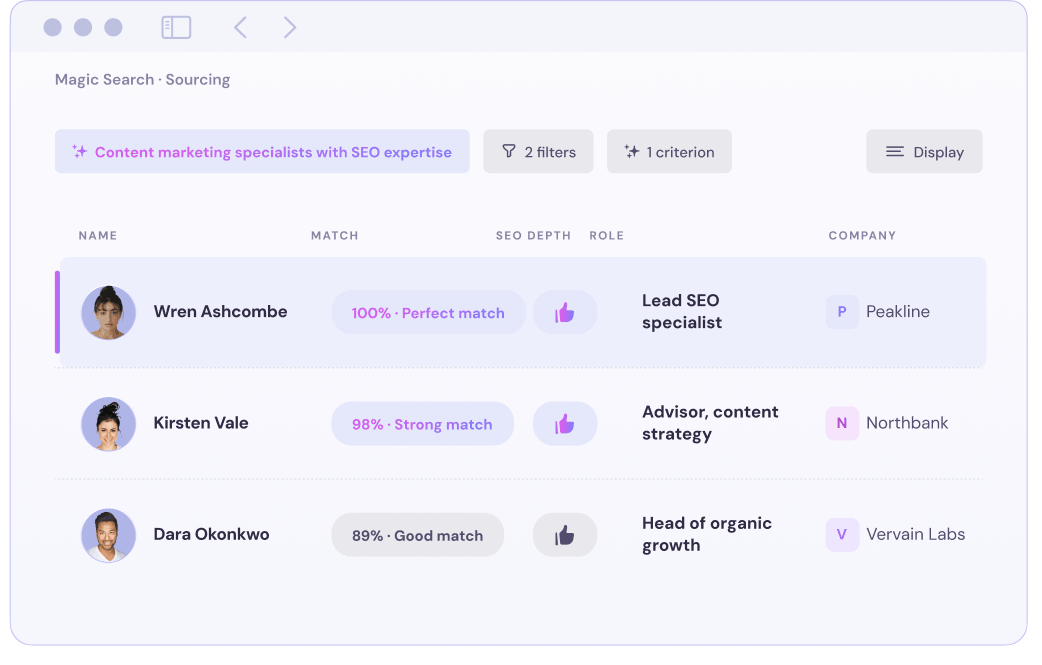
Atlas’s equivalent has been through exactly that. Magic Search v2 has been live since March 2026: a recruiter defines what “great” looks like for a search in plain language, and Atlas scores every profile against those criteria with a visible fit rating. Six months of daily production use across 500+ agencies is six months of edge cases found and fixed, and the model has kept improving since launch rather than sitting where it shipped — it is measurably more robust and more reliable now than on day one.
The practical test for any buyer is the same for both vendors: ask how long the specific capability you care about has been generally available, and ask to watch it run on one of your live roles. Atlas can answer that with production history. On the agentic workforce, Loxo is answering it with a launch date.
Deep dive 3: where each company’s weight actually sits
How Loxo works. Loxo runs a sales organisation of 50+ people, backed by a $115M growth investment led by Tritium Partners. That buys reach: more outbound, more account management, more support coverage, a deeper partner marketplace and the kind of brand recognition a cautious buyer can point to internally. It is a coherent strategy for a private-equity-backed company optimising for efficient revenue expansion, and it works — Loxo’s install base and market presence are real.
Where Atlas is stronger. Atlas is built the other way round. Around 40% of the team works in engineering and product and around 10% in sales, because in a market where the product changes every quarter, the fastest route to growth is a product that is visibly ahead rather than a larger outbound team.
The observable output is release velocity, and it is the thing Atlas customers volunteer without being asked — an unusual thing for recruiters to say about software, and a direct consequence of where the headcount sits.
This matters more than it looks, because a buyer signing a multi-year contract is buying the roadmap, not the pitch. Capital and headcount are only an advantage where they are deployed. A company weighted toward selling will out-sell you; a company weighted toward building will out-build you. Over three years, only one of those shows up in the product your consultants open every morning.
Where Loxo has genuine advantages
The owned sourcing database. Loxo owns a talent graph of 850M+ professionals that it built and enriches itself, searched in the same motion as your private database, with contact information delivered alongside shortlists. For an agency currently paying separately for sourcing and contact data, folding that into the ATS is a real consolidation of spend, and Atlas has no equivalent proprietary graph. Coverage is not the same as quality — the binding constraint on sourcing outcomes is contact accuracy and match relevance rather than raw profile count — but the asset is real. When it decides the choice: if your recruiters spend the day mapping unfamiliar markets at volume, Loxo’s graph is the better answer.
Proprietary in-house models. Loxo has developed recruitment-specific machine learning since 2012 — 50+ algorithms over its own knowledge graph — and argues that owned intelligence is a moat while rented intelligence is not. Within its own data, for ranking and matching, that investment shows. The argument was stronger before 2023, though: Loxo’s own pricing page now describes AI search as table stakes and includes it on every tier, and frontier labs spend more on one model generation than Loxo has raised in its history, so owning your models increasingly means funding every advance yourself. When it decides the choice: if you are buying ranking quality specifically within a large vendor-owned dataset, Loxo’s models are purpose-built for it.
Market footprint and capital. Fourteen years, $115M of growth capital, a large install base and strong review-site standing give Loxo proof of durability that a 2023 company cannot manufacture, and they fund a support and partner ecosystem to match. That counts for something with a buyer who has to defend the decision internally. It is also capital deployed disproportionately into commercial expansion rather than the roadmap, which is why the product gap has been narrowing rather than widening. When it decides the choice: if vendor scale and track record are hard procurement requirements, no architectural argument overrides a procurement constraint.
What the market is telling us
Atlas talks to agencies evaluating the whole ATS and CRM market every week, including firms that trialled both Atlas and Loxo before deciding. What those buyers say is more useful than either vendor’s marketing, so we publish it as we hear it.
Loxo looked great at the start, but I’m not really using it now because it’s just become an absolute mess very quickly. It automatically adds people and companies for you when you don’t ask it to.
Loxo’s really good. It’s fine for candidate management, but it’s really got no features for the client side of things. It’s all candidate-focused — you don’t have client cards. I didn’t even realise this until I started using it.
It does not do what it says it’s gonna do. I’ve been hearing a lot about Atlas, mainly through the podcast — a lot of the guests are Atlas users — and being disappointed with Loxo’s rollout, I thought let’s just have a demo.
Based on Atlas evaluation conversations, 2026. Updated as new comparisons come in.
Choose Loxo if
- Sourcing breadth is your binding constraint and you want an owned graph inside your ATS rather than a separate subscription.
- Vendor scale and a long track record are procurement requirements you cannot waive.
Choose Atlas if
- Your firm’s knowledge is your product, and the problem is that it sits in inboxes, notebooks and departed employees rather than in a system you can query.
- You want admin to disappear rather than be delegated — agents that run without being commissioned or metered.
- You want AI that has been in production long enough to be trusted, not newly launched.
- You are buying the roadmap as much as the product, and you want the vendor whose headcount is weighted toward building it.
-
// Magic Search
Find the right people in plain English
Search your entire database using natural language and see exactly why every recommended candidate matches your criteria.
-
// AI Notetaker + Tasks
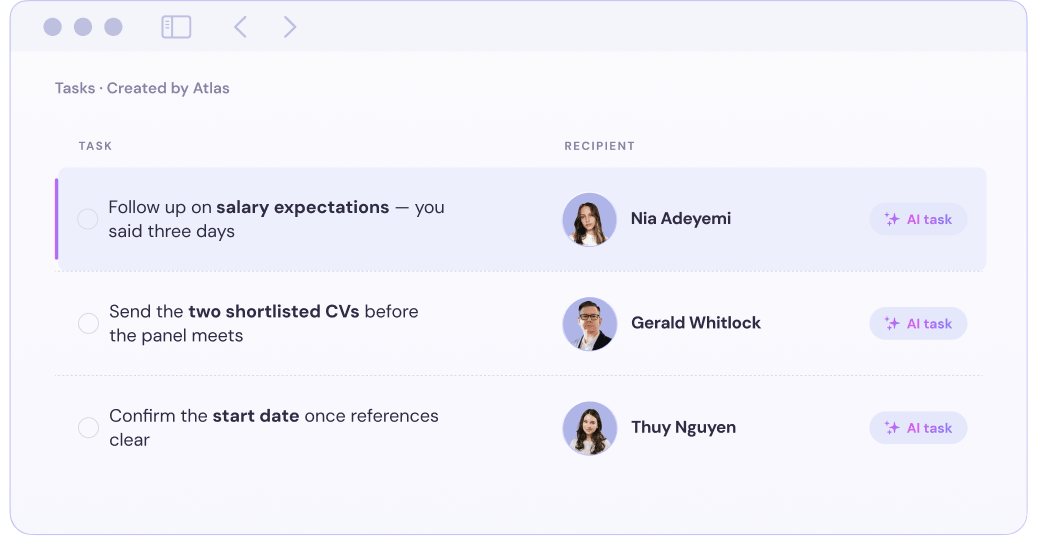
Turn conversations into next actions
Capture calls automatically and turn every commitment into a clear, timely follow-up task for your team.
-
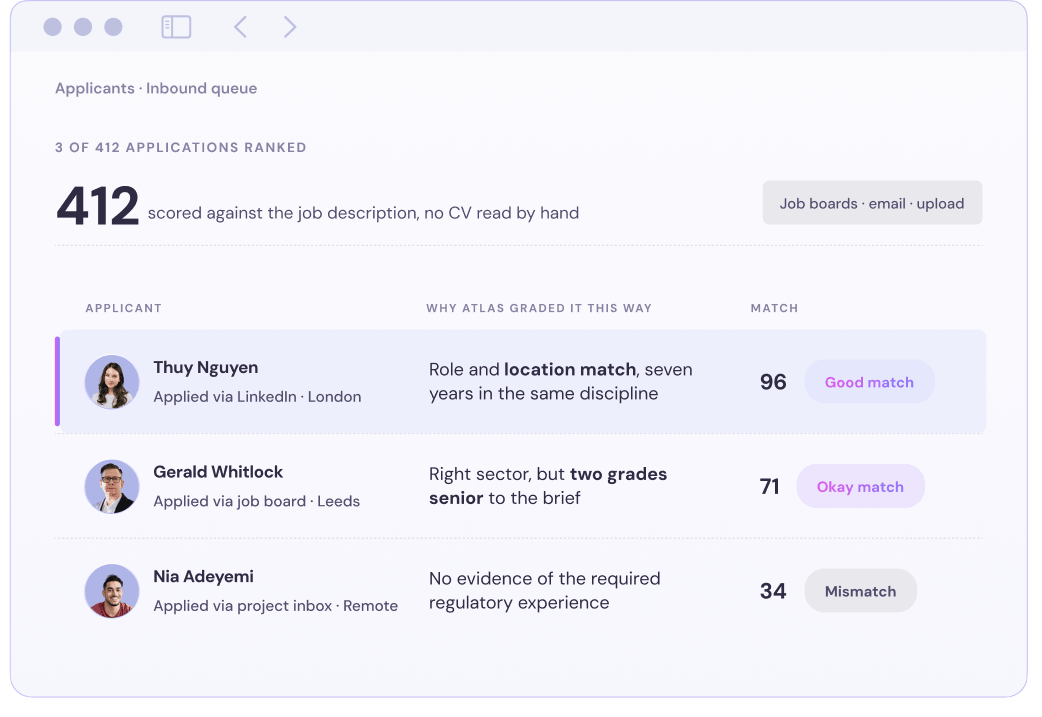
// Applicants
Triage applicants without database clutter
Automatically grade incoming applicants with clear reasoning while keeping unapproved profiles outside your main database.
-
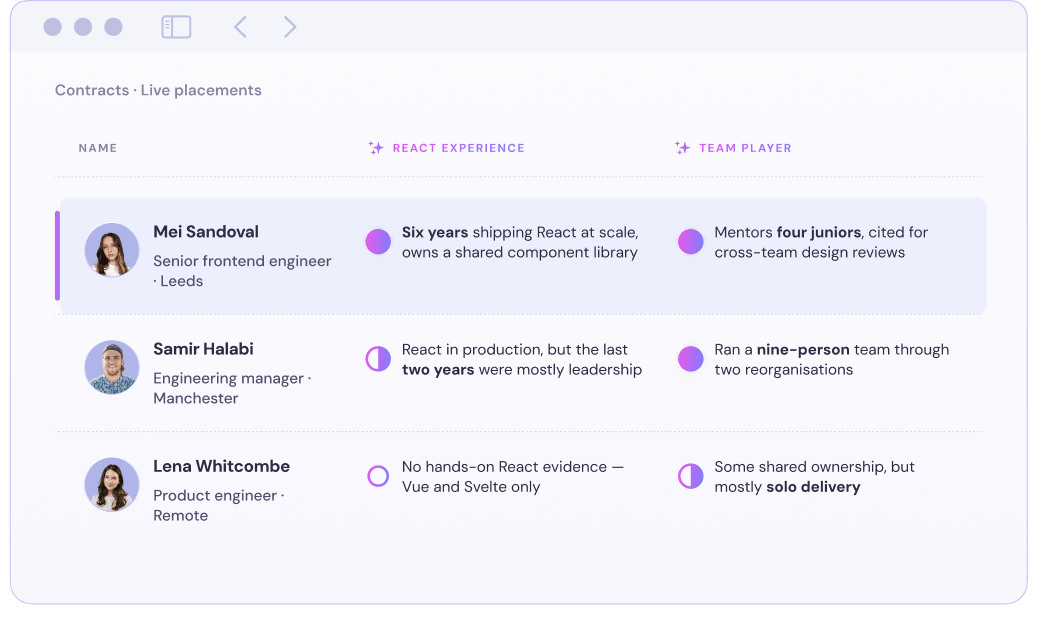
// Magic Columns
Score candidates against your criteria
Evaluate every candidate against your own competencies, instructions and scoring system using flexible AI-powered columns.
-
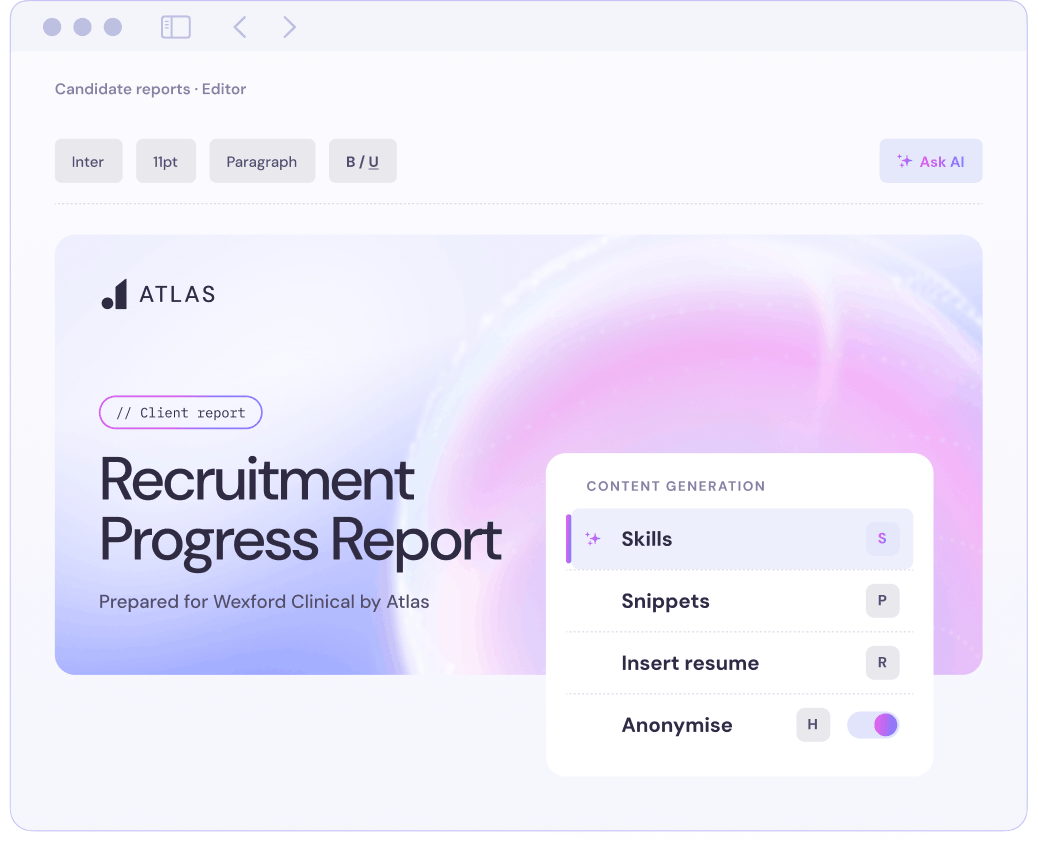
// Candidate Reports
Create polished candidate reports
Turn complete profiles, meeting notes and conversations into polished, client-ready documents.
-
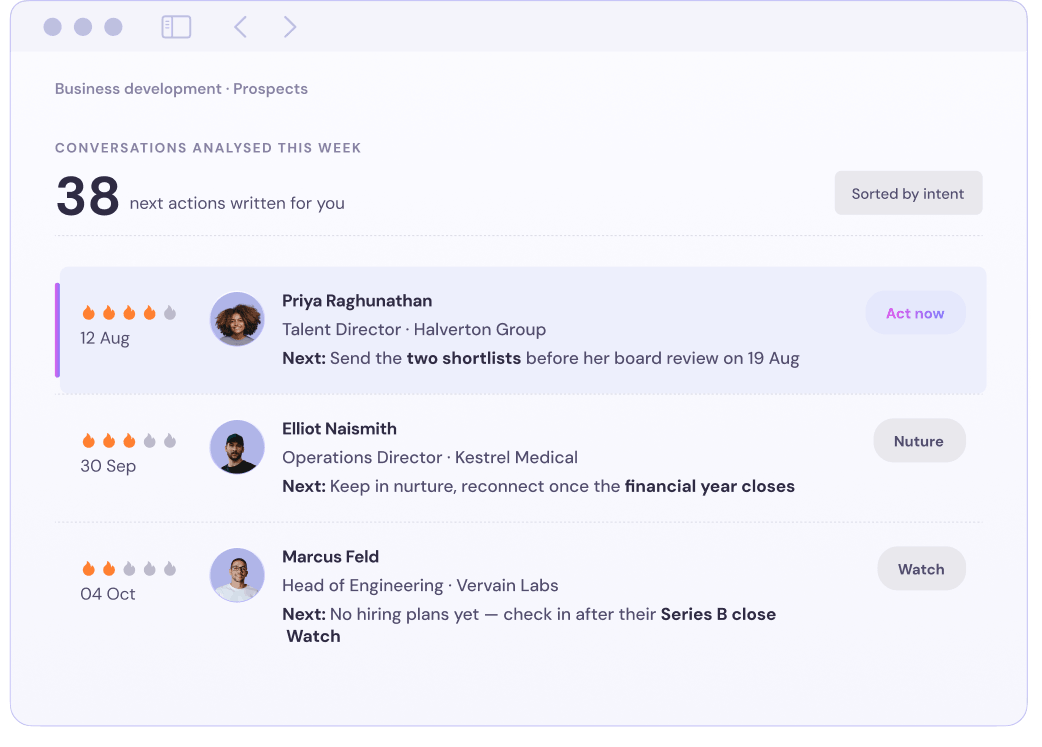
// Opportunities
Focus on opportunities most likely to convert
Track every interaction, assess urgency and prioritise opportunities using an automatically updated likelihood of winning.
-
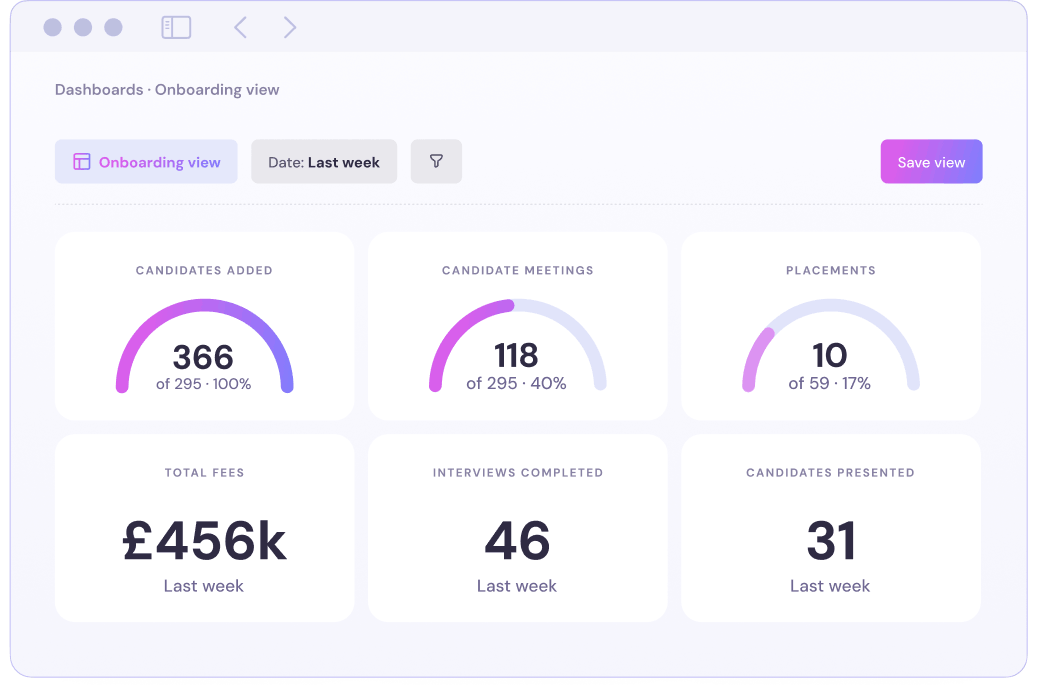
// Dashboards
See performance and pipeline in real time
Track performance, fees, placements and conversion ratios through live dashboards with custom views and filters.
-
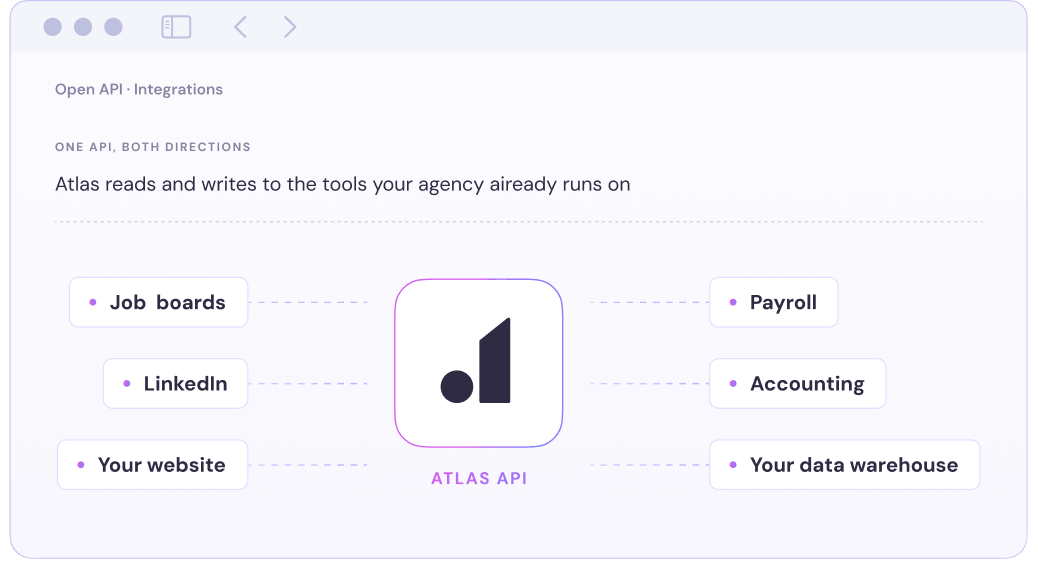
// Open API + Integrations
Connect Atlas to the tools you use
Connect external tools and custom workflows through Atlas’s public API and growing library of native integrations.
-
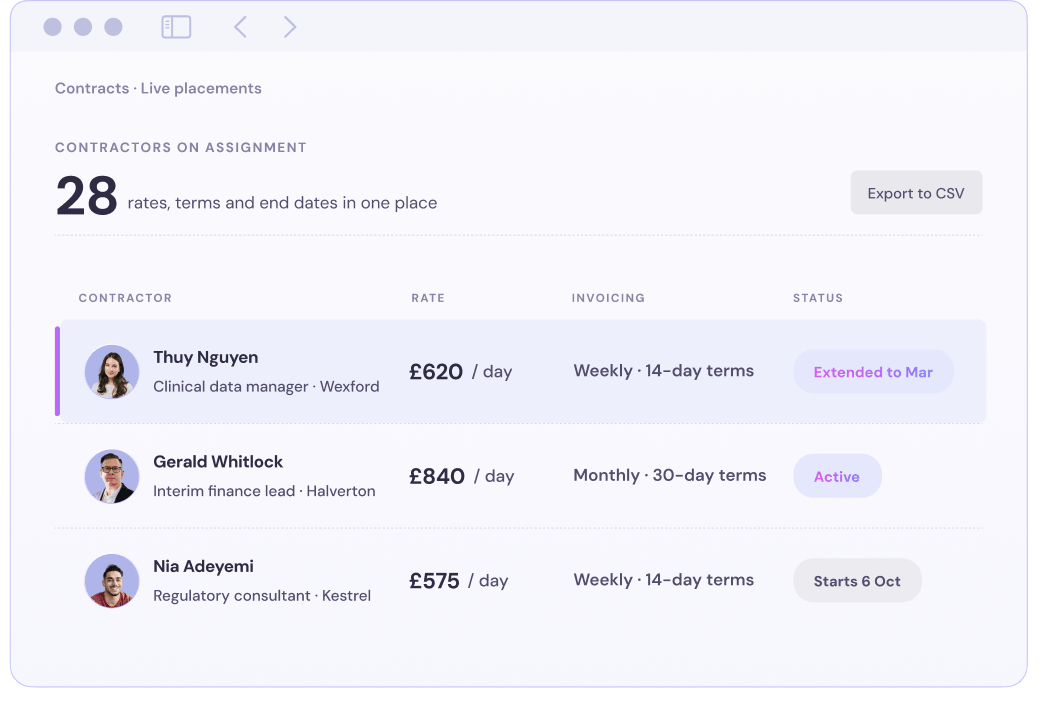
// Contract Management
Manage every placement in one platform
Handle permanent and contract placements with flexible rates, approvals, expenses and automatic status updates.
-
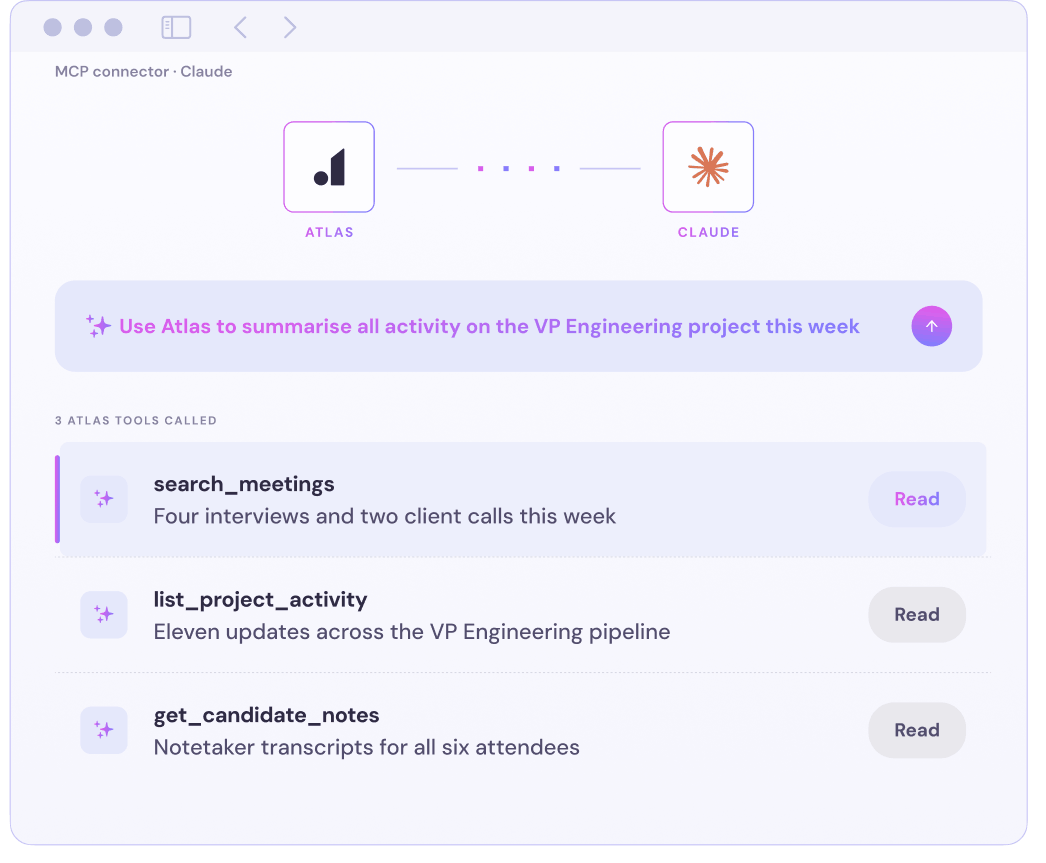
// Claude Connector
Ask Claude anything about your Atlas data
Get answers across candidates, projects, companies, meetings and transcripts without manually searching through records.
Pricing, side by side
Atlas starts at $120 per user per month on an annual commitment paid up front, with AI usage included. Magic Credits will unify visibility of AI consumption across the platform.
Loxo publishes Core at $149 per user per month and Professional at $199 per user per month, both annual. The distinction matters: Core is the ATS, CRM and natural-language search. Loxo Source and the agent workforce — the capabilities the platform is marketed on — require Professional at $199, plus credit consumption, with Boost multipliers priced separately for heavier desks.
The practical comparison is $120 with AI included, against $199 plus consumption for comparable capability. Loxo’s Core tier is cheaper than its Professional tier, but it is not the product Loxo advertises.
Migrating from Loxo to Atlas
Loxo is one of the most common systems our customers move from. We’ve completed well over 50 Loxo migrations, and Atlas’s VP Delivery has completed 300+ large-scale migrations before joining Atlas.
How it works:
- We analyse how you use Loxo. Before anything moves, we look at what’s in your database and how your team actually works: which fields matter, what’s been repurposed and what’s no longer used.
- We map your data into Atlas together. We agree with you where everything should land, so your records make sense in Atlas from day one.
- We test. You check your own data in Atlas before you switch over.
- We train your team. Your recruiters learn Atlas on their own data, not a demo database.
Preserving unstructured history matters more here than in a conventional migration, because that history is exactly what Total Memory operates on afterwards: a migration that carries records but drops notes, call logs and activity context discards the asset the platform is built to exploit. Ask any vendor, including Atlas, for a migration scope that names unstructured data explicitly.
The numbers behind the switch
-
// Garfield Stephers
80%less time spent on CV formatting
-
// Pace Global
30% +more candidates and roles handled
-
// Aym Recruitment
150%revenue growth after adopting Atlas
-
// Ethiq
200%of annual billing target achieved
-
// Tech Valley Recruitment
30 minsaved per candidate report
-
// Globus Search
4×faster candidate sourcing and updates
The verdict
Loxo is a serious platform with a serious asset. Fourteen years, an owned talent graph, in-house models and $115M of growth capital are real, and for agencies whose binding constraint is market reach, Loxo is the better answer.
Most agencies are not constrained by reach. They are constrained by the fact that their firm already knows the right people and cannot retrieve what it knows, and that their consultants lose a third of the week to admin nobody assigned. Those problems are solved by architecture, not by database size. Atlas was built around them from the first line of code, puts around 40% of its team into continuing to build, and ships AI that has been running in production long enough to be trusted.
Loxo added AI to a recruitment platform. Atlas built a recruitment platform on AI. Over a three-year contract, that is the difference that compounds.
// See Atlas in action
Bring a live role. Book a 30-minute demo and we will run it in Atlas against your own data — not a sandbox, not a slide.


