// Recruitment Technology, Recruitment Strategies
Your Placement Pipeline Stages Are a Mess. Redesign Them From Scratch
Published: 12 October 2026,
8 min to read
The bottom line
Most agency pipelines were never designed. They accumulated one stage at a time as staff churned and clients asked for visibility. What is left mixes real milestones with tasks nobody tracks.
Map the process on paper with the people who work the desk. Then cut back to the stages that change a decision. Everything else belongs in a task list or a note.
Where agency pipeline stages actually come from
Ask two consultants on the same desk what submitted means. One says the CV went to the client. The other waits until the client confirms they read it.
That gap is where a recruiting pipeline stops working as a management tool. The board still moves and the weekly numbers still get reported, but nobody can act on either with any confidence.
Atlas research puts a number on the drift: 22.22% of agencies say their processes are defined but followed inconsistently. Another 13.89% run on process that is mostly informal.
Every agency also has one stage that exists because a client asked for it in 2019. Nobody since has felt brave enough to delete it.
Why do recruitment pipeline stages accumulate instead of getting designed?
Because nobody owns the board. Stages arrive from four directions, and not one of those directions is a design decision.
The cost lands first as admin. Recruiters maintain a record of the work alongside the work itself. UK recruiters lose 17.7 hours per vacancy to manual admin tasks, more than two working days per hire.
Then adoption slips. Consultants keep a private version of the truth in a spreadsheet. The board becomes something they tidy on Friday if there is time.
Stage sprawl is usually a symptom of a recruitment tech stack that grew by accretion rather than by plan. It also sits underneath most failed CRM adoption at recruitment agencies. A system that records work nobody values gets used at the minimum.
Every agency has one spreadsheet that a single person understands and nobody is allowed to delete. Pipeline stages work the same way.
- A client wanted visibility, so somebody added a stage named after that client’s internal process
- A manager needed an activity number for a Monday meeting, so a task became a column
- A consultant left, and the two stages only they used stayed behind
- A migration carried old stages into a new system that already handled the same step
What should a stage in your recruiting pipeline actually represent?
A stage should represent a decision that changed hands. Once responsibility for the next move passes to the client or the candidate, you have a milestone worth tracking.
Four questions settle almost every argument about whether a stage belongs on the board.
Chasing a reference is a task. Reference received is a milestone. The first belongs in a to-do list. The second belongs on the board. Mixing them is what makes stage counts meaningless.
Stage bloat is expensive on the candidate side too. 28% of jobseekers have dropped out of a hiring process altogether. Slow communication and a process that ran too long were among the reasons.
Fewer stages, worked properly, protect candidate control. Qualified candidates rarely wait while an agency decides which of its five submission stages applies to them.
- Has responsibility for the next move passed to somebody else?
- Would you work the candidate differently on either side of this line?
- Would two consultants place the same person here without discussing it?
- Does anyone make a decision from the number of candidates sitting in it?
How do you map the process before touching your CRM configuration?
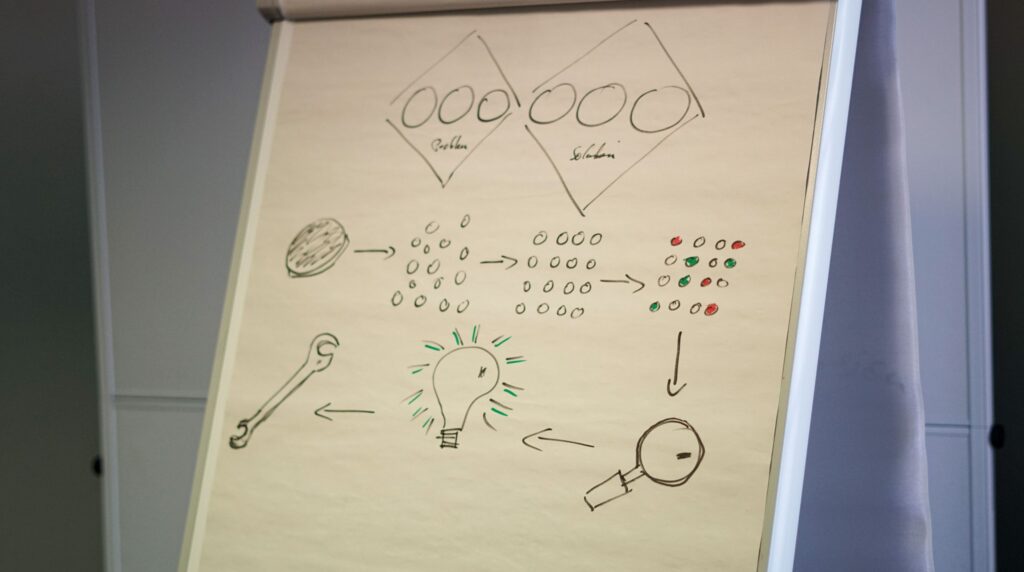
Start on paper, with the consultants who run the desk, working backwards from a placement that actually happened. Configuration comes last, once the map is agreed.
Most perm desks land on six to eight stages. Contract desks need their own board. A finisher coming to the end of an assignment behaves nothing like a candidate on a longlist. Extensions and rebate periods carry milestones of their own.
Resist the urge to model the client’s internal process. Their feedback loop sits outside your control. Track it as one stage with a date attached, then chase against the date.
Executive search is the exception that earns extra stages. Longlist, shortlist, client interview rounds, and offer are genuine decision points on a retained assignment. That is why executive search reports mirror the board rather than the task list.
The requirements document usually gets written after the contract, which is a strange order to do it in. Pipeline configuration has the same habit, and this is the step that fixes it.
- Take four recent placements and list every point where somebody had to decide something
- Ask each consultant which stages they use in practice, then compare that with what the system offers
- Label every existing stage as a milestone or a task, and flag anything that exists only for reporting
- Rebuild the board from the milestones and move the rest into tasks and notes
Which numbers finally work once your placement pipeline is clean?
The ratios your managers already ask for. Once every stage marks a decision, time-to-send and offer acceptance rate mean the same thing across the whole team.
Clean stages hold only if the system maintains them. That is the argument for an AI-powered ATS that keeps the board current. A job pipeline is built by drag and drop, and candidates move with a right-click. The platform advances them automatically when interest shows up in a connected email or phone channel. Atlas is an AI-powered recruitment platform that uses agentic AI to strip admin out of the workflow. The board reflects reality without anyone maintaining it by hand.
Reporting follows from that. Recruitment dashboards filter by consultant or stage. Funnel conversions and pipeline health become something a manager reads rather than assembles.
Capacity is where the redesign shows up commercially. Garfield Stephens moved from five to eight live roles per recruiter up to fifteen or twenty. That is a jump of more than 200% in role capacity, earned once the admin behind each role stopped landing on a person.
- Time-to-send shows whether the desk is slow or the market is thin
- Submission-to-interview ratio shows whether shortlists match the brief
- Offer acceptance rate shows where candidate control is slipping
- Stage aging shows which live roles are quietly dead
Frequently asked questions (FAQs) on redesigning placement pipeline stages
Most perm desks run well on six to eight, and contract desks usually need fewer on a separate board. The count matters less than the test applied to each stage: it should mark a decision that changed hands. If a stage never changes what a recruiter does next, it is reporting rather than pipeline.
A stage records where responsibility currently sits. A task records work somebody still has to do. Chasing a reference is a task, while reference received is a stage. Keeping tasks off the board makes stage counts comparable across a team.
No. A contract desk tracks assignment starts, extensions, rebate periods, and finishers coming available. None of those exist on a perm board. Forcing both through one set of stages makes consultants misfile candidates. Every report built on those stages inherits the compromise.
Reduce what they have to update, then automate what remains. Stages that map to real decisions get updated, because recruiters find them useful. Stages that exist for reporting get skipped. An AI-powered CRM that captures calls and emails and advances candidates on its own removes most manual updating entirely.
Some of it, and the trade is usually worth making. Map old stages onto new ones before you switch. Year-on-year comparisons then survive at the level that matters, such as sent, interviewed, offered, and placed. Granular history from stages nobody applied consistently was never reliable anyway.
In one stage with a date attached, rather than a run of stages modeling the client’s internal process. You control the chase and not their decision cycle. Record when the ball moved to them, then measure how long it stays there. That single date supports an account conversation better than five client-facing stages.
The pipeline your team stops having to maintain
Stage discipline in a recruiting pipeline fails for a predictable reason. Updating a board produces no billings, so it loses to every phone call. The data degrades until nobody trusts the numbers.
Agentic AI closes that gap by doing the recording in the background. It reads the calls and emails that already happened and updates the record. The candidate moves when a real decision lands rather than when somebody remembers. Atlas is built on that mechanism, and a redesigned set of stages stays accurate a quarter later.
If your board carries stages nobody can defend, an hour with a pen and your team is time well spent.