










// Software Comparisons
Ultimate Guide to the Best Contract Management Software for Recruiters in 2026
Published: 29 June 2026,
21 min to read
Contract recruitment moves faster than permanent hiring. Recruiters are managing rolling start dates, contract extensions, billing cycles, and multiple client engagements at the same time. For staffing agencies and contract recruiters, keeping track of contractors, placements, and revenue across dozens or even hundreds of active agreements quickly becomes complex.
Traditional recruitment tools are often built with permanent placements in mind. As a result, many contract recruitment teams end up relying on spreadsheets, disconnected systems, or manual reporting to track contract pipelines, placements, and gross profit. This makes it harder to forecast revenue, monitor contract movement, and maintain clear visibility across the entire contract portfolio.
That is why many agencies are now turning to contract recruitment software designed specifically for contract staffing workflows. The right contract recruitment ATS or recruiting CRM for contract recruiters can centralize contractor data, manage contract pipelines, track placements, and provide real-time insight into revenue and performance.
In this guide, we compare the best contract management software for recruiters built to support contract staffing agencies.
Top Contract Management Software for Recruiters in 2026
1. Atlas – the Recruitment Platform
2. Pinpoint
3. Liveforce
4. Crelate
5. Manatal
6. Firefish
7. Vincere
8. Bullhorn
1. Atlas – the Recruitment Platform
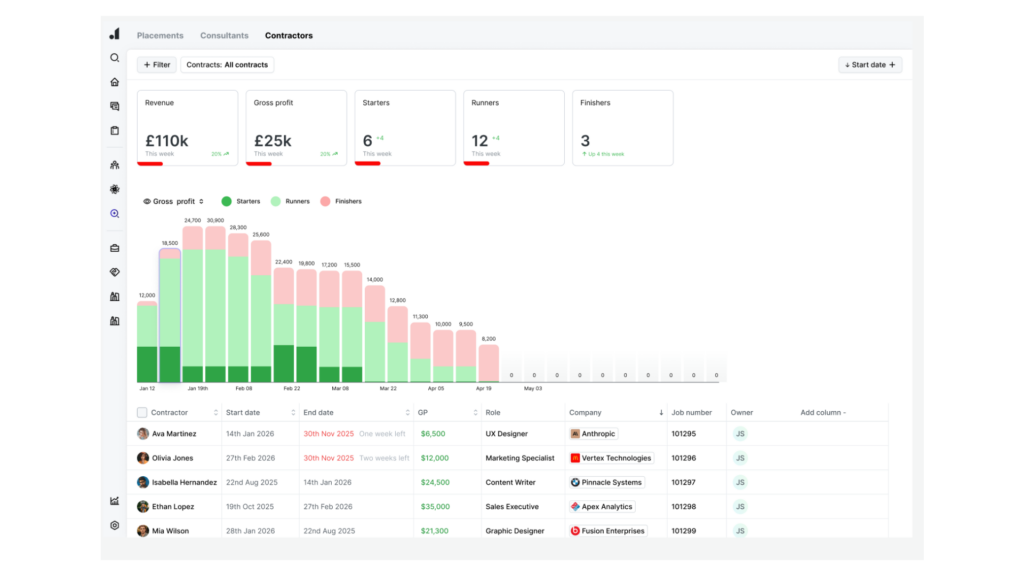
Atlas – the Recruitment Platform is a leading contract recruitment software built specifically for agency recruiters managing high-volume contract desks. With a clean, intuitive interface and no unnecessary clutter, Atlas combines ATS and CRM functionality to help recruiters manage contract pipelines, contractors, and client relationships while minimizing admin.
At the core of Atlas is its AI-powered assistant framework, with agents that continuously analyze your contract data to guide decision-making. From highlighting contracts nearing completion to identifying redeployment opportunities and surfacing high-value clients, Atlas turns contract recruitment into a proactive, data-led workflow. Its business development capabilities help recruiters focus on opportunities that drive contract revenue and pipeline growth.
Customizable dashboards provide real-time visibility into the metrics that matter most in contract recruitment, including starters, runners, finishers, revenue, and gross profit. Recruiters and leadership teams can track performance across the entire contract portfolio, drill into individual agreements, and identify trends early. With structured contract management tools, financial tracking, and AI-powered workflows, Atlas is built to give enterprise agencies full control and clarity over their recruitment operations from contract drafting to automated alerts as their contract volumes grow.
What are the key features of Atlas – the Recruitment Platform?
- Agentic AI workflows
- Contract lifecycle management
- Advanced BD features
- Smart customizable dashboards
- AI candidate search and scoring (Magic Search)
- Outreach campaigns with custom writing styles
- Native calendar with meeting scheduling
- Candidate and executive search reports
- Career page and website job posting
- AI note-taker
- Reports and analytics
- Browser extension
- Integrations
- Open API
G2 Rating: 4.9/5
Best for: End-to-end enterprise contract management needs for recruiters
Not a great fit for: In-house recruitment
Pricing: Free trial available, book a demo for your pricing
2. Pinpoint
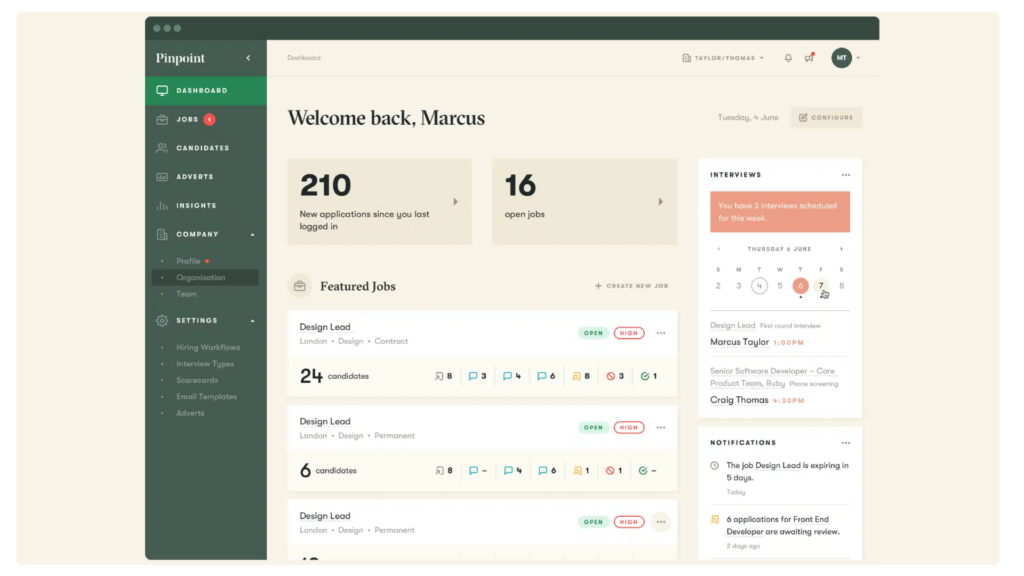
Pinpoint is a talent acquisition platform designed for recruitment teams, with a focus on structured hiring workflows, collaboration, and compliance. It can support elements of contract recruitment by providing clear visibility across candidate pipelines and hiring processes.
The platform offers customizable workflows, candidate tracking, and automated communication tools that help teams manage applicants across multiple roles. For contract recruitment scenarios, this can support managing short-term hiring needs, coordinating with hiring managers, and maintaining consistency across repeat contract roles.
Pinpoint also includes reporting, analytics, and integrations with tools like email and calendar systems, allowing teams to track hiring activity and improve decision-making. Its structured approach makes it suitable for organizations that need a clear, compliant hiring process, including those managing contract or temporary hiring alongside permanent recruitment.
What are the key features of Pinpoint?
- Candidate pipeline management
- Interview scorecards
- Meeting scheduling
- Background checks
- Outreach campaigns
- Career site builder
- Reports and analytics
- Browser extension
- Integrations
G2 Rating: 4.7/5
Best for: Collaborative workflows, compliance-reliant recruitment
Not a great fit for: High-volume pipelines, BD-heavy workflows
Pricing: No free trial available, book a demo for your pricing
3. Liveforce
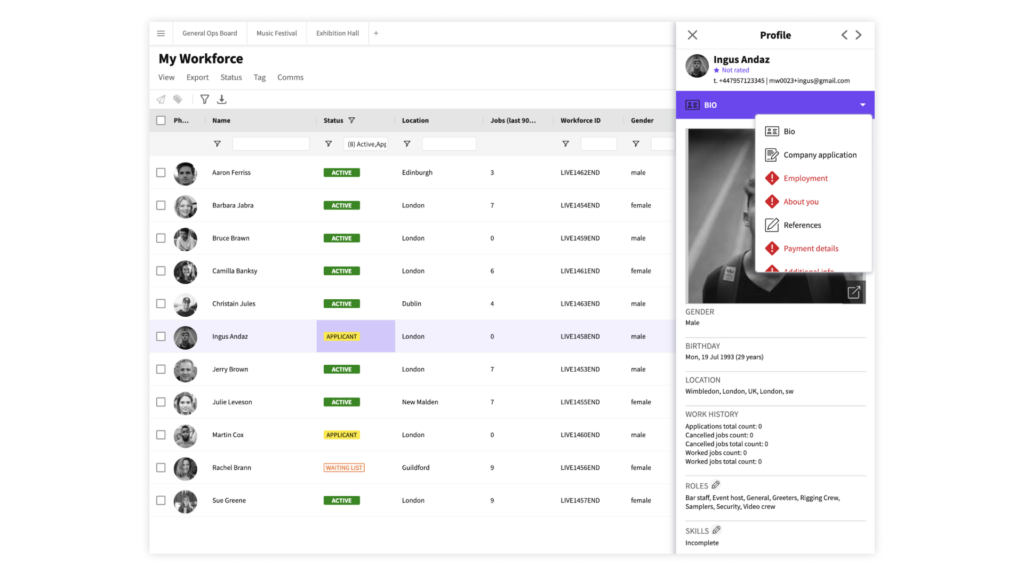
Liveforce is a recruitment platform built for staffing agencies. It focuses on helping recruiters manage both candidate pipelines and client relationships while reducing the need for disconnected tools.
The platform places a strong emphasis on automation and engagement, allowing recruiters to streamline outreach, follow-ups, and day-to-day workflow management. For contract recruitment, this supports maintaining momentum across active roles, keeping candidates engaged, and ensuring consistent communication with clients.
Liveforce also centralizes recruitment data, giving teams visibility into pipeline activity, recruiter performance, and client interactions. While it supports general staffing workflows, its value in contract recruitment comes from helping teams stay organized, responsive, and aligned across ongoing placements.
What are the key features of Liveforce?
- Candidate profile management
- Employment type customization
- Scheduling boards
- Custom fee types
- Candidate ratings and notes
- Timesheets and pay reports
- Invoicing
- White-label mobile app
- Open API
G2 Rating: 4.5/5
Best for: Agencies looking to centralize recruitment and communication data
Not a great fit for: Enterprise-level reporting, highly specialized recruitment
Pricing: Free trial available, pricing starts at $80 per user/month
4. Crelate
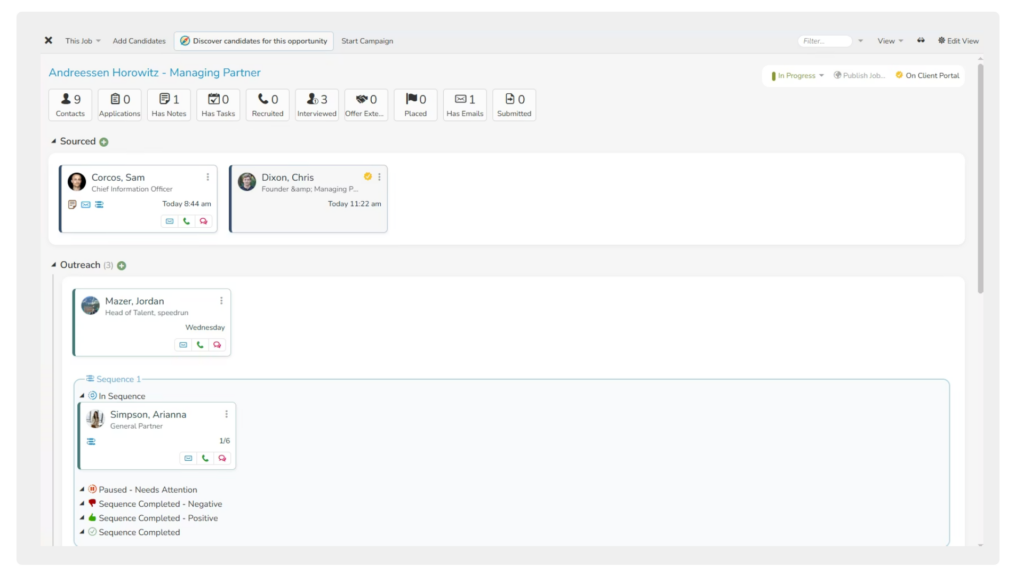
Crelate is a recruiting CRM built for agencies that need to manage both client relationships and candidate pipelines within a single platform. It brings together core recruitment and business development workflows, giving contract recruiters a structured way to handle active roles, contractor pipelines, and client engagement.
Crelate enables teams to organize contacts, companies, and opportunities alongside job and candidate data. Automation features support email and messaging workflows, while real-time analytics and data enrichment help recruiters maintain consistent, informed outreach. For contract recruitment, this supports managing ongoing client demand and keeping multiple roles progressing simultaneously.
The platform is designed to provide a connected view of the entire recruiting lifecycle. By housing both talent and client data in one system, Crelate allows agencies to maintain visibility across placements, track pipeline activity, and manage long-term client relationships tied to contract hiring.
What are the key features of Crelate?
- Business development features
- Candidate and client data management
- Contact and company history management
- Native scheduling tools
- Outreach automation
- Reports and analytics
- Role-based user permissions
- Integrations
- Open API
G2 Rating: 4.4/5
Best for: Agencies looking for legacy workflows in their recruitment systems
Not a great fit for: Modern end-to-end recruitment management
Pricing: No free trial available, pricing starts at $119 per user/month
5. Manatal
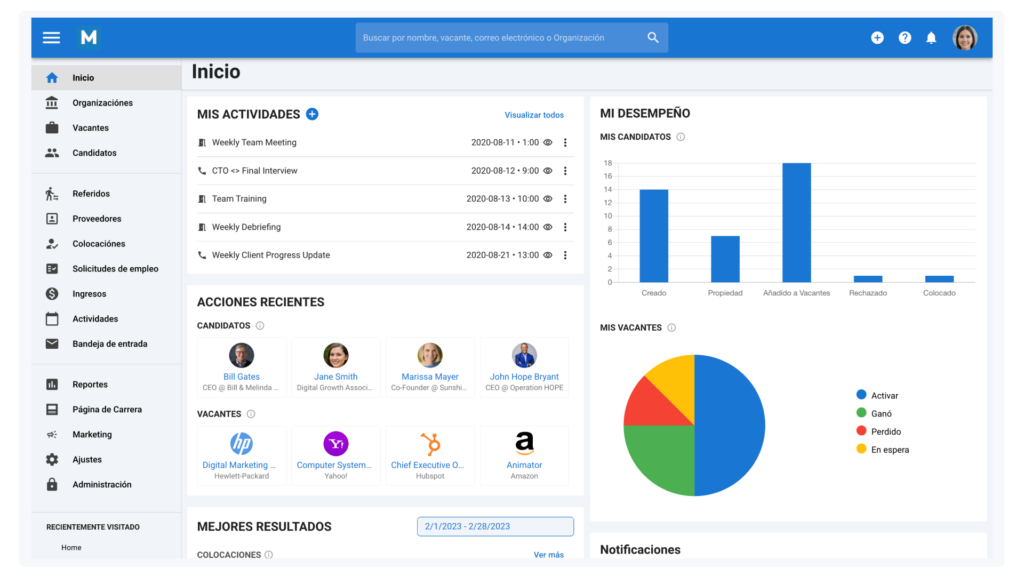
Manatal is a cloud-based recruitment platform designed for agencies that want a straightforward solution. It provides tools for managing client relationships, tracking job orders, and monitoring candidate pipelines within a user-friendly interface. For contract recruiters, this supports day-to-day management of contractor pipelines, helping teams keep track of active roles, candidate progress, and client activity in one place.
Its CRM features support client and contact management, deal pipeline tracking, and collaboration across teams. Recruiters can enrich contact records automatically, monitor deal stages, and create custom workflows aligned with their sales process. In a contract recruitment context, this helps teams manage ongoing client demand and maintain visibility across multiple opportunities.
With built-in analytics, branded client portals, and permissions control, Manatal offers a scalable option for agencies looking to organize their recruitment and business development workflows while maintaining oversight of contract pipelines and placements.
What are the key features of Manatal?
- Candidate sourcing and screening
- Contract management tools
- Custom workflows
- Data enrichment
- E-signatures
- Role-based access
- Dashboards
- Analytics
- Integrations
G2 Rating: 4.8/5
Best for: Teams looking for an affordable starter solution
Not a great fit for: Enterprise-grade workflows or integrations
Pricing: Free trial available, pricing starts at $15 per user/month
6. Firefish
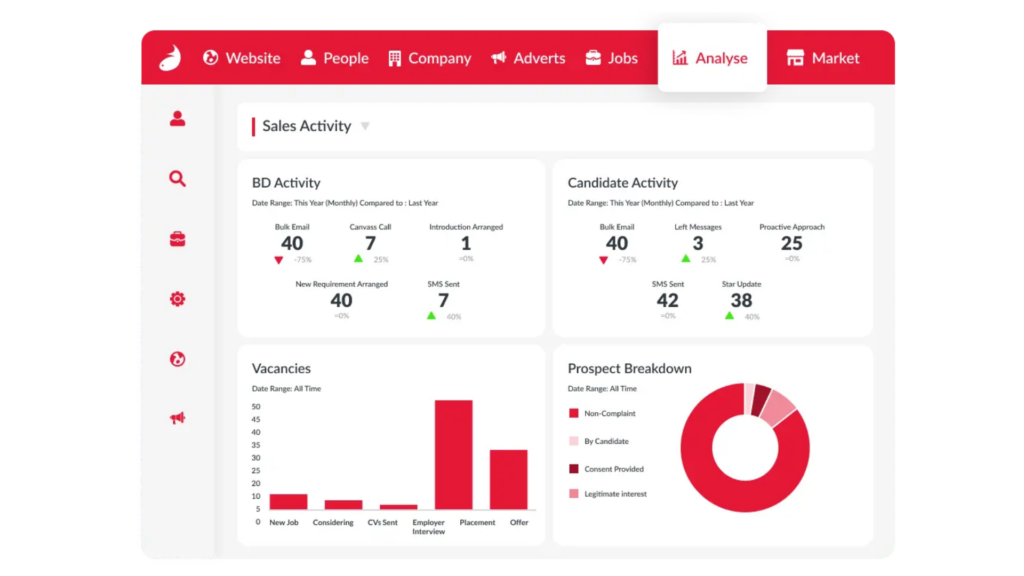
Firefish is a recruitment platform designed to support permanent, contract, and temporary hiring within a single system. It includes features such as candidate matching, job multiposting, interview scheduling, and email management. For contract recruiters, Firefish also offers built-in tools for managing contracts and invoicing, helping teams keep track of placements and associated financial workflows.
A key focus of Firefish is its marketing-led approach to recruitment. The platform provides SEO tools and branded job boards, enabling agencies to attract candidates and promote roles across multiple channels. This can support contract recruitment by maintaining a steady flow of applicants for ongoing and repeat roles.
Firefish is typically used by small to mid-sized agencies looking for a structured platform that combines recruitment and marketing capabilities. While it supports contract workflows, it is often better suited to teams that prioritize candidate attraction alongside day-to-day recruitment operations.
What are the key features of Firefish?
- Candidate matching
- Business development features
- Data enrichment
- Revenue reporting
- Terms management
- Invoicing
- Marketing tools
- Browser extension
- Integrations
G2 Rating: 4.4/5
Best for: Agencies looking for recruitment tools with marketing features
Not a great fit for: Enterprise agencies, outbound-first recruiters
Pricing: No free trial available, book a demo for your pricing
7. Vincere
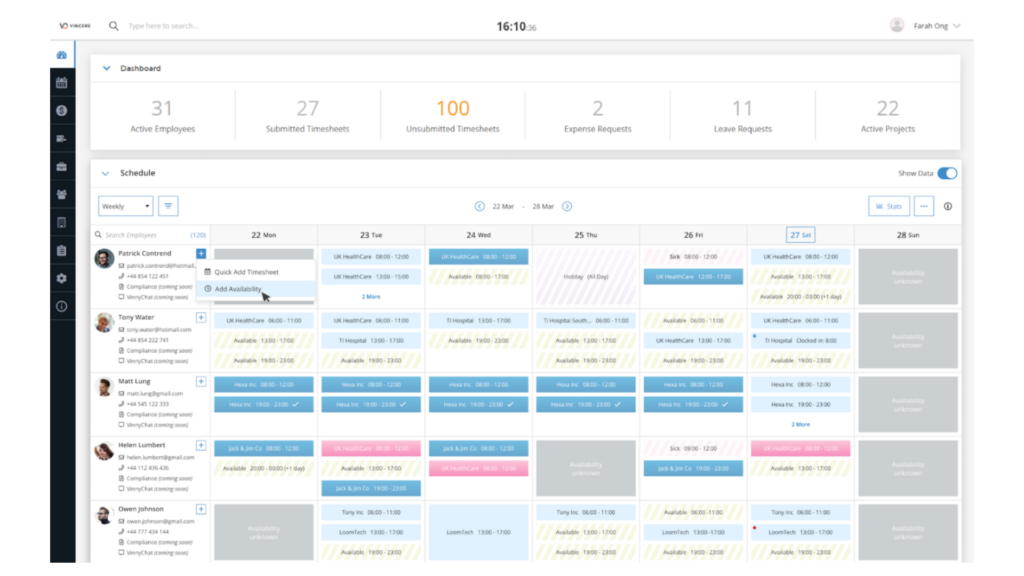
Vincere is a front-to-back office recruitment platform built for staffing agencies that need to manage both recruitment and operational workflows. It combines ATS and CRM functionality with tools for time tracking, invoicing, and reporting, making it particularly relevant for agencies handling contract and temporary recruitment at scale.
For contract recruiters, Vincere supports managing the full lifecycle of contractor placements, from candidate sourcing and client engagement to timesheets, billing, and revenue tracking. Its built-in time management and invoicing features allow agencies to handle contractor hours, generate invoices, and maintain financial oversight without relying on external systems.
The platform also includes candidate search, email and calendar synchronization, and analytics dashboards that provide visibility into pipeline activity and performance. Vincere is typically suited to mid-sized and large agencies managing complex contract operations, where having recruitment and back-office processes connected in a single system can improve efficiency and control.
What are the key features of Vincere?
- Workflow automation
- Candidate search and database management
- Pipeline and job management
- Onboarding automation
- Email and calendar sync
- Billing and invoicing
- Timesheets
- Reports and analytics
- Integrations
- Mobile app
G2 Rating: 4.5/5
Best for: Distributed agencies, seasonal recruitment
Not a great fit for: Solo and small-scale recruitment agencies
Pricing: No free trial available, book a demo for your pricing
8. Bullhorn
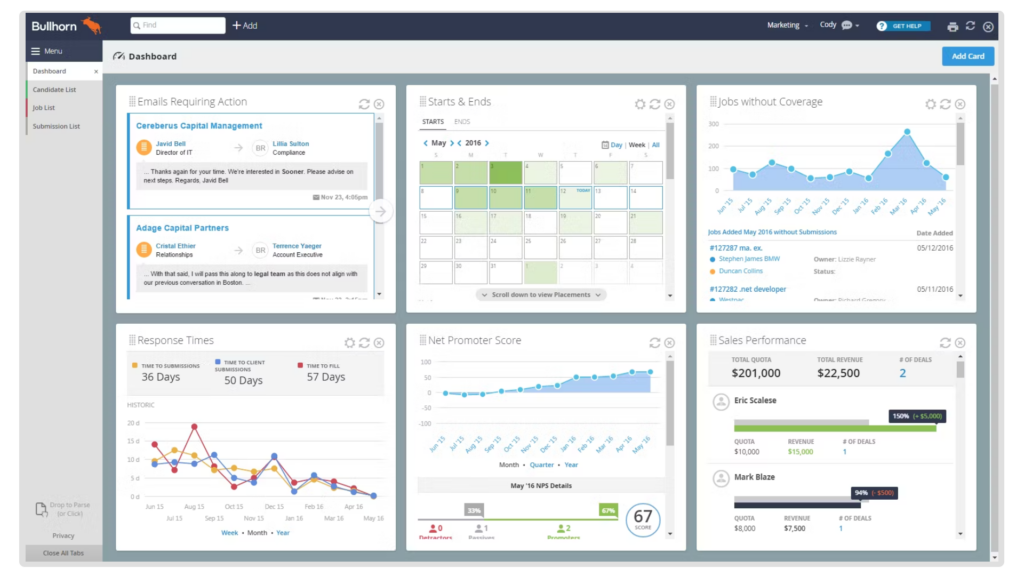
Bullhorn is a recruitment CRM and applicant tracking system built to support staffing agencies with end-to-end workflow management. As a global platform, it combines candidate sourcing, client relationship tracking, sales management, and recruitment operations into a single system. For contract recruitment, this allows agencies to manage contractor pipelines, job orders, and client activity within one environment.
Bullhorn enables recruiters to manage contacts, track communication, and organize job orders and client interactions in one place. Built-in automation supports outreach, follow-ups, and workflow triggers. In a contract recruitment context, this can help teams stay on top of ongoing placements, client demand, and repeat contract opportunities.
Bullhorn is often used in more complex recruitment environments, including contract staffing, though it may require additional setup and onboarding to align with specific contract workflows.
What are the key features of Bullhorn?
- Client and contact management
- Job applicant tracking
- Built-in invoicing
- Workflow automation
- Reports and analytics
- Mobile app
- Integrations
- Open API
G2 Rating: 4.2/5
Best for: Complex, high-volume recruitment workflows
Not a great fit for: Teams looking for streamlined, AI-first recruitment solutions
Pricing: No free trial available, book a demo for your pricing
What is contract recruitment?
Contract recruitment is a hiring model where recruiters place professionals into fixed-term roles for a defined period, rather than permanent positions. These roles are typically tied to specific projects, temporary business needs, or short-term skill gaps within internal and external teams.
You may also hear contract recruitment referred to as:
- Temporary recruitment
- Temp staffing
- Contract staffing
- Contingent workforce recruiting
- Temporary hiring
While the terminology varies, the entire process remains the same. Recruiters source, place, and manage professionals who work for a client organization for a set contract duration. Contractual obligations can range from a few weeks to several months or even years. They often consult with legal and business teams to ensure contract creation and contractual agreements are drafted properly.
Contract recruitment is particularly common in industries that require project-based or rapidly scalable talent, such as technology, healthcare, engineering, finance, and marketing. Instead of committing to permanent hires, companies streamline processes and rely on contract professionals to maintain flexibility while accessing specialized expertise.
For recruiters and staffing agencies, contract recruitment involves managing more than candidate pipelines. Teams often track active contractors, start and end dates, extensions, billing cycles, and contract revenue across multiple clients. Because contracts are constantly starting, finishing, or extending, recruiters need systems that provide clear visibility into contract pipelines, contractor placements, and performance metrics.
What is contract recruitment software?
Contract recruitment software is a category of recruiting technology designed to help staffing agencies and recruiters manage contract hiring pipelines, contractor placements, and ongoing contract performance. Unlike traditional recruiting systems that focus primarily on permanent hires, these platforms are built to support the fast-moving workflows involved in contract staffing.
For contract recruiters, the software acts as a central system for managing key operational data and digital contracts, including:
- Contractor profiles and placement history
- Client accounts and active projects
- Contract execution start and end dates
- Extensions and renewals
- Billing rates, margins, and placement revenue
- Contract visibility across multiple stakeholders
Because contract recruitment involves continuous movement across starters, runners, and finishers, agencies often need real-time visibility into how their contract portfolio is evolving. Modern contract recruitment ATS platforms help recruiters track this activity while maintaining a clear view of both contractor pipelines and client relationships.
Many staffing agencies adopt contract recruitment software to replace spreadsheets and disconnected tools with a single system that supports contract pipeline management, contractor tracking, and performance reporting. To do that, they need an all-in-one solution to create and review contracts, as well as increase recruitment process efficiency across the board.
What to look for in top contract recruitment software?
When implementing contract management software, it’s important to understand what each vendor can potentially do for your staffing agency. While some ATS and CRM solutions offer full contract lifecycle management software features, others do so partially or as add-ons. Here’s a list of capabilities to keep an eye out for when assessing potential contract management platforms and narrowing your options down to the one that suits your agency’s needs.
Agentic Artificial Intelligence (AI)
Contract recruitment software like Atlas uses agentic AI to support recruiters behind the scenes. Instead of only automating tasks, AI agents continuously monitor contract recruitment pipelines, contractor records, and client accounts to surface important insights. For contract recruiters, this means receiving proactive alerts about potential opportunities and risks.
AI agents can flag contracts nearing completion, highlight clients likely to extend engagements, identify candidates ready for redeployment, and surface tasks that require attention. By tracking contractor movement and client demand in real time, AI-powered contract recruitment ATS platforms help recruiters stay informed and act quickly without constantly reviewing dashboards or spreadsheets.
Contract lifecycle management features
Effective contract recruitment software should provide flexible contract management systems that reflect how contract desks actually operate. Recruiters need to track agreements across multiple clients, contractors, and regions while maintaining clear visibility into contract timelines and financial performance.
Leading contract recruitment ATS platforms allow teams to manage the full contract lifecycle, from initial setup to extensions and completion. Recruiters should be able to capture key contracting process data, such as contractor details, end clients, contract types, working schedules, start and end dates, and financial metrics within a structured customer relationship management workflow.
Systems like Atlas also provide visibility into contract movement, including starters, runners, and finishers, alongside revenue and gross profit. This allows leadership teams to monitor portfolio performance, identify trends early, and maintain control across the entire contract lifecycle.
Advanced Business Development (BD) features
Traditional business development workflows are often too manual and generic for contract recruitment. High-volume outreach without clear prioritization can lead recruiters to spend time on low-value opportunities while missing deals that drive real revenue.
Contract management solutions address this by embedding smarter BD capabilities into the platform. Unlike basic document management platforms, these tools help recruiters identify which clients are most likely to generate contract demand based on real-time data.
For contract recruiters, this means prioritizing accounts with active hiring patterns, upcoming contract gaps, or expansion signals. Advanced recruiting software for contract recruiters ensures outreach is targeted, timely, and aligned with revenue opportunities, helping teams focus on the deals that move the contract pipeline forward.
AI-powered candidate search
Finding the right candidates quickly is critical in contract recruitment, where speed directly impacts placements and revenue. Traditional keyword-based search often falls short, especially when recruiters are managing large talent pools across multiple roles and clients.
Modern contract recruitment software uses AI-powered candidate search to go beyond simple matching. These systems analyze skills, experience, contract history, availability, and client requirements to identify the best-fit candidates for each role.
Tomorrow’s contract recruitment platforms use agentic AI to continuously learn from placements and recruiter behavior, improving match quality over time. The result is reduced time to fill, stronger placements, and increased revenue across the contract pipeline.
Built-in meeting scheduling
Managing interviews, client calls, and contractor check-ins is a constant in contract recruitment. Without a centralized system, meetings can easily become disconnected from the roles, clients, or candidates they relate to.
Contract recruitment software should include built-in meeting scheduling that connects directly to the recruitment workflow. Recruiters can schedule meetings within the platform, ensuring every interaction is linked to the relevant job, client, or contract.
A native scheduling tool within a contract recruitment ATS helps ensure no touchpoint is missed, keeps timelines on track, and maintains a clear record of every interaction tied to ongoing contract placements.
AI note-taker
In contract recruitment, recruiters are constantly speaking with clients and candidates, often managing dozens of conversations at once. Capturing and recalling every detail manually can quickly become a bottleneck.
An AI-powered note-taker within contract recruitment software automatically records, summarizes, and stores key information from calls, meetings, and interactions. This ensures that important context, such as candidate preferences, client requirements, and contract details, is always captured and accessible.
Instead of relying on memory or scattered notes, teams using a contract recruitment ATS can keep all communication data centralized, reducing admin time while improving placement quality and client engagement.
Enterprise dashboards
Performance visibility is critical in contract recruitment, where small shifts in contract activity can directly impact revenue. Recruiters and leadership teams need to understand what is driving the pipeline, from placements and contractor activity to margin and deal flow.
Leading contract recruitment software provides enterprise dashboards that surface the metrics that matter most. Teams can track performance across contract pipelines, monitor key trends, and customize dashboards to reflect their specific goals and workflows.
For contract recruiters, flexibility is key. Advanced contract recruitment platforms allow users to tailor dashboards to their role, while also building leaderboards to gamify performance. This creates greater accountability, clearer insights, and a stronger focus on the activities that move contract revenue forward.
Mobile app
Contract recruiters are rarely at their desks. Between client meetings, candidate interviews, and on-site visits, important information is often captured on the go and easily lost if not recorded properly.
A mobile app built into contract recruitment software allows recruiters to capture notes, update records, and manage their pipeline from anywhere. Whether logging candidate feedback or client requirements, every interaction can be recorded in real time without relying on manual note-taking. The result is more complete data, better collaboration, and no missed details across contractors, clients, or active contracts.
What types of contract management software solution integrations are there?
Productivity improvement integrations
Contract recruiters need to move quickly while managing multiple candidates, clients, and contracts at once. Productivity integrations extend the value of contract recruitment software by connecting it with everyday tools used to organize and execute work.
Integrations with platforms like Google Workspace, outreach tools such as Expandi, and flexible Open APIs allow recruiters to streamline communication, automate workflows, and sync data across systems.
Email sync integrations
Email remains central to contract recruitment, with ongoing communication between recruiters, candidates, and clients. Without proper tracking, important conversations can become fragmented or lost across inboxes.
Email sync integrations connect contract recruitment software with providers like Microsoft Outlook and Gmail, automatically logging all communication within the platform. This ensures every email is tied to the relevant candidate, client, or contract record.
Accounting integrations
Accurate and timely accounting is critical in contract recruitment, where revenue depends on contractor billing, margins, and ongoing placements. Managing this manually can lead to delays, errors, and poor financial visibility.
Accounting integrations connect contract recruitment software with tools like Xero, allowing recruiters to manage fees, invoices, and financial reporting directly within their platform. Contract data flows seamlessly into accounting systems, reducing duplication and manual input.
Phone and messaging integrations
Contract recruiters spend a large portion of their day on calls and messaging candidates and clients. Keeping track of every interaction is essential to avoid missed details or miscommunication across fast-moving contract pipelines.
Phone and messaging integrations connect contract recruitment software with tools like Ringover, RingCentral, and WhatsApp, ensuring every conversation is logged and linked to the right record. Calls, messages, and notes are automatically captured within the platform.
Video call integrations
Video interviews are a core part of contract recruitment, especially when screening candidates or aligning with clients quickly. Without proper tracking, valuable insights from these conversations can be lost or underutilized.
Video call integrations connect contract recruitment software with tools like Zoom, Microsoft Teams, and Google Meet, allowing interviews to be recorded, transcribed, and stored within the platform. Transcripts can then be parsed and linked to candidate or client records automatically.
Open API integrations
Beyond native integrations, strong contract recruitment software should offer an open API that allows agencies to extend their tech stack even further. While built-in integrations cover common tools, they cannot account for every workflow or system used by growing recruitment teams.
An open API enables contract recruiters to connect their ATS or CRM with custom tools, internal systems, or specialized platforms. This is particularly valuable in contract recruitment, where teams may need to link financial systems, data warehouses, or bespoke reporting tools.
Choosing contract management software for your needs
Finding the best contract recruitment software can be challenging, especially when managing complex pipelines, contractor relationships, and revenue streams across multiple clients. Here are a few questions that can help you as you assess vendors:
- Does the platform support both ATS and CRM functionality for contract recruitment?
- Can it track starters, runners, and finishers across your contract pipeline?
- Does it provide real-time visibility into revenue, margins, and performance?
- How strong are its AI capabilities for candidate matching and workflow automation?
- Can it help prioritize business development opportunities based on revenue potential?
- Does it offer customizable contract management processes and data fields?
- How does it integrate with your existing tools?
- Can recruiters manage workflows effectively on mobile while on the go?
- Does it provide customizable dashboards and performance tracking for your team?
- Does the vendor have a proven track record of satisfied recruitment agencies?
- Can you get a free trial to test its capabilities without commitment?
Drive revenue with the best contract recruitment software in 2026
Contract recruitment is complex by nature. Managing contractors, clients, timelines, and revenue across a constantly moving pipeline requires precision, visibility, and speed. Without the right systems in place, teams often rely on manual processes that slow them down and limit growth.
The good news is that modern contract management tools have evolved to meet these challenges. With the right contract recruitment ATS or recruiting CRM for contract recruiters, agencies can streamline workflows, improve visibility, and make better commercial decisions.
Platforms like Atlas – the Recruitment Platform take this a step further by eliminating administrative overhead through AI-powered workflows. Instead of spending time on manual tasks, contract recruiters can focus on what drives revenue: placing candidates, building client relationships, and growing their contract pipeline with confidence.