










// Recruitment Technology, Business Development
Predictive Analytics in Recruitment: From Reactive to Proactive BD
09/04/2026
11 MIN
Every recruiter knows the frustration. You spend Tuesday morning calling fifteen prospects who seemed interested last month, only to discover twelve have already hired someone else. Meanwhile, your genuinely hot opportunities sit buried in a pipeline that looks identical to the dead ones.
This broken guesswork approach costs agencies millions in wasted hours and missed placements. Predictive analytics in recruitment changes everything by turning your client interactions, candidate conversations, and deal progression into intelligence that actually predicts outcomes.
Instead of manually chasing every lead, you get clear signals about which opportunities deserve your attention today and which clients are genuinely ready to move. The agencies winning in this market have stopped treating recruitment like a numbers game and started treating it like an intelligence operation.
They use data to spot the patterns humans miss, predict which placements will close, and focus their energy where it matters most. When your platform remembers every conversation and scores every opportunity in real-time, you stop playing catch-up and start getting ahead of the market.
Traditional Recruitment Data Analysis Falls Short
Your spreadsheets tell you what happened yesterday. Predictive analytics in recruitment tells you what will happen tomorrow. The difference determines whether you place three candidates this month or thirteen.
Traditional recruitment tracking focuses on lagging indicators. Days to fill. Number of interviews. Cost per hire. These metrics help you write reports, but they do not help you make better decisions when the phone rings at 3 PM with a new urgent role.
Implementing predictive analytics into your workflow flips this backwards-looking approach on its head. Instead of counting completed placements, it identifies future outcomes and which opportunities in your pipeline will convert before you invest weeks chasing dead ends. The system analyzes conversation patterns, response times, and engagement levels to surface the candidates most likely to accept offers and the clients most likely to move forward.
Let’s start by unpacking and understanding predictive analytics from a more practical perspective. Your current recruitment processes might track that Client A takes an average of three weeks to make hiring decisions. Predictive analytics tells you that Client A responds to your emails within two hours when they are serious about a role, but takes over 24 hours when they are still exploring options. This pattern recognition happens across hundreds of data points that you cannot manually track to identify candidates in a timely manner.
Contributing to Improved Candidate Experience
The same principle applies to candidate behavior. Traditional metrics tell you that Software Engineer B has five years of experience and wants a 20% salary increase. Predictive analytics identifies that candidates who engage with follow-up questions within four hours of initial outreach have an 80% higher likelihood of progressing through your process compared to those who respond after two days.
This shift from descriptive to predictive transforms your daily decisions. Instead of hoping your outreach will work, you focus energy on opportunities the data indicates will succeed. With repeat use, your data lets you develop predictive models tailored to your recruitment agency. Then, your pipeline turns into a ranked priority list of the most promising candidates, not a collection of maybes.
The recruitment firms winning today use predictive analytics capabilities to eliminate guesswork but still rely on human judgment when deciding which deals to ultimately pursue. Recruitment firms like Executive Integrity and Attis have already witnessed positive ROI from embracing predictive analytics in their operations. They know which placements to push and which to park before investing time in lengthy processes that may lead nowhere.
Shifting from Legacy Forecasting to Data-Driven Decision Making
Your pipeline spreadsheet tells you nothing about deal momentum. You see a list of opportunities with dollar amounts, but which ones will actually close this month? Traditional forecasting relies on gut feelings and past data that your team may forget to maintain, costing your firm valuable insights.
The problem runs deeper than stale data. When you manually track opportunities without predictive analytics tools, you miss the behavioral signals that predict success. Did the hiring manager respond to your follow-up within two hours or two days? Are they asking specific questions about start dates or still talking in hypotheticals? These micro-interactions reveal deal health better than any status dropdown.
Manual tracking creates another issue: inconsistent data collection across your team. One consultant logs detailed notes after every client conversation. Another updates deals once a week with minimal details. Your pipeline accuracy depends entirely on individual discipline, which means your ability to forecast future outcomes is only as reliable as your least organized team member.
This inconsistency compounds over time and erodes your team’s recruitment strategies. You cannot identify patterns across successful placements when half your historical data is incomplete. Predictive analytics relies on historical data to predict future outcomes for your pipeline.
And without reliable historical data, you cannot build predictive models that help you prioritize opportunities or allocate resources effectively. Your team operates on instinct instead of insight, missing the early warning signs that separate winning deals from time wasters.
To make the most out of these tools, you’ll need to build historic hiring data, which can then be used to deliver actionable insights across your team automatically.
How Predictive Analytics Builds Relationship Intelligence
Traditional recruitment relies on gut instincts and personal connections. You remember which clients respond well to direct calls versus email. You track which candidates prefer text updates over messages. You notice patterns in successful placements. The problem is that this tribal knowledge stays locked in individual heads.
Predictive analytics in recruitment changes this completely. Instead of hoping your team remembers every client preference and candidate behavior pattern, the system captures and analyzes every interaction. It knows that Client A always takes three weeks to make decisions, but moves fast once they commit. It recognizes that candidates in certain sectors ghost after salary discussions but stay engaged when you lead with career progression.
The real power emerges when your recruitment tool connects these relationship insights with deal momentum. Your system starts flagging when a normally responsive client goes quiet for five days. It highlights candidates who typically accept counteroffers so you can address retention early. It surfaces which hiring managers make decisions based on cultural fit versus technical skills.
Adopting Predictive Analytics for a Smarter Hiring Process
Intelligence transforms how you prioritize your day. Instead of working through your pipeline chronologically, you focus on opportunities with the highest probability of closing. Instead of sending generic follow-ups, you craft messages based on proven response patterns for that specific relationship.
The system learns from every email opened, every call completed, every interview scheduled. It builds a comprehensive picture of what drives each client’s decisions and what motivates each candidate. The competitive advantage compounds over time. While your competitors rely on spreadsheets and memory, your team operates with complete visibility into every relationship dynamic.
You know which deals to push and which ones need patience. You understand which candidates require careful handling and which ones appreciate direct communication. This knowledge transforms from individual expertise into organizational capability.
Spotting High-Value Opportunities Before Your Competitors
Your CRM holds thousands of candidate data points from every conversation, interaction, and placement outcome. Recruitment predictive analytics involves turning this information into a competitive advantage by identifying which opportunities deserve your immediate attention.
- Start by examining your historical placement data. Which client types convert fastest from first contact to signed deal? Which hiring managers respond positively to follow-up calls within 48 hours? Your analytics should surface these patterns automatically, creating a scoring system for every opportunity in your pipeline.
- Set up automated alerts for behavioral triggers. When a client opens your candidate submission five times in two days, that signals serious interest. When they forward your profile to colleagues, move that opportunity to priority status. These micro-actions predict placement success better than any gut feeling.
- Focus on engagement velocity over engagement volume. A client who responds to three emails in one afternoon shows more intent than one who takes a week to reply to each message. Predictive analytics software like Atlas will always weigh recent activity more heavily than older interactions and flag it with data-driven insights.
- Build trigger-based workflows around these insights. High-scoring opportunities automatically generate follow-up tasks, calendar blocks for relationship calls, and reminders to prepare backup candidates. Low-scoring deals get moved to nurture campaigns instead of consuming your prime selling hours. This systematic approach ensures your best opportunities get your best effort while preventing promising deals from falling through the cracks.
Moving Beyond Reactive Recruitment with Proactive Hiring Decisions
Traditional hiring methods operate on hope and handwritten notes. You send out CVs and wait for client responses. You chase candidates who go quiet mid-process. You guess which opportunities deserve your time based on gut feeling rather than data patterns.
Instead of reacting to what happens, with predictive tools, you anticipate what will happen. The system watches how clients engage with your submissions. It tracks response patterns, interview-to-offer ratios, and decision timelines with statistical algorithms. Then it surfaces the deals most likely to close.
Look at opportunities that have been sitting there for weeks without movement. Predictive systems would have flagged these as low-probability weeks ago, saving you from wasted follow-ups. Meanwhile, that client who seemed lukewarm but keeps opening your emails and forwarding profiles to colleagues? The data shows engagement patterns that predict genuine interest.
This approach transforms how you prioritize your day. Instead of spreading effort equally across all active searches, you focus on the opportunities with the highest probability of success. The candidate who responds to texts within minutes and asks detailed questions about the role scores higher than someone who takes days to reply with one-word answers.
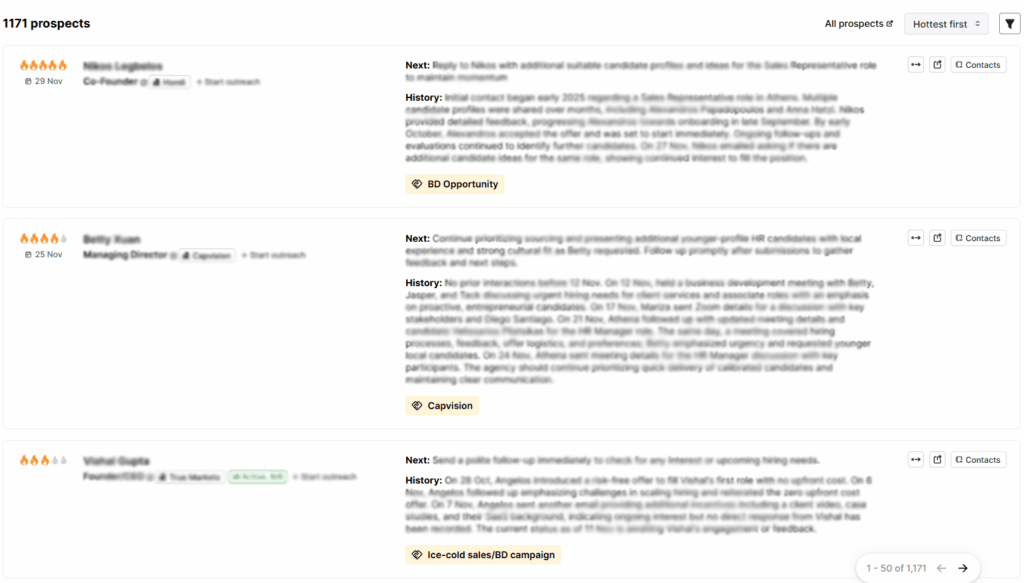
Your BD efforts become surgical rather than scattered. Predictive models identify which prospects match patterns of clients who became high-value accounts. They spot early warning signs when existing clients show disengagement patterns. You can course-correct relationships before they turn cold.
The administrative burden disappears when systems like Atlas handle analyzing historical data for you. You spend time on strategy calls with promising prospects instead of updating spreadsheets. You have meaningful conversations with engaged candidates instead of chasing ghosts who checked out weeks ago. Predictive analytics in recruitment means chasing hiring outcomes with intelligence, not intuition.
Frequently Asked Questions (FAQ) on Predictive Analytics in Recruitment
Predictive analytics uses historical data and AI algorithms to forecast recruitment outcomes. Instead of guessing which candidates will succeed or which clients are ready to hire, the system analyzes patterns from past placements, interview feedback, and engagement data to predict future results. This helps recruiters prioritize their time on the most promising opportunities.
No technical expertise required. Recruitment platforms like Atlas translate complex data analysis into simple visual indicators and recommendations. You’ll see candidate fit scores, deal probability ratings, and priority rankings without needing to understand the underlying algorithms.
The system needs a comprehensive interaction history, including emails, calls, interview notes, placement outcomes, and client feedback. The more touchpoints captured, the better the predictions become. Platforms with total memory systems like Atlas, that automatically record all candidate and client interactions, provide the richest data foundation.
Future-Proof Your Desk with a Data-Driven Approach to Recruitment
The recruitment landscape has shifted. Manual processes and gut instincts worked when deal flow was predictable, and client demands were straightforward. Now you need systems that surface hot opportunities before competitors even know they exist. Predictive analytics in recruitment transforms your pipeline from a guessing game into a strategic advantage.
The agencies winning today have moved beyond fundamental CRM functions. They leverage platforms that remember every conversation, automatically score deals, and highlight which placements deserve immediate attention. When your system knows which clients are most likely to hire and which candidates will accept offers, you stop chasing dead ends.
This shift requires more than analytics dashboards. You need a platform built for the AI era, where predictive insights integrate seamlessly with your workflow. Atlas is a CRMx that eliminates the administrative burden that prevents you from acting on those insights. While competitors waste time updating records and chasing stale leads, your team focuses on closing the deals that matter.

Related news

// Recruitment Technology, Business Development
How Are Enterprise Hiring Solutions Evolving With AI?
Explore how enterprise hiring solutions are evolving with AI to improve efficiency, candidate experience, and hiring outcomes at scale.
03/23/2026
6 MIN

// Recruitment Technology, Business Development
How Agentic AI Eliminates Admin Work in Enterprise Recruitment
Agentic AI makes independent decisions for recruitment teams. See how it automates data entry, candidate scoring, and client outreach.
04/08/2026
11 MIN
// Recruitment Technology, Business Development
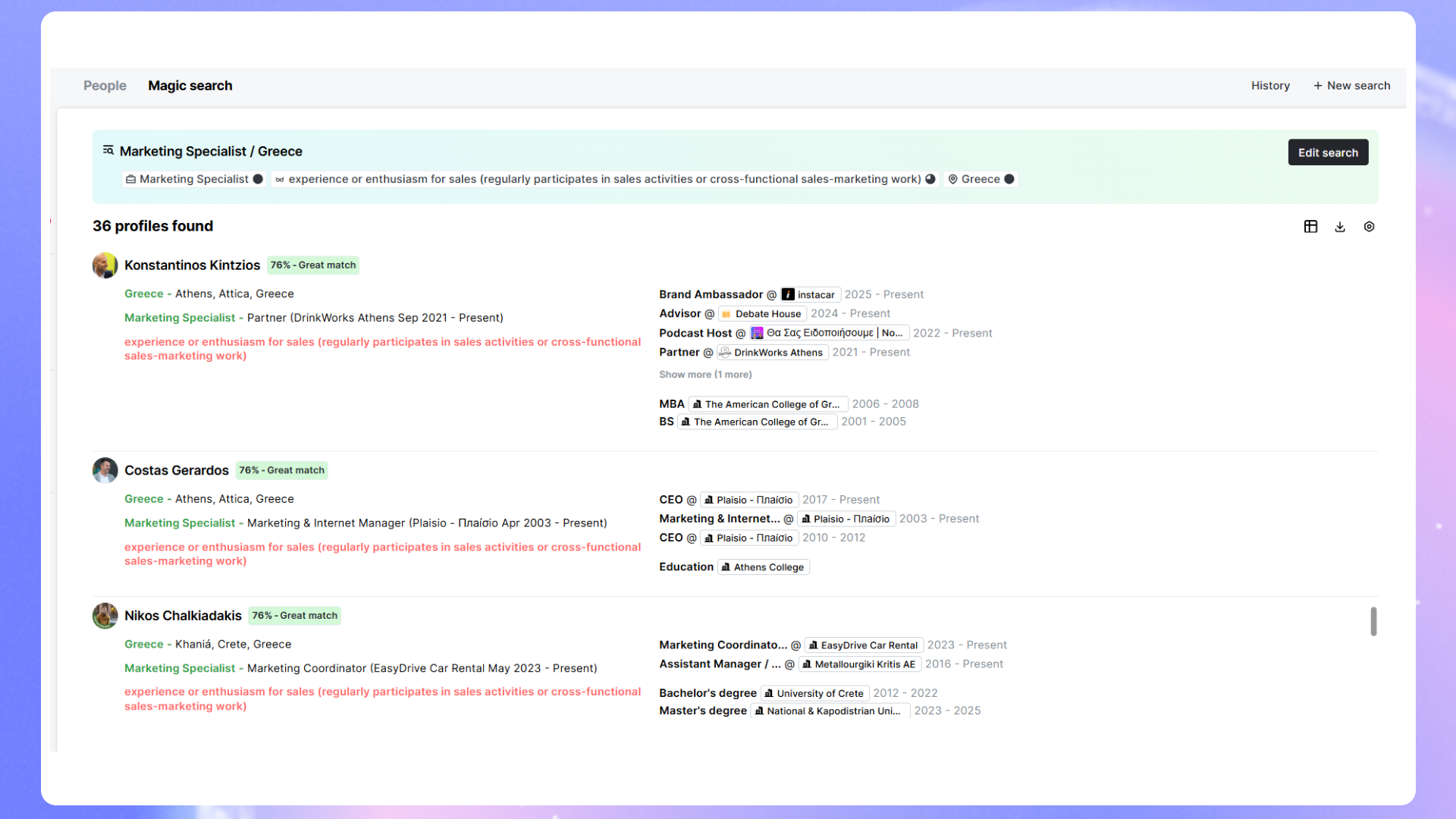
Magic Search: Enterprise AI Candidate Search for Large Staffing Agencies
Magic Search by Atlas delivers an enterprise AI candidate search built for large staffing agencies. Standardize sourcing, improve visibility, and scale recruiting performance.
02/16/2026
9 MIN