










// Recruitment Influencers
Meet the February 2026 Atlas30: This Month’s Top Recruitment Influencers
12/03/2026
9 MIN
As 2026 begins, Q1 is already setting a decisive tone for the year ahead. For agency recruiters, February means strengthening pipelines, creating opportunities, and setting the tone for the months ahead.
The February 2026 Atlas30 highlights the recruitment voices sharing practical insights and fresh thinking. Whether you’re aiming for early wins or planning your next move, these are the people helping you stay focused and ready for what’s next.
The Human Edge in 2026: Sales Skills, Smarter AI Use & Real Conversations in Recruitment
Hishem on Future-Proofing Your Recruitment Career Through Commercial Skills
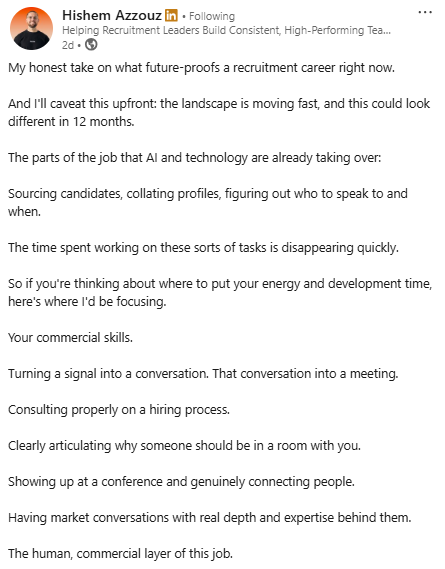
Hishem explains that many recruiting tasks have been replaced by AI tools, especially admin work. Sourcing candidates, selecting profiles, and sending calendar links are now automated. AI can identify suitable candidates faster and manage outreach and scheduling.
He says recruiters should now focus on developing commercial skills. They need to be active in the market, attend conferences, and build a strong presence on social media. Recruiters should be the reason a candidate replies positively. This comes from trust, credibility, and genuine relationships.
AI can handle a large part of the workload. This creates space for recruiters to focus on the human factor.
Key takeaway: AI manages admin recruiting tasks, so recruiters should focus on building real connections with candidates and industry professionals.
Joel Breaks Down What Recruitment Really Involves Beyond Posting Jobs
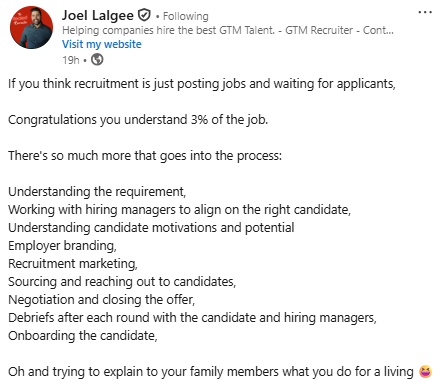
Joel is speaking about very important aspects that hide behind a job posting. Recruiting is much more than posting a job on a job board or social media. It is not about waiting for applicants to send CVs or cover letters.
The recruitment process starts with the kick-off call with your client. You listen to the role requirements. You consult the client about the market and available talent.
It continues with understanding candidates. You explore their motivations, their reasons, and what they want. This helps you secure a long-term placement.
Sales and marketing are also key parts of the process. You need to sell the role to candidates. You also need to sell the candidates to your clients.
Sourcing and outreach are essential. One job post is never enough to find the right candidate.
The final stage is close to the offer when you negotiate salary, and you keep candidates engaged. You close the placement and start the onboarding process. Recruitment is a constant effort. You work toward your goal until the very last minute.
Key takeaway: Recruitment is a strategic, end-to-end process that goes far beyond posting a job and waiting for applicants.
Greg Shares Why the Best Recruiters Close More Deals by Asking Questions and Listening First
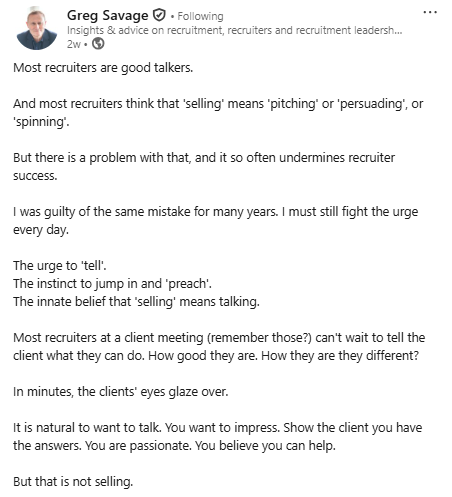
Greg talks about a common mistake in recruitment. Many recruiters think selling means talking more. They want to impress the client with facts and achievements. But this often pushes clients away instead of building trust.
He explains that good selling starts with questions. When you ask and listen carefully, you understand the real problem. Clients may say they are unhappy with candidate quality.
Candidates may say they want career growth. These are only starting points. The real value comes from digging deeper and understanding what they truly mean.
Greg also focuses on trust. People want to feel heard and understood. When the client speaks more, the recruiter learns more. That insight helps you give better advice and close stronger placements. Listening with purpose is what truly drives success in recruitment.
Key takeaway: Top recruiters sell more effectively when they ask better questions and listen more than they speak.
Benjamin Highlights the Hidden Risks of Using AI to Auto-Apply for Jobs
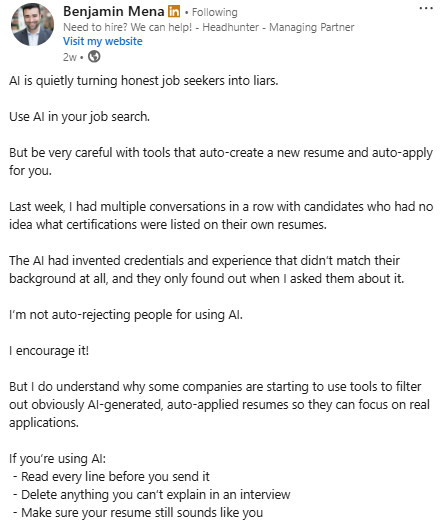
Benjamin, in his post, shares practical advice for candidates who are looking for a new role or planning a career move. He understands that many professionals now use AI to create resumes or apply for jobs. AI has become part of the modern job search process.
However, he points out an important risk. Some candidates do not carefully review what AI generates. As a result, they may miss errors or false information added by the tool. In some cases, AI even invents certifications or experience that candidates cannot explain in an interview. This can seriously damage trust with recruiters and hiring managers.
He also explains that while he supports the use of AI, he understands why some companies now filter auto-generated applications. When resumes look automated or inaccurate, employers question their authenticity. His message is clear. Use AI as support, review every detail, and make sure your resume truly reflects who you are.
Key takeaway: If you are looking for a new role, use AI wisely to support your application, but always review the final result carefully.
Sean Shares 3 Daily Actions That Turn Warm Signals Into Booked Calls
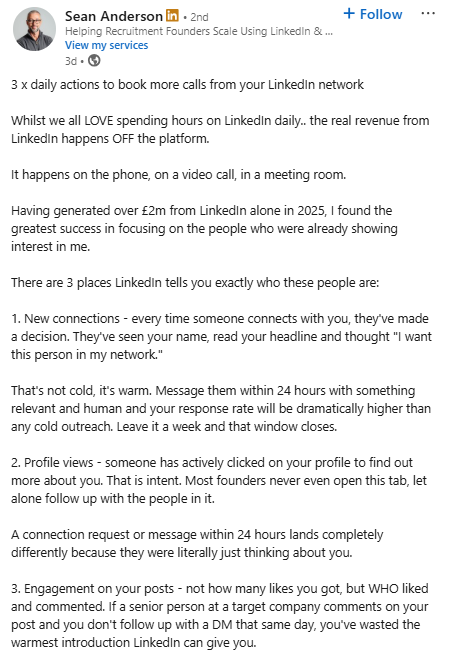
Sean, in his post, shares a very practical approach on how to book more calls through specific social media platforms. He explains that LinkedIn is not where revenue actually happens. The real results come from phone calls, video meetings, and real conversations.
He focuses on three simple signals. New connections, profile views, and people who engage with your posts. These are not cold leads. These are people who already showed interest in you. If you follow up within 24 hours, the conversation feels warm and relevant.
What he really highlights is consistency. You do not need to spend hours online. You need a small daily habit. That is what helps turn social media activity into real business.
Key takeaway: Focus on people who already show interest in you on social media platforms and follow up fast to turn warm signals into booked calls.
Fast-Rising Recruitment Professionals to Watch on LinkedIn
Glen Shares a Smarter Approach to Choosing and Maximising a Recruiting Software
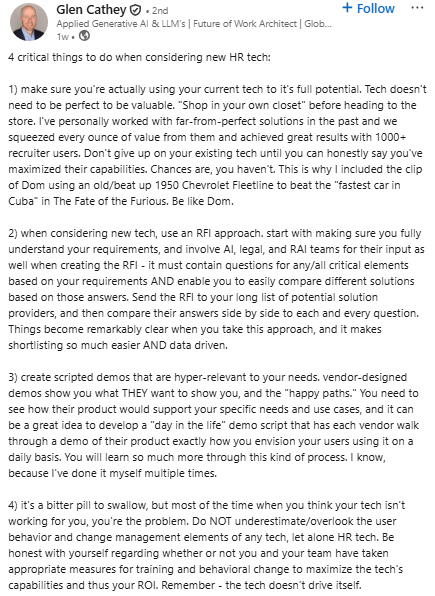
When it comes to investing in new recruiting software and technology, it’s easy to get confused, feel lost, and be distracted by features that you don’t need. But as Glen highlights, better outcomes don’t start with new tools; they start with smarter decisions.
That means fully maximising what you already have before replacing it, getting clear on your real requirements, and holding vendors accountable to how your team actually works.
What Glen suggests is creating a structured set of questions based on your needs, sending it to multiple providers, and comparing their answers side by side. It removes emotion from the decision, brings clarity to the shortlist, and makes the process far more data-driven.
Pair that with scripted, real-world demos and honest change management, and you move from chasing technology to making it work for you truly.
Key takeaway: Before buying new recruiting technology, take a step back and make smarter, more structured decisions.
David on Setting the Standard for Better Candidate Communication
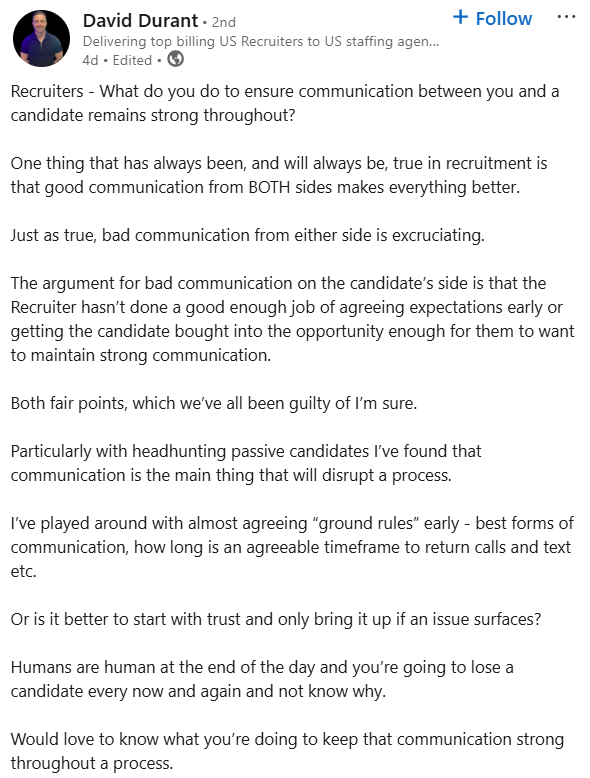
David raises an important question around something every recruiter experiences but doesn’t always unpack: how do you maintain strong communication with candidates throughout a process?
He explores whether communication breakdowns are simply human nature or often reflect expectation-setting and early buy-in. It starts with agreeing on simple “ground rules” early on, such as preferred communication channels, response times, and shared accountability.
It also raises the question of whether trust should come first or if a little structure upfront is what truly drives strong candidate engagement.
Particularly with passive talent, momentum is fragile. When communication drops, it’s rarely random. It can signal misaligned motivation, unclear value, or expectations that weren’t fully agreed upon upfront.
Key takeaway: Strong communication between candidates and recruiters doesn’t happen by chance, it starts with clear expectations and consistent effort from the very first conversation.
Leading Recruitment Podcasts and Videos to Watch in February 2026
The Chad & Cheese Podcast: A Conversation with James Ellis About Why Talent Acquisition Drives Business Success
In this episode of the Chad & Cheese podcast, Joel Cheesman and Chad Sowash speak with James Ellis about why talent acquisition is the most important function in any business, because everything starts with hiring the right people.
They discuss what it really means to be “choosable” as an employer, moving beyond awards and polished career sites to clearly showing what a company stands for and what it truly offers.
The conversation explores how AI, automation, and mass applications are making candidates and companies look the same and why standing out now requires clarity, honesty, and real differentiation.
They also touch on social media, influencers, and why authentic employee voices matter more than scripted messaging.
James x Nitin on REC Talk: The Collaboration You Can’t Miss on Recruitment Branding
This episode focuses on recruitment branding and brand identity. James Whitelock explains that brand is what people say about you when you are not in the room. He argues that many agencies lack clarity, consistency, and credibility.
Those three elements shape how clients and candidates perceive your business. Every interaction matters, from sales calls to candidate follow-ups, because each touchpoint affects your reputation.
The discussion also challenges the idea that size creates authority. A smaller, focused agency can out-brand a larger competitor through clear positioning and consistent messaging.
The conclusion is simple. Your brand is built through daily behaviour, not design. Internal culture and consistent execution define how the market sees you
Recruitment in 2026: Smarter AI, Stronger Relationships, Better Results
As February sets the pace for 2026, one message is clear: recruitment success will depend on stronger conversations, sharper positioning, and smarter use of AI. The perspectives shared by some of the top recruitment influencers highlight how the industry is evolving and where recruiters should focus their energy next.
2026 is a year where AI continues to support recruiters in their daily work, especially across admin and process tasks. At the same time, this is the year to strengthen commercial skills and market awareness. Recruiters should build stronger relationships with clients and candidates through clear communication and consistent follow-ups.
The voices in this Atlas30 edition, including several top recruitment influencers, show that technology supports performance, but people drive results. Now is the time to stay visible, refine your brand, and turn insight into measurable growth for the months ahead.
Make sure to also check out the Atlas30 2025 list and our featured recruitment podcasts for even more valuable insights.

Related news

// Recruitment Influencers
The Atlas30 for 2025: Recruitment Influencers You Should be Following
Discover the Atlas30 for 2025 - A list of the most influential recruitment voices shaping hiring, talent strategy, and the future of work.
01/15/2026
9 MIN
// Recruitment Influencers
The Atlas30 for October: Recruitment Influencers You Should Be Watching
From AI strategy to human-first hiring, explore this month’s standout posts from agency recruitment influencers making a difference in October 2025.
11/06/2025
10 MIN

// Recruitment Influencers
The Recruitment Leaders Defining Fall 2025 | Atlas – Hoxo Elite 100
Looking for recruiter content that leads with insight and influence? Our Fall 2025 Elite 100 features the recruitment leaders making real impact this season.
10/09/2025
5 MIN