









// Executive Search Best Practices, Recruitment Strategies
How Are Enterprise Hiring Solutions Evolving With AI?
23/03/2026
6 MIN
Enterprise hiring solutions help large companies manage complex and high-volume recruiting processes. They combine tools like applicant tracking systems, CRM capabilities, automation, and data reporting to support hiring across multiple teams and locations.
Unlike regular hiring, enterprise recruitment involves a larger scale, more stakeholders, and more complex workflows. It also requires stronger coordination, workforce planning, advanced tools, and structured processes to enable smarter hiring across global enterprises. Continuous optimization and predictive analytics are essential within enterprise hiring solutions to maintain consistency and improve hiring outcomes over time.
In 2026, enterprise recruiters face growing challenges such as high hiring volumes, slow processes, and poor candidate experience. These enterprise hiring solutions help streamline workflows, improve candidate experience, and enable faster, data-driven hiring decisions at scale.
Challenges Enterprise Recruiters Face In 2026
Even with access to more tools and data, enterprise recruiters in 2026 still face ongoing challenges. Managing scale, maintaining quality, and delivering a strong candidate experience can quickly turn into real struggles without the right enterprise hiring solutions in place. Here are the key challenges shaping enterprise hiring today:
High-volume hiring
Enterprise recruiters and large organizations manage large volumes of open roles and candidates at the same time. This creates pressure on pipelines and slows down response times, especially when technology and resources are limited or not fully optimized. Without the right tools, it becomes difficult to maintain quality while moving quickly.
Slow and inefficient hiring processes
Many enterprise recruiting teams and staffing agencies still rely on manual tasks across the recruiting process. CV screening, scheduling, follow-ups, creating candidate reports, taking interview notes, writing meeting notes, managing client reports, and handling paperwork take time and reduce efficiency. This leads to longer hiring cycles and missed opportunities.
Poor candidate experience
Candidates, especially top talent, expect fast and personalized communication throughout the hiring process. Delays, generic messaging, lack of feedback, and missing rejection emails create frustration. This is even more critical for engineering roles, where multiple assessments are required to progress and prove technical skills, increasing the risk of drop-offs and negatively impacting the employer brand.
Underused candidate databases
Enterprise companies store large amounts of candidate data that often remains unused. Recruiters frequently restart sourcing instead of re-engaging existing talent, even when they have already identified strong candidates. This is especially common with top talent, silver medalists, or even passive candidates who were previously assessed, matched well, and aligned with the company culture but did not accept an offer due to changing circumstances. This increases costs and extends time-to-hire.
Misalignment between hiring teams
Enterprise hiring involves multiple stakeholders across teams and locations. Companies often rely on different communication channels, such as Microsoft Teams for discussions, email for updates, ATS platforms for tracking candidates, and other tech tools to present shortlists. This fragmentation creates misalignment, delays, and confusion. As a result, decision-making slows down, and overall hiring performance is impacted.
How AI Is Transforming Enterprise Recruitment
The biggest change in enterprise hiring isn’t just automation, it’s memory. AI tools now learn from every interaction, helping teams build context over time and make consistently better hiring decisions, with every search, message, and interview improving the next. Below, you can find the key ways AI is transforming enterprise recruitment:
Candidate matching
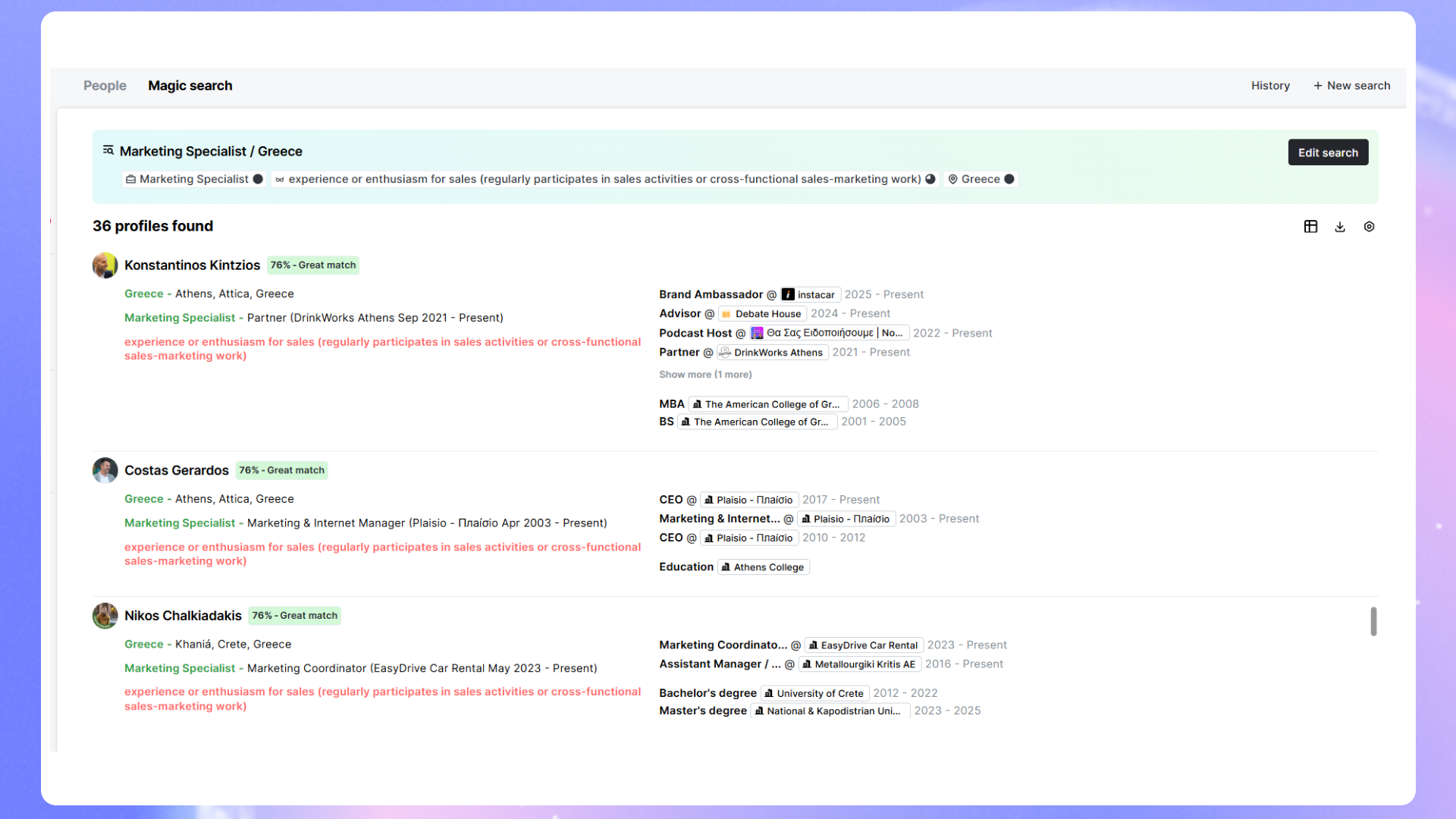
Smart matching tools, such as Magic Search in Atlas – the Recruitment Platform that finds strong candidates for your role within seconds, are a key part of modern enterprise hiring solutions and use memory to connect candidates with the right roles more accurately. These tools store and learn from all past candidate interactions, including conversations and interviews. Recruiters can input keywords, skills, or a full job description to surface the most relevant candidates instantly, improving match quality and reducing time-to-hire.
Automated outreach
Outreach tools, such as automated and personalized campaigns, use stored candidate data and previous interactions to tailor communication. They send messages and follow-ups based on behavior and engagement, keeping pipelines active and consistent. Advanced features like AI variables allow recruiters to focus on specific aspects of a candidate’s profile, such as their company, experience, interests, or tech stack, while also enabling custom writing styles for more relevant outreach within enterprise hiring solutions.
Analyze interview responses
Interview analysis tools capture and evaluate responses in real time, using features like magic columns to organize and structure candidate data. These features can rate competencies and assess whether a candidate is a strong match based on the job description and client requirements. As part of enterprise hiring solutions, they also provide visibility into outreach performance, such as response rates, message opens, rejections, and non-responses, helping teams make more consistent and data-driven hiring decisions.
Transcribe conversations
Transcription tools automatically capture and store candidate conversations. This creates a searchable record of every interaction. Features such as AI chat assistants allow recruiters to type questions and instantly retrieve specific details mentioned during interviews, while AI note-taking tools generate clear and well-structured transcripts, reducing repetitive tasks and ensuring no important information is missed.
Workflow automation and task management
Workflow tools automate tasks using real-time data and system triggers. They move candidates through stages, update pipelines, and assign actions automatically. Tools like task agents can organize recruiters’ work based on conversations, messages, emails, interviews, and calls, and generate clear daily priorities, helping teams save time, stay focused, and improve time-to-hire and candidate experience within enterprise hiring solutions.
Improved candidate experience
Engagement tools use stored data to personalize every interaction. As part of modern enterprise hiring solutions, AI matching tools can identify the best candidates based on both cultural fit and hard skills, reducing the need to interview large numbers of candidates and avoiding long waiting times that lead to drop-offs. In addition, by automating tasks, emails, and communication, candidates receive timely updates after each stage of the process, including interviews and rejections, creating a smoother and more consistent experience.
Bias reduction and consistency
Structured evaluation tools apply consistent criteria across all candidates. They rely on data instead of subjective judgment, helping recruiters identify the perfect match based on skills, competencies, and role requirements. These tools also improve security by ensuring hiring decisions follow standardized processes and reduce bias, creating better alignment and trust across hiring teams and strengthening enterprise hiring solutions.
Choosing the Right AI ATS for Enterprise Success
Choosing the right recruitment software platform and the right solutions providers requires a clear understanding of your hiring needs, workflows, and long-term goals. Enterprise teams should prioritize platforms that combine AI, CRM, and automation as part of modern enterprise hiring solutions to support scale and efficiency. These platforms help attract top talent, identify the right candidates faster, and act as a trusted partner in the hiring process.
Key capabilities such as candidate matching, automated outreach, analyzing interview responses, transcribing conversations, and real-time updates help reduce manual work and improve decision-making.
Real-time updates ensure that candidate data, interactions, and pipeline changes are reflected instantly across the system, so teams always work with accurate, up-to-date information. Strong data reporting, seamless integrations, and ease of use are essential for adoption and performance. The right solution should improve hiring speed, candidate quality, and team productivity.
Platforms like Atlas – the Recruitment Platform, an AI-powered recruitment applicant tracking system designed for agencies and enterprise teams, bring these capabilities together in one system to support smarter and more scalable hiring.

Related news

// Executive Search Best Practices, Recruitment Strategies
Winning at High-Volume Recruiting: What Enterprise Agencies Need to Know
High-volume recruiting pressures processes, recruiters, and results. See how your enterprise agency can stay efficient while delivering quality hires.
03/13/2026
8 MIN
// Executive Search Best Practices, Recruitment Strategies
Magic Search: Enterprise AI Candidate Search for Large Staffing Agencies
Magic Search by Atlas delivers an enterprise AI candidate search built for large staffing agencies. Standardize sourcing, improve visibility, and scale recruiting performance.
02/16/2026
9 MIN

// Executive Search Best Practices, Recruitment Strategies
10 Best Enterprise Recruitment Software Platforms for 2026 | Top Systems Ranked
A practical look at the best enterprise recruitment software for agencies managing multiple teams, clients, and high-volume workflows.
02/12/2026
20 MIN