









// Recruitment Strategies, Sourcing Strategies
10 Candidate Sourcing Strategies To Elevate Your Hiring Process
18/03/2026
7 MIN
Sourcing candidates is one of the most time-consuming tasks in the recruitment process. It is also the first step of recruitment. Finding successful candidate sourcing strategies requires time, effort, and strong focus. Recruiters need to identify the right profiles and qualified candidates from the beginning. Strong sourcing decisions reduce mistakes later in the recruiting process.
A targeted approach helps recruiters consistently identify the best candidates for each role. There are several candidate-sourcing strategies that recruiters can use, depending on the channel they use. These strategies help achieve faster hires and attract higher-quality candidates.
Effective talent sourcing also helps recruiters expand their network, satisfy their clients, and build a strong professional reputation.
10 Social Media/Job Board Sourcing Strategies to Find Quality Candidates
Candidate sourcing can happen through many different channels, either via online candidate sourcing channels or offline recruitment methods such as job fairs. The approach depends on the role you are hiring for. Recruiters often use social media platforms, professional communities, and sourcing through an applicant tracking system with AI features and tools.
1) Explore GitHub and Tech Communities
Talent sourcing via those platforms is effective, especially for engineers and technical roles. Many strong engineers share their work there. Engineers who care about their careers often maintain a GitHub account. Passionate developers usually build projects outside their daily job.
GitHub shows personal projects, contributions, and activity. These signals help recruiters evaluate real technical experience. Recruiters or hiring managers can use GitHub or any other talent community to spot talent early and assess skills before the interview stage.
2) Target Specific Companies Based on the Client
If the client is a startup, focus on smaller companies. Candidates in these environments handle multiple tasks. They take ownership and work independently, often aligning well with a fast-paced company culture. If the client is an enterprise, target larger companies. These environments offer structure, clear roles, and defined processes.
You can also target companies based on technical tools. If your client uses specific technologies, search for candidates with that experience. For example, if your client needs “AWS cloud” experience, target companies that use AWS. This approach is more precise than a broad search.
3) Personalize Outreach Messages
AI outreach is common. Candidates often ignore mass messages generated by AI. They prefer personalized outreach messages. They want communication that feels human and direct. You can still use AI to help.
Train AI to include variables in the message. Highlight a specific project the candidate worked on. Mention a tool they use or a contribution they made. This increases response rates and builds stronger candidate engagement.
4) Focus on Keywords and Not Titles
When sourcing candidates, search for specific skills or nice-to-have qualifications. For example, search for “React.js” when hiring a tech talent. This creates a more targeted candidate-sourcing strategy. It reduces errors and saves time. You already know the candidate has the required skill. For complex roles, focus on keywords and skills instead of titles.
Many candidates perform tasks outside their official title. One engineer may work across frontend, backend, and DevOps. Titles do not always reflect real responsibilities. The same candidate may match several roles. A keyword search helps you discover future candidates with the exact skills you need.
5) Use Boolean Search For Titles
Many roles have different titles but similar responsibilities. A software engineer may appear as a software developer, full-stack engineer, or full-stack developer. You can also include seniority levels, such as senior software developer.
Use a Boolean search to include all variations. This candidate-sourcing strategy expands results and reduces the risk of missing qualified talent. This will also help you capture a wider talent pool and maximize your sourcing efforts.
6) Use the “Open to Work” Filter
This is useful for urgent roles. These candidates are already looking for new opportunities. On social platforms, the “Open to Work” badge makes them easier to identify. This increases response rates and speeds up the candidate sourcing process.
This is a controversial topic because some job seekers may feel uncomfortable displaying their job search status publicly. It helps recruiters quickly see who is actively seeking new opportunities. It also shows who is immediately available, which is useful for short hiring timelines.
7) Review “More people like them”
Sometimes you find an ideal candidate. Many platforms offer a feature that shows similar profiles to the ones that you have already found. This helps you quickly discover additional relevant candidates.
This feature is often labeled as “More people like them.” It uses shared skills, experience, and career paths to suggest profiles. It saves time during sourcing. You avoid starting from scratch and build on a strong initial match.
It also improves consistency. The suggested candidates often match the same criteria and expectations. Use this feature after identifying a high-quality profile. It works best when your starting point is accurate.
8) Engage Before Outreach
Your network contains potential candidates for future job openings. Communicate with them regularly. Ask questions and build relationships early. You can tag them, segment them, and track past conversations in your applicant tracking system.
When a role opens, you can contact them faster. This improves candidate relationship management and strengthens your reputation with clients. It also helps you to achieve your hiring goals and your business growth plans faster.
9) Monitor Job Changes
Track candidate career movements. This helps identify potential long-term hires. Candidates with stable career paths may present lower flight risk. Short tenures do not always indicate risk. You should evaluate this during the interview process.
If you are hiring contractors, short tenures are often expected. Many are hired for a fixed timeframe or specific project. You can also check if candidates label themselves as contractors in their title. This helps you quickly identify relevant profiles.
10) Use the Right AI Recruitment Platform For Sourcing
Last but not least, choose a system that supports outreach campaigns, automation, and candidate scoring. Advanced platforms, like Atlas – the Recruitment Platform, can rank candidate competencies and organize talent pipelines efficiently.
Atlas uses AI to match candidates with job requirements based on skills, experience, and behavior. This improves shortlisting accuracy. It also helps automate outreach while keeping messages personalized through dynamic variables.
Recruiters and hiring managers can track engagement, manage talent pipelines, and collaborate with their team in one place, including viewing employee referrals.
Searching For the Latest AI Sourcing Solution with Atlas?
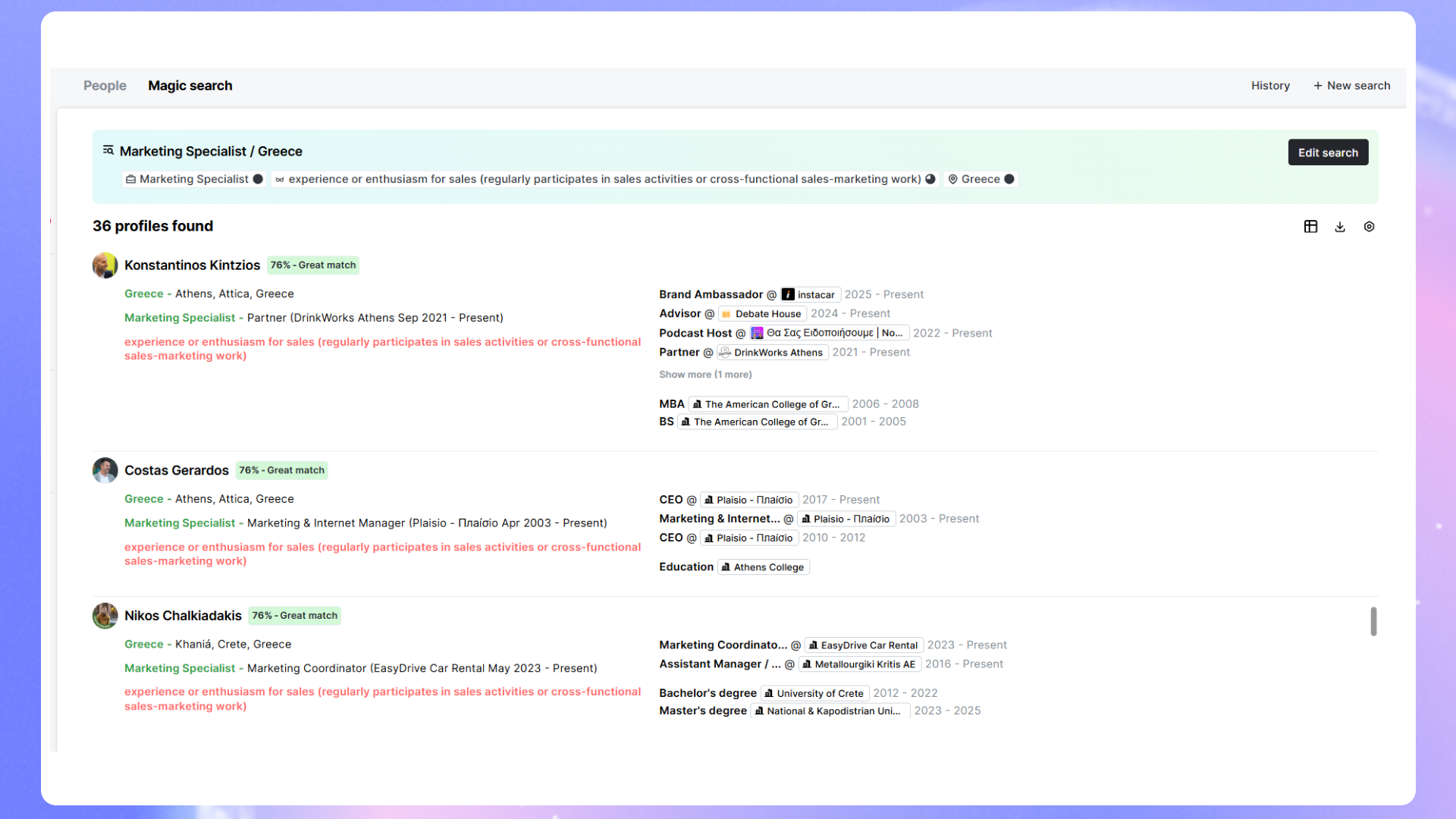
Magic Search is an AI-powered sourcing feature within the Atlas recruitment platform that helps recruiters quickly identify best candidates for a role. Instead of relying on filters or complex Boolean searches, it allows you to describe the type of candidate personas you’re looking for in natural language or simply copy and paste a job description.
The system interprets your input to understand factors such as seniority, skills, professional background, career progression, and industry experience. The feature then analyzes this information and compares it against potential candidates already stored in your AI recruiting platform, including previous applicants and individuals you may have contacted for other roles. It helps surface both qualified talent and interested candidates.
Based on this analysis, Magic Search produces a focused shortlist of top talent and assigns each candidate a match percentage, helping you quickly evaluate fit and move forward with the most promising candidates.
How AI Is Transforming Candidate Sourcing
In the future, AI will reshape candidate sourcing by automating much of the manual work recruiters handle today. Instead of spending hours on talent sourcing via social media platforms, job boards, and databases, AI tools continuously scan global talent pools. These tools will map skills and automatically generate relevant candidate shortlists.
They will also support personalized outreach and help identify passive candidates who may be open to new roles. As sourcing candidates becomes more automated, recruiters will focus on higher-value work. They will design stronger search strategies and define the right skills and top talent profiles. They will also review and refine AI-generated talent pipelines to ensure quality and relevance.
Most importantly, recruiters will spend more time building authentic relationships with qualified candidates instead of focusing on the candidate sourcing process. In this model, AI will help you source candidates faster and more scalable. Recruiters will bring the workforce hiring strategy, judgment, and human connection needed to attract the right and talented candidates.

Related news
// Recruitment Strategies, Sourcing Strategies
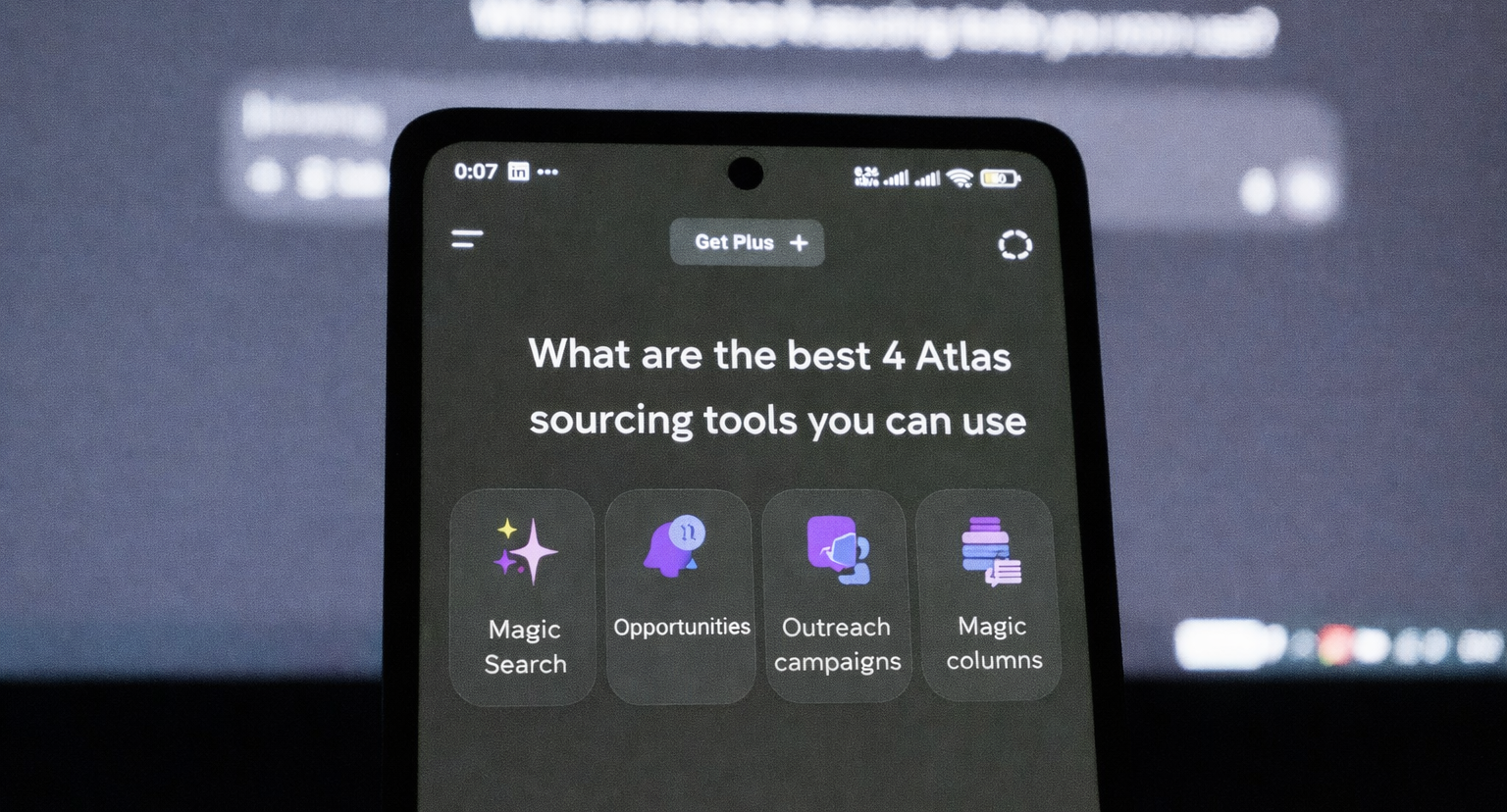
4 Atlas AI Sourcing Tools That Help You Build Strong Talent Pipelines
Discover 4 Atlas AI sourcing tools that help recruiters build strong talent pipelines, source candidates faster, and improve recruitment workflows.
03/06/2026
6 MIN

// Recruitment Strategies, Sourcing Strategies
Create a More Effective Recruitment Process with Magic Search
Enhance your recruitment process with Magic Search by using AI-powered sourcing and intelligent search to identify, assess, and hire the right talent faster and more efficiently.
02/26/2026
7 MIN
// Recruitment Strategies, Sourcing Strategies
Magic Search: Enterprise AI Candidate Search for Large Staffing Agencies
Magic Search by Atlas delivers an enterprise AI candidate search built for large staffing agencies. Standardize sourcing, improve visibility, and scale recruiting performance.
02/16/2026
9 MIN