









// Software Comparisons
12 Best AI Recruitment Tools for Staffing Agencies in 2026
19/12/2025
18 MIN
Agency recruiters are spending more time than ever on admin instead of chasing qualified candidates. Between logging activity, chasing replies, switching between tools, and keeping data up to date, the recruiting process that actually drives revenue often gets pushed to the margins.
That is why interest in AI recruitment software has surged, especially tools designed to automate repetitive tasks and simplify day-to-day workflows. In 2026, the best AI recruitment tools are not defined by flashy features alone. They are measured by how effectively they reduce manual effort across the recruitment lifecycle.
From applicant tracking systems and communication platforms to productivity tools recruiters already rely on, AI is increasingly embedded in the software stack agencies use every day. The result is faster response times, better data quality, and more capacity for recruiters to focus on candidates and clients. In this list, we break down each tool, its AI capabilities, and where it fits in a modern agency tech stack.
What are AI tools for staffing agencies used for?
AI tools for staffing agencies reduce manual work, improve speed, and create more consistent recruitment processes across the business. Rather than replacing recruiters, these tools automate the repetitive, admin-heavy tasks that slow agencies down and limit placement capacity.
At a practical level, AI recruitment software helps agencies manage high volumes of candidates and client activity without increasing headcount. Tasks like updating records, logging communication, scheduling interviews, and following up with candidates can be automated or handled in the background. This allows recruiters to spend more time on revenue-generating work such as relationship building, interviewing, and business development.
For staffing agencies, the biggest value comes from using the best AI recruitment tools across the entire workflow rather than in isolated instances. When systems work together, agencies reduce tool sprawl, maintain cleaner data, and create a more scalable recruitment operation that can grow without adding unnecessary admin.
Best AI recruiting software for 2026
Applicant Tracking Systems (ATSs)
1. Atlas – the Recruitment Platform
2. RecruitCRM
Phone and messaging systems
4. Ringover
5. RingCentral
6. WhatsApp
Video interviewing tools
9. Google Meet
Productivity tools
10. ChatGPT
11. Truffle
12. Slack
Applicant Tracking Systems (ATSs)
For staffing agencies, an AI-powered applicant tracking system acts as the operational backbone of recruitment. They are used to centralize candidate, client, and job openings data while automating the admin tasks that typically slow recruiters down. Instead of manually updating records after every call or email, modern ATSs use AI to capture activity, log communication, and keep pipelines accurate in real time.
The biggest benefit for agency recruiters is consistency in high-volume hiring when sourcing candidates. The best AI recruitment tools for staffing agencies, like ATSs, help standardize workflows across teams, reduce data gaps, and ensure nothing falls through the cracks when managing multiple roles and clients. When AI is applied effectively, the ATS becomes less about rigid talent pools and more of a system that actively reduces admin and supports faster placements.
1. Atlas – the Recruitment Platform
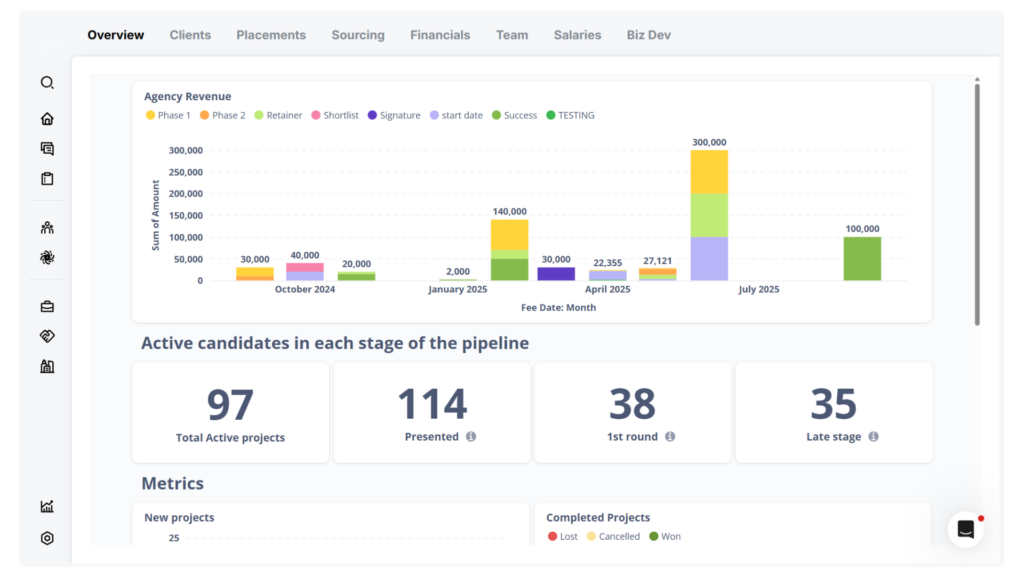
Atlas – the Recruitment Platform is the best AI recruitment tool for agency recruiters who want to reduce admin rather than manage another layer of tools. Unlike legacy platforms that bolt AI onto an existing ATS structure, Atlas is designed as an AI-first recruitment platform from day one. This removes much of the manual work that slows recruiters down and creates a simpler, more efficient system for managing candidates, clients, and opportunities.
At its core, Atlas uses an intelligent assistant framework that learns from recruiter activity and data. These AI agents automate time-consuming tasks such as data updates, reminders, workflow prompts, and sourcing support, helping agencies cut hours of manual work each week. The result is cleaner pipelines, more consistent processes, and more time spent on candidate experiences and client relationships. It goes beyond Boolean search and keyword matching with conversational AI that lets you surface potential candidates faster than traditional recruiting platforms.
Atlas also supports recruiters on the go. Its mobile app allows recruiters to capture notes during in-person meetings or interviews, with information automatically structured and synced in the platform. This eliminates the need to backfill systems after meetings.
With built-in business development tools, real-time dashboards, and embedded automation, Atlas provides a unified recruitment automation platform designed to support scaling recruitment agencies in high-volume hiring for 2026 and beyond.
Key features of Atlas – the Recruitment Platform
- Agentic AI for admin-free recruitment
- Opportunities (Advanced business development)
- Magic Columns (Custom candidate matching & scoring)
- Job board & website job listing publishing
- Multi-step sequences for candidate outreach
- Dashboards & analytics
- Self-scheduling calendar
- Automated tasks and to-dos
- Mobila app for in-person interview process management
- Client view & reports
- Browser extension
- Integrations
Pros: All-in-one recruitment tool, user-friendly interface, suitable for scaling teams and enterprise agencies
Cons: Not suited for in-house recruitment
Pricing: Free trial available, book a demo for your pricing
2. RecruitCRM
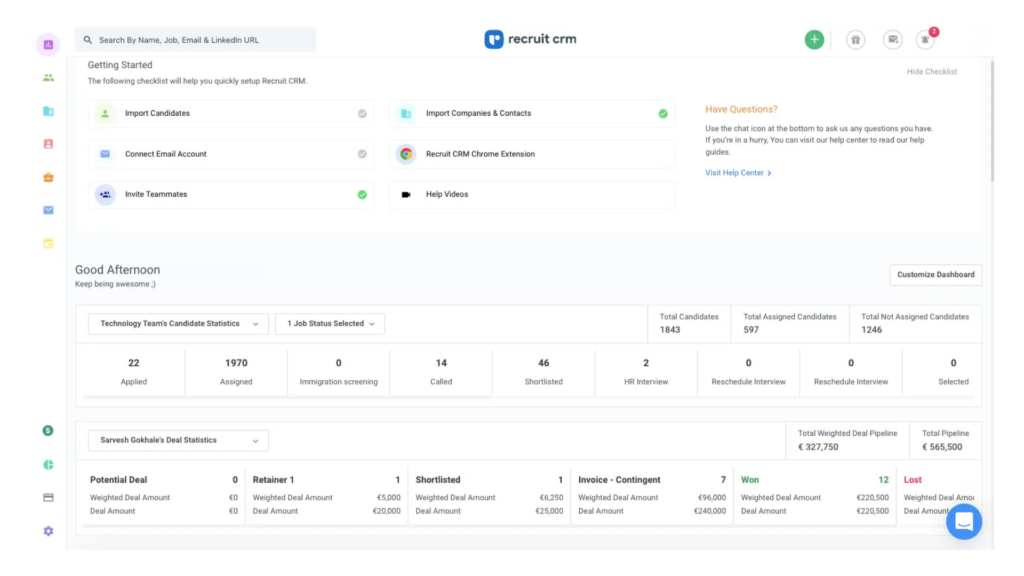
RecruitCRM is an ATS and CRM combination designed for staffing agencies that want clear pipelines and predictable workflows. If you value simplicity and want a system your team can adopt quickly to find the right candidates, RecruitCRM helps you keep client data organized without a steep learning curve.
You can manage job requirements, track activity, and move the best candidates through a visual pipeline using tools like resume parsing, email sequences, and task management. This keeps day-to-day recruitment work structured, although most of the efficiency comes from process clarity rather than advanced AI automation.
RecruitCRM is often a good fit if you want an organized, traditional alternative to more complex platforms to eliminate manual screening. As your agency scales or workflows become more specialized, you may start to notice limitations around automation and analytics.
Key features of RecruitCRM
- Email sequencing
- Candidate resume parsing
- Kanban-style recruitment pipelines
- Email sequencing and templates
- Task and activity management
- Candidate and client relationship tracking
- Basic reporting and dashboards
- Workflow customization
- Integrations
Pros: Reliable for smaller agencies, good pipeline visibility, and tracking tools
Cons: Fewer advanced AI features, restrictive for scaling agencies
Pricing: Free trial available, pricing starts at $40 per user/month
3. Clockwork Recruiting
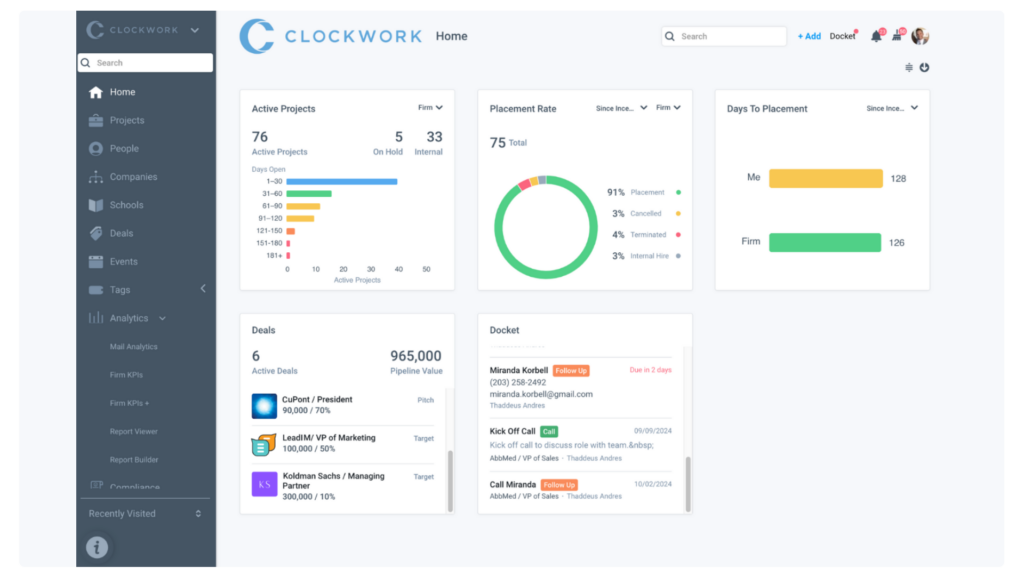
Clockwork Recruiting is an ATS designed for staffing agencies that want more structure and visibility across their recruitment workflows. If you are managing multiple jobs, clients, and submissions at once, it helps you keep everything organized in a single system rather than relying on spreadsheets or manual tracking.
You can configure workflows, track submissions and placements, and report on performance across teams. This makes Clockwork a solid operational tool, particularly if your agency has defined processes and values consistency. While it includes some automation, most of the efficiency comes from improved structure rather than AI-driven task elimination.
Clockwork Recruiting is useful if you need detailed reporting and compliance support, but it may not be the best AI recruitment tool if your goal is to reduce admin through automation rather than manage it more effectively.
Key features of Clockwork Recruiting
- Customizable workflows and fields
- Candidate, client, and job management
- Submission and placement tracking
- DEI (Diversity, Equity & Inclusion) metrics
- Reporting and performance analytics
- Compliance and audit support
- Activity and task tracking
- Browser extension
Pros: Customizable to match agency needs, good reporting tools
Cons: Complex for smaller teams, more focused on tracking than reducing admin
Pricing: No free trial available, pricing starts at $149 per user/month
Phone and messaging systems
Phone and messaging systems are critical productivity tools for agency recruiters, especially in high-volume and fast-moving markets. AI-powered calling and messaging platforms help automate logging, prioritize conversations, and provide context before and after every interaction. This reduces the need for manual note-taking and constant system switching.
For staffing agencies, these tools improve both speed and consistency. Recruiters can respond faster, track conversations more accurately, and maintain better visibility across candidate and client communications. When integrated into the wider recruitment stack, AI-driven phone and messaging systems help agencies reduce admin, improve follow-up rates, and deliver a more professional experience without adding extra workload.
4. Ringover
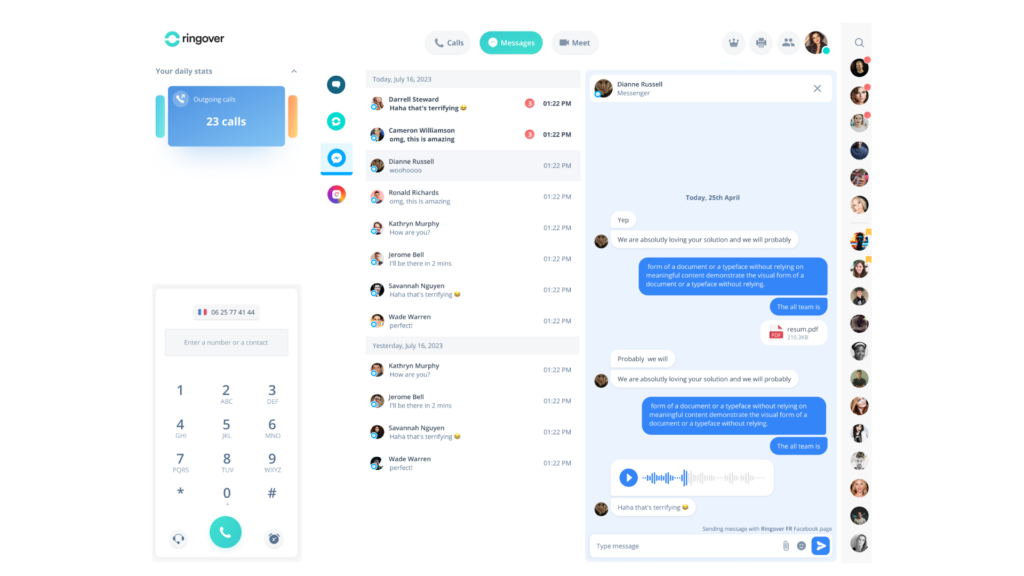
Ringover is a cloud-based phone and messaging tool built for team collaboration and relies heavily on outbound communication. For agency recruiters, it helps you spend less time on admin by automatically logging calls and messages, so your activity is captured without extra effort after each conversation.
You can use Ringover’s AI features to generate call summaries and surface key insights, giving you quick context before follow-ups or client updates. This is especially useful when you are managing multiple candidates and roles at the same time and need to stay organized without manual note-taking.
Ringover integrates with recruitment systems to keep communication data centralized. It’s a strong fit if calling is a core part of how you engage candidates and clients every day.
Key features of Ringover
- Cloud-based calling and messaging
- AI-generated call summaries
- Automatic activity logging
- Call recording and analytics
- Custom filters & call tags
- SMS and messaging support
- Real-time statistics
- Integrates with Atlas – the Recruitment Platform
Pros: Seamless deployment, improved pipeline visibility
Cons: Limited AI features require ATS integration to reach full potential
Pricing: Free trial available, pricing starts at $15 per user/month
5. RingCentral
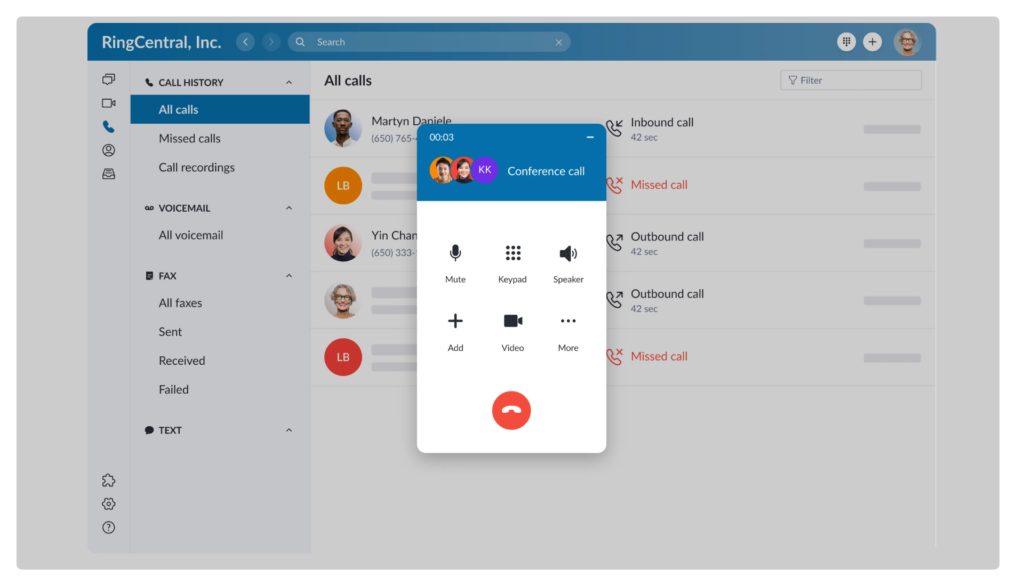
RingCentral is a unified communications platform you can use to manage calls, messages, and meetings in one place. For agency recruiters handling high volumes of candidate and client conversations, it helps reduce admin by centralizing communication and automatically capturing interaction data.
You can rely on AI-powered features like call transcription and meeting summaries to keep records up to date without manual note-taking. This is especially useful when you are juggling multiple roles and need clear visibility into who was contacted, what was discussed, and what happens next.
RingCentral is used by agencies that want a reliable, scalable communication system across growing teams. It supports recruiter productivity best when paired with recruitment platforms that handle candidate and job tracking.
Key features of RingCentral
- Cloud-based phone system
- SMS and team messaging
- Video meetings and conferencing
- AI call transcription and summaries
- Call recording and analytics
- Enterprise-grade security and reliability
- Integrates with Atlas – the Recruitment Platform
Pros: Centralizes all your calls, messages, and meeting records
Cons: Full value is dependent on integrations with ATS/CRM systems
Pricing: Free trial available, pricing starts at $20 per user/month
6. WhatsApp
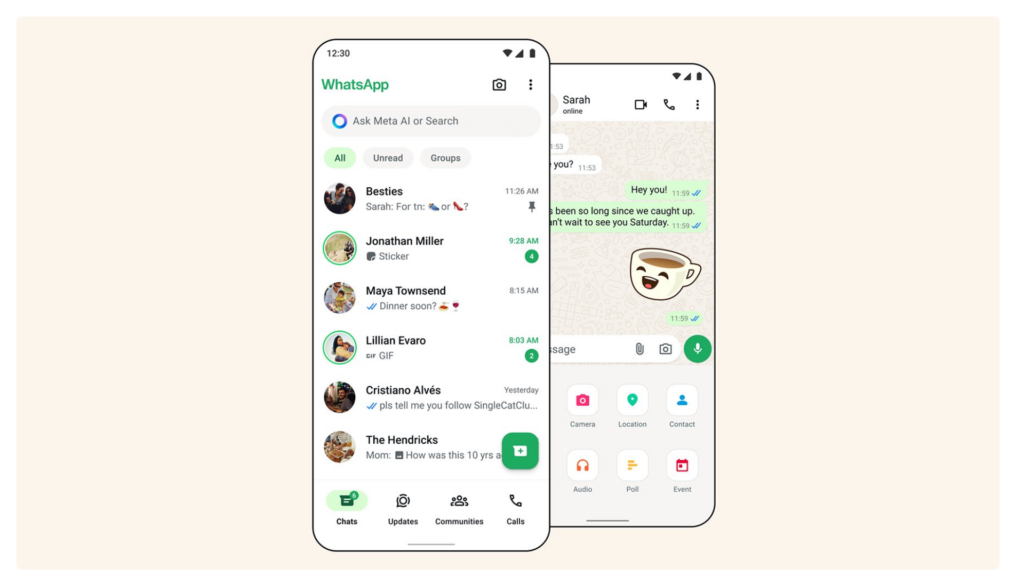
WhatsApp is a messaging tool you can use to stay in close, real-time contact with candidates and clients, especially in markets where mobile messaging is the preferred channel. For agency recruiters, it often helps you get faster responses and keep conversations moving without the formality of email.
You might use WhatsApp to confirm availability, share quick updates, send voice notes, or coordinate candidate interviewing on the fly. It integrates natively with Meta AI, reducing admin by speeding up communication and cutting down on back-and-forth. When connected to your recruitment stack, WhatsApp conversations can be captured and logged automatically.
Key features of WhatsApp
- Instant mobile messaging
- Voice notes and media sharing
- Read receipts and delivery status
- Group messaging
- Cross-device access
- Integrates with Atlas – the Recruitment Platform
Pros: Fast, familiar, and widely adopted by candidates
Cons: Without integrating it with an ATS/CRM, manual logging is required
Pricing: Free plan available, business plans dependent on country/currency
Video interviewing tools
Video interviewing tools help staffing agencies streamline early-stage screening and reduce the time spent coordinating and running interviews. With AI-supported features like automated scheduling, meeting summaries, and call recordings, recruiters can assess candidates more efficiently without adding extra admin to their day.
For agency recruiters managing multiple roles at once, these tools make it easier to screen candidates remotely and collaborate internally. AI interview insights can be shared quickly, feedback is easier to capture, and less time is spent on manual documentation. When used consistently, video interviewing platforms help agencies move candidates through the hiring process faster while maintaining quality and reducing administrative overhead.
7. Zoom Workplace
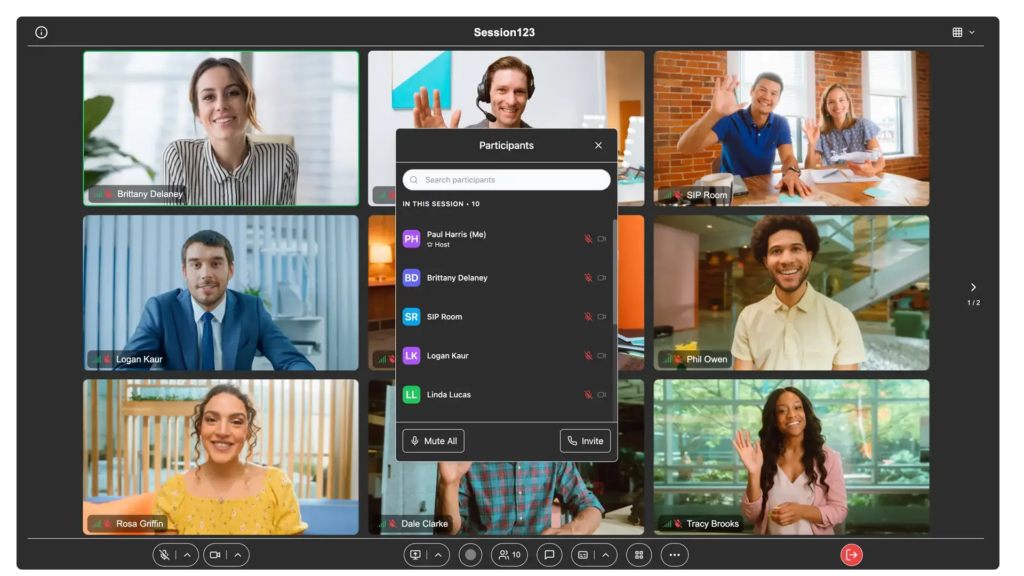
Zoom Workplace is a collaboration platform that goes beyond video interviews, giving you a single place to manage meetings, chat, and internal communication. For agency recruiters, it helps reduce admin by keeping interviews, team discussions, and follow-ups connected rather than spread across multiple tools.
You can use AI-powered meeting summaries and transcripts to capture key interview moments automatically. This makes it easier to share feedback with clients or hiring managers without replaying recordings or writing detailed notes.
Team chat and collaboration features also help you coordinate internally when working on multiple roles at once. Zoom Workplace is a good fit if you want familiar video interviewing combined with lightweight collaboration and productivity features.
Key features of Zoom Workplace
- Video interviewing and virtual meetings
- Meeting recording and playback
- AI-generated transcripts and summaries
- Screen sharing and collaboration tools
- Calendar integrations
- Integrates with Atlas – the Recruitment Platform
Pros: Easy to use for recruiters and candidates, reliable for remote interviewing
Cons: Limited automation as a standalone product
Pricing: Free plan available, pricing starts at $12.49 per user/month
8. Microsoft Teams
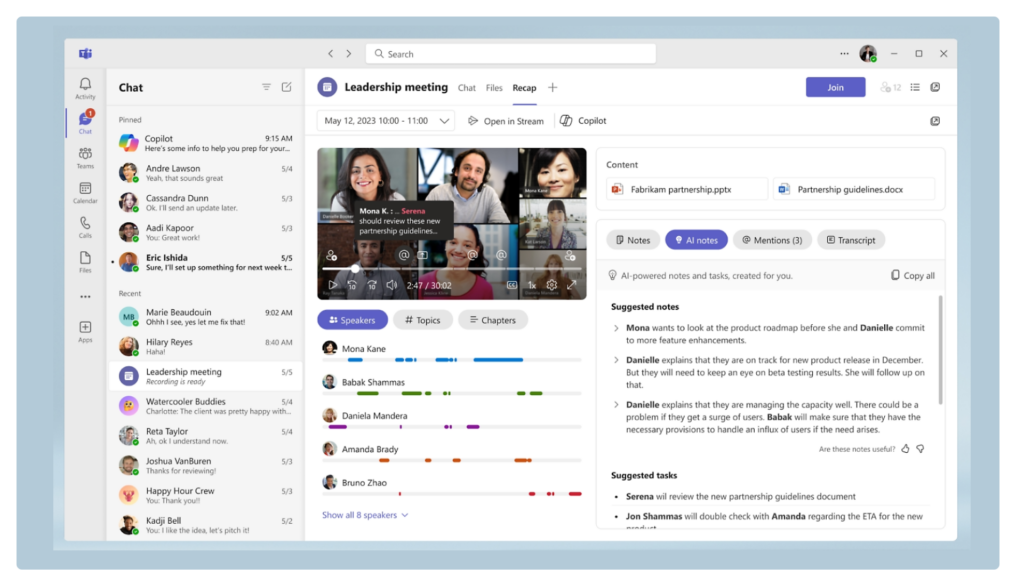
Microsoft Teams is a collaboration platform you can use to manage communication, meetings, and shared work in one place, especially if your agency already runs on Microsoft 365. For recruiters, it is used to coordinate internally and stay aligned with clients during longer or more complex hiring projects.
You can run interviews, share feedback, store documents, and keep conversations tied to specific roles or clients through channels. AI-powered features like live transcription and meeting recaps help reduce the admin that usually follows interviews and client calls. Instead of writing up notes manually, you can evaluate candidates and job seekers more thoroughly for more informed hiring decisions.
Microsoft Teams works best when you want structured collaboration and tighter control over files, conversations, and access.
Key features of Microsoft Teams
- Video meetings and collaboration
- Live transcription and meeting recaps
- Team chat and shared channels
- File sharing and document collaboration
- Integration with Microsoft 365
- Integrates with Atlas – the Recruitment Platform
Pros: Useful collaboration tools, pairs with other Microsoft workflows
Cons: Limited recruitment automations require ATS/CRM integration
Pricing: Free plan available, pricing starts at $4 per user/month
9. Google Meet
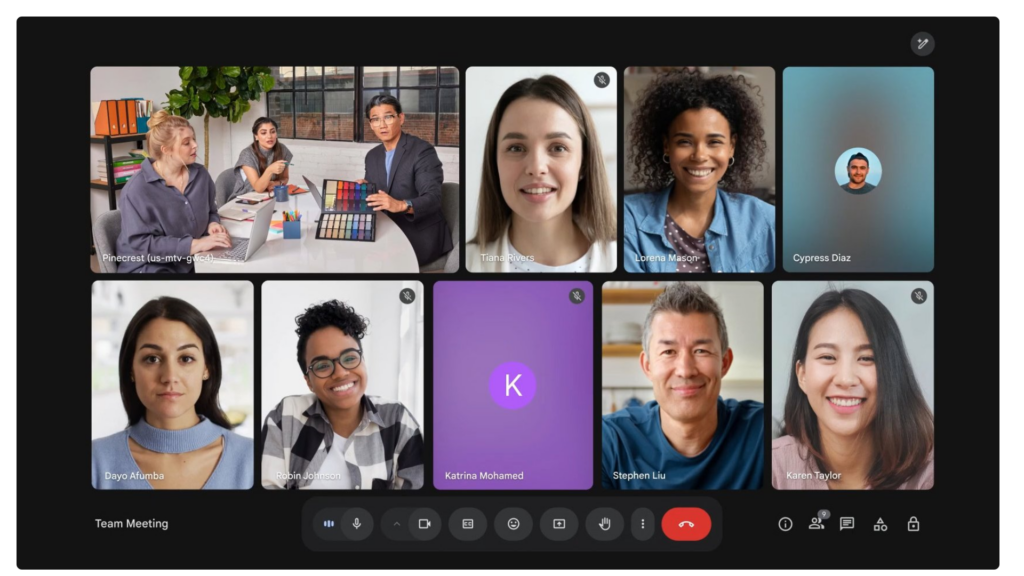
Google Meet is a simple, browser-based video interviewing tool you can use to run interviews and client meetings with minimal setup. If your agency already uses Google Workspace, Meet fits naturally into how you schedule, communicate, and collaborate throughout the hiring process.
You can join interviews directly from your calendar, record meetings, and rely on AI-powered features like live captions and automated notes to reduce post-interview admin.
This makes it easier to capture key points without breaking the flow of the conversation or spending time writing follow-ups afterward. Google Meet works well when you want speed and simplicity, especially for early-stage interviews or recurring client calls.
Key features of Google Meet
- Video meetings and interviews
- Live captions and accessibility features
- Meeting recording and automated notes
- Calendar and Gmail integration
- Browser-based access
- Integrates with Atlas – the Recruitment Platform
Pros: Easy access, minimal setup or technical friction
Cons: Recruitment workflows require external ATS/CRMs to reach full potential
Pricing: Free plan available, pricing starts at $6 per user/month
Productivity tools
Productivity tools play a key role in helping agency recruiters manage the volume and complexity of day-to-day work. These platforms support tasks beyond core recruitment systems, including writing outreach emails, summarizing information, collaborating with teammates, and organizing work across multiple roles and clients.
For staffing agencies, these tools help reduce context switching and speed up routine recruitment tasks that would otherwise consume recruiter time. AI-driven productivity tools can assist with drafting job ads, improving candidate communication, and capturing interview notes or next steps from conversations. When used alongside recruitment automation tools, they help recruiters stay focused, work more efficiently, and reduce the administrative burden that comes with growing an agency.
10. ChatGPT
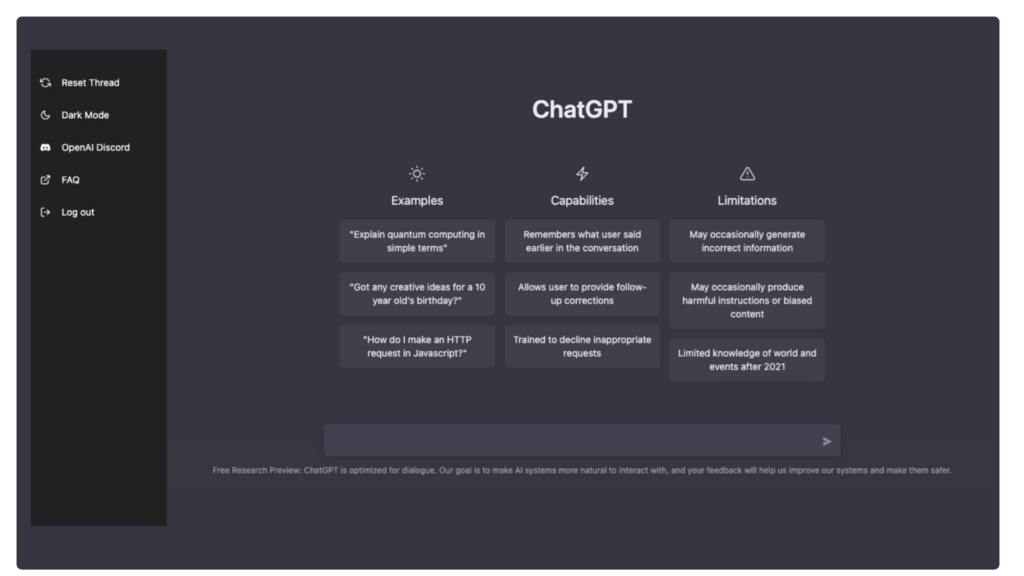
ChatGPT is a flexible AI assistant you can use to speed up the everyday tasks that quietly eat into your recruiting time. It is not a recruitment system, but it can significantly reduce admin by helping you get work done faster across sourcing, outreach, and internal communication.
You might use ChatGPT to draft job ads, personalize outbound talent sourcing, summarize top talent profiles, prepare interview questions, or clean up client emails before sending them. It is especially useful when you are juggling multiple roles and need help turning rough inputs into polished output without starting from scratch each time. Unchecked data can result in human oversight, as artificial intelligence can’t replace human intuition.
ChatGPT works best as a productivity layer alongside your core recruitment tools. It does not manage data or workflows for you, but it can help you think, write, and respond faster throughout the day.
Key features of ChatGPT
- AI-powered writing and content generation
- Job description and candidate sourcing email drafts
- Summarization and research support
- Interview question generation
- General workflow assistance
Pros: Save time on writing and research, easy and flexible to use
Cons: Outputs always need human review, no built-in tracking/automation
Pricing: Free plan available, pricing starts at $20 per user/month
11. Truffle
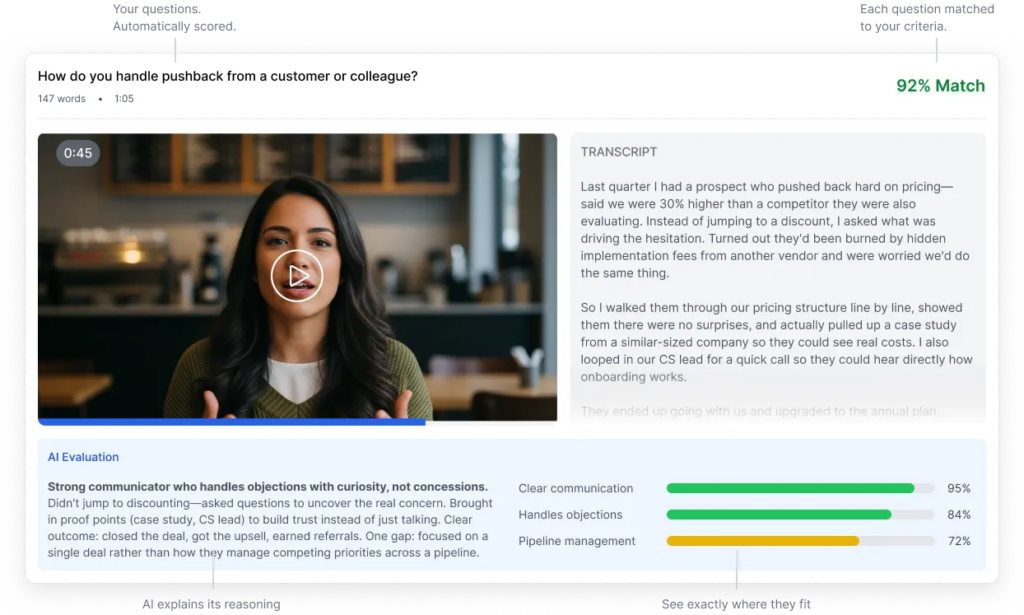
Truffle is an AI-assisted asynchronous video interview platform that helps hiring teams screen large volumes of candidates without scheduling phone screens. Candidates record responses to questions on their own time from any device — no downloads or logins required. Truffle’s AI then transcribes, summarizes, and generates match scores for each completed interview, helping teams prioritize who to review first instead of watching every recording end to end.
Truffle also generates Candidate Shorts — ~30-second highlight reels that pull key moments from interviews with explanations for why each clip was selected. Team collaboration features let multiple reviewers rate, comment, and share candidate profiles with role-based permissions, making it easy to align on hiring decisions without extra meetings.
Key features of Truffle
- One-way async video interviews
- AI candidate summaries and match scores
- Candidate Shorts (AI-generated highlight reels)
- Team collaboration with role-based permissions
- Job board integration (LinkedIn, Indeed, direct invite, shareable link)
- Qualification questions for must-have requirements
- Personality, Situational Judgment, and Environment Fit assessments
Pros: Replaces first-round phone screens, transcript-based AI keeps humans in control, fast candidate review
Cons: Designed for first-round screening, not a full ATS
Pricing: Free 7-day trial, plans start at $99/month (annual billing)
12. Slack
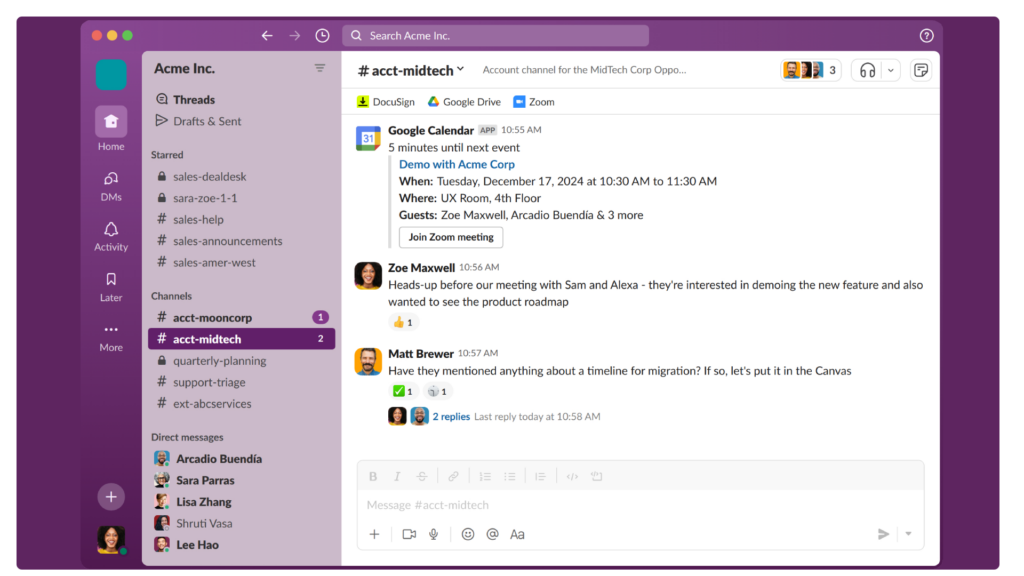
Slack is a collaboration tool that helps you keep conversations moving without relying on long email threads or scattered messages. For agency recruiters, it is used to stay in close contact with internal teams and, increasingly, with clients who prefer real-time communication.
You can use Slack to share candidate updates, interview feedback, and role progress quickly, making it easier to keep clients engaged and aligned. Files, links, and notes can be shared instantly, which reduces delays and cuts down on follow-up admin.
When paired with automation or integrations, Slack can also surface updates from your recruitment tools in real time. Slack works best as a communication layer rather than a system of record, helping you move faster while keeping everyone informed.
Key features of Slack
- Text, video, and audio communication tools
- Real-time team and client messaging
- Department/team level channels and workspaces
- Collaborative processes through Canvases
- File and link sharing
- Channel polls
- Searchable message history
Pros: Fast, transparent, customizable communication tools
Cons: Not designed for performance or job tracking
Pricing: Free plan available, pricing starts at $5.75 per user/month
Win more business with the best AI recruitment tools for staffing agencies
For staffing agencies, winning more business in 2026 is closely tied to how effectively admin is reduced across the recruitment process. Every manual update, missed follow-up, or disconnected tool limits the time recruiters can spend with candidates and clients. The best AI recruitment tools for staffing agencies are the ones that quietly remove friction, allowing agencies to operate faster, stay organized, and scale without adding unnecessary overhead.
While many tools on this list solve specific problems well, managing them separately creates new admin in the form of integrations, data gaps, and process inconsistencies. This is where all-in-one recruitment automation tools deliver the greatest long-term value. By bringing candidate management, communication, automation, and reporting into a single system, agencies can simplify their tech stack and create a more reliable way of working.
Reinvent how you run your desk with Atlas
Atlas – the Recruitment Platform is built for this reality with seamless integration with the tools you already use. It is designed to support every stage of the recruitment workflow while using AI to eliminate the repetitive tasks that slow agencies down. For recruitment businesses looking to grow in 2026, the right AI recruitment software is not about adding more tools, but about replacing fragmented systems with a platform that reduces admin and supports sustainable scale.

Related news

// Software Comparisons
Top 10 Customer Relationship Management Software for 2026 | Best Recruitment CRM Ranked
Searching for the top customer relationship management software in 2025? Explore CRM tools that streamline client communication, enhance recruiter productivity, and support growth.
11/14/2025
22 MIN

// Software Comparisons
10 Best Applicant Tracking Systems for 2026 | Top ATS Software Ranked
Looking for the best applicant tracking system in 2026? Discover top-rated ATS tools that streamline hiring, boost recruiter productivity, and support AI-driven candidate management.
06/20/2025
20 MIN

// Software Comparisons
Top 10 Loxo Alternatives for 2026
Is Loxo an outdated recruitment solution? We compare Atlas - the Recruitment Platform, and other potential tools for features, ease of use, and more.
12/11/2025
20 MIN