









// Recruitment Technology, Sourcing Strategies
When LinkedIn Doesn't Cover the Candidates You Place
Published: 20 November 2026,
8 min to read
The bottom line
LinkedIn covers one slice of the labor market extremely well and large parts of it barely at all. Blue collar desks, trades, older engineers, discreet niches and several APAC markets are thinly represented there. Sourcing tools built on LinkedIn data inherit exactly the same blind spots. Those desks are won with referral networks, niche communities, trade bodies and an agency’s own data.
Sourcing channels your tech stack cannot see
Ask a trades desk where its last ten placements came from. LinkedIn is rarely the answer.
The platform sits underneath almost every sourcing product sold to agencies. That assumption holds up fine for a software desk in London or Austin. It falls apart on a welding desk in the Midlands or a plant maintenance desk in Nagoya. The candidate sourcing channels that fill those roles were never digital-first, and most of them still are not.
Every agency has one consultant whose best source of candidates is a WhatsApp group nobody else is allowed into.
That consultant is usually the one on target. The channel matches the market, and the market was never going to come to a profile page.
Which desks does LinkedIn fail to cover?
The desks that place people who do not work at a desk.
LinkedIn adoption tracks formal education more sharply than any platform Pew Research Center measures. Its survey puts usage at 53% of US adults with a bachelor’s degree, against 10% of those with a high school education or less and 12% of adults over 65. Read that as a coverage map.
Four groups fall straight through it:
The volume behind that gap is commercially serious. Deloitte projects that 1.9 million of the 3.8 million manufacturing roles the US needs by 2033 could go unfilled. The research was run with The Manufacturing Institute, and it flags rising competition for welders and electricians.
Those are live roles on agency desks right now. The candidates for them are close to invisible to the tooling most agencies pay for.
- Blue collar and skilled trades, where tickets, certifications, site history and word of mouth matter more than a headline
- Long-tenured engineers and plant specialists in their fifties and sixties, whose last profile edit predates the role you are filling
- Discreet niches such as defense, security, private wealth and family offices, where a thin profile is deliberate
- Markets where LinkedIn never became the professional network, including Japan, Korea, parts of Southeast Asia and much of non-English speaking Europe
What goes wrong when sourcing data comes from one platform?
Coverage gaps quietly turn into scoring errors.
Most AI candidate sourcing tools read the same source material, so they repeat its silences with total confidence. A missing profile gets reported as a missing person. That is a very different statement from unavailable. A stale profile gets reported as current, which is worse, because somebody then builds a shortlist on it.
Four failures show up again and again on these desks:
Sourcing is already the expensive end of the week. Atlas research found that 36.99% of agency recruiters say candidate sourcing is the biggest factor slowing placements. More than 1,000 agency recruiters took part, and client feedback delays came second.
A talent mapping exercise built from one platform produces a map with holes in it. The holes are usually where your competitors are billing.
- A fitter who last updated a profile in 2016 scores as dormant and gets filtered out of the longlist
- Trade certifications and tickets rarely map onto the job titles a Boolean search is built around
- English-language search terms miss people whose entire working life is documented in another language
- Passive candidates in closed sectors look identical to people who left the sector years ago
Which candidate sourcing channels work where LinkedIn doesn’t?
The ones where somebody already knows the candidate.
On these desks the strongest signal is human and verbal. Employee referrals, former employees, site contacts and trade bodies carry information no profile holds. They know who finishes a contract in March and who will travel. They also know who holds the ticket your client insists on, and who walked off site last year. Broader candidate sourcing strategies still apply, but the channel mix changes completely.
What actually produces qualified candidates here:
Every one of those channels generates data that exists nowhere except your own system. Multi-touch outreach campaigns carry the follow-up at volume, so a referral is not lost to a busy fortnight. WhatsApp message syncing keeps the conversation attached to the candidate record rather than a personal phone. The mobile app captures a site meeting while the recruiter is still standing in the yard. The record gets written once, by the person who was there.
None of that ever reaches a social platform. That is precisely the point.
- Referral networks and employee referrals, worked deliberately on a schedule rather than hoped for
- Former employees and past placements, including contractors coming off a finish date
- Niche communities, trade forums, union branches and certification registers
- Industry events, trade shows, depot and site visits, where the first message is a conversation
- Local-language job boards and messaging apps, which carry most of the candidate traffic in several APAC markets
How does your own database become your best sourcing channel?
By becoming the only place your market’s real history is written down.
A system that records every call, email, meeting and message stops being a filing cabinet. It starts behaving like a sourcing channel of its own. Doing that automatically is what Atlas exists for, an AI-powered recruitment platform that removes admin with agentic AI. Total Memory ingests calls, video meetings, emails, notes and messages, then makes them searchable later. That matters most on desks where the knowledge was only ever spoken aloud.
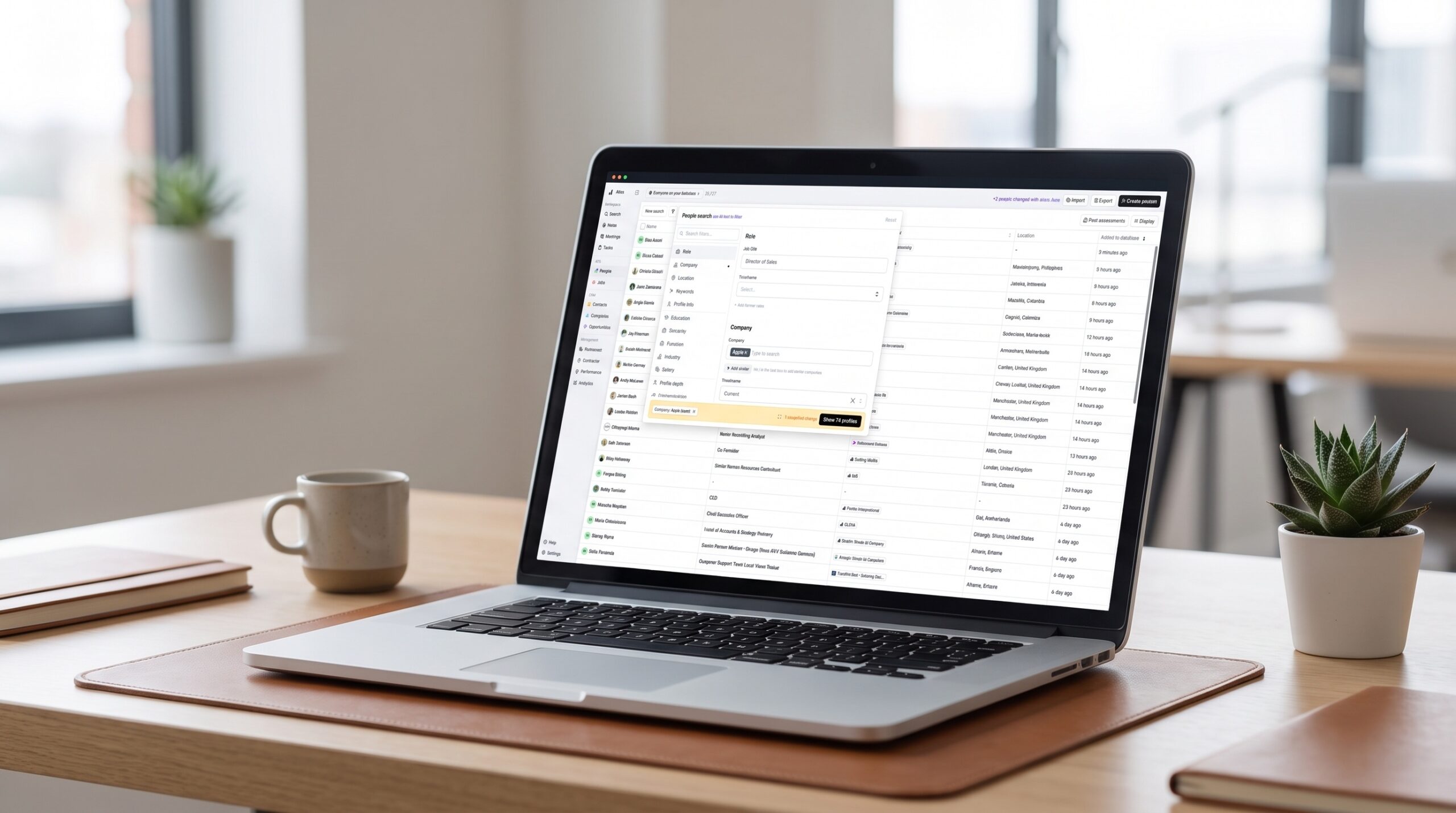
Search then works the way recruiters think. Atlas People Search lets a recruiter describe the person in plain language and builds the search for them. It reads everything the team has sourced, placed, interviewed or spoken to, including people who never had a profile to parse.
The alternative is decay. Data decay costs agencies their easiest placements. A living database that refreshes records in the background keeps a ten-year-old relationship usable.
The outcome shows up in delivery speed. Globus Search runs executive search across more than 55 countries. The firm reported sourcing and updating candidates 4x faster after connecting WhatsApp, email, phone and messaging into one record. Your own data is the only sourcing channel that compounds, and it compounds hardest on the desks the platforms ignore.
Frequently asked questions (FAQs) on candidate sourcing channels
It depends on what share of your placements it actually touches. Run the audit by source across the last two quarters, and count only candidates first identified on the platform. Many industrial and trades desks find the license pays for client-side mapping and hiring managers rather than candidate discovery.
Messaging apps, local-language job boards, in-country partners and agency referral networks carry most of the volume. Profile coverage is patchy and candidate behavior is relationship-led, so a first message often arrives through an introduction. Keep those conversations in your CRM, because they are not retrievable anywhere else.
Capture them where the conversation happens instead of asking recruiters to log them afterward. A platform that transcribes calls and syncs messages onto the candidate record builds the referral trail by itself. Agencies struggle when they rely on consultants to remember who recommended whom six weeks ago.
Yes, provided the AI reads your data rather than a public platform. Tools that search your own database, parse your notes and surface past conversations work regardless of profile coverage. Tools that depend on scraped public profiles will reproduce the gaps your market already has.
Most specialist desks work a six to twelve month cycle, tightened to quarterly for contractors approaching a finish date. The practical limit is how current your records are. If salary, location, rates and availability are years out of date, the outreach lands badly and burns the relationship.
What the desk looks like when LinkedIn stops being the plan
The week changes shape. Recruiters spend it on referral calls, site visits, trade events and contractors coming off a finish date. The same search no longer gets rebuilt against a platform that does not hold their market. The candidate sourcing channels that fill these roles have always been relationship-led, and the work is in capturing what they produce.
Behind that shift sits Atlas, an AI-powered recruitment platform whose agentic AI records calls, meetings, emails and messages as they happen. The database grows on its own while consultants are out working the market.
Worth a look if your best candidates were never on a platform in the first place.